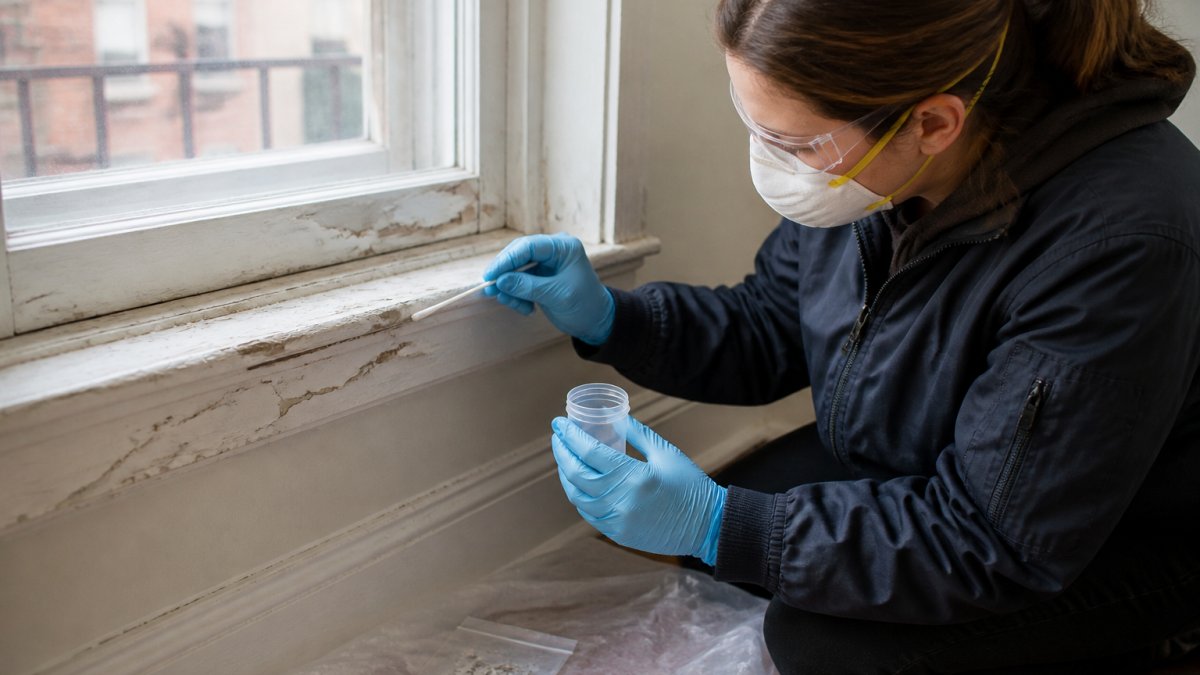
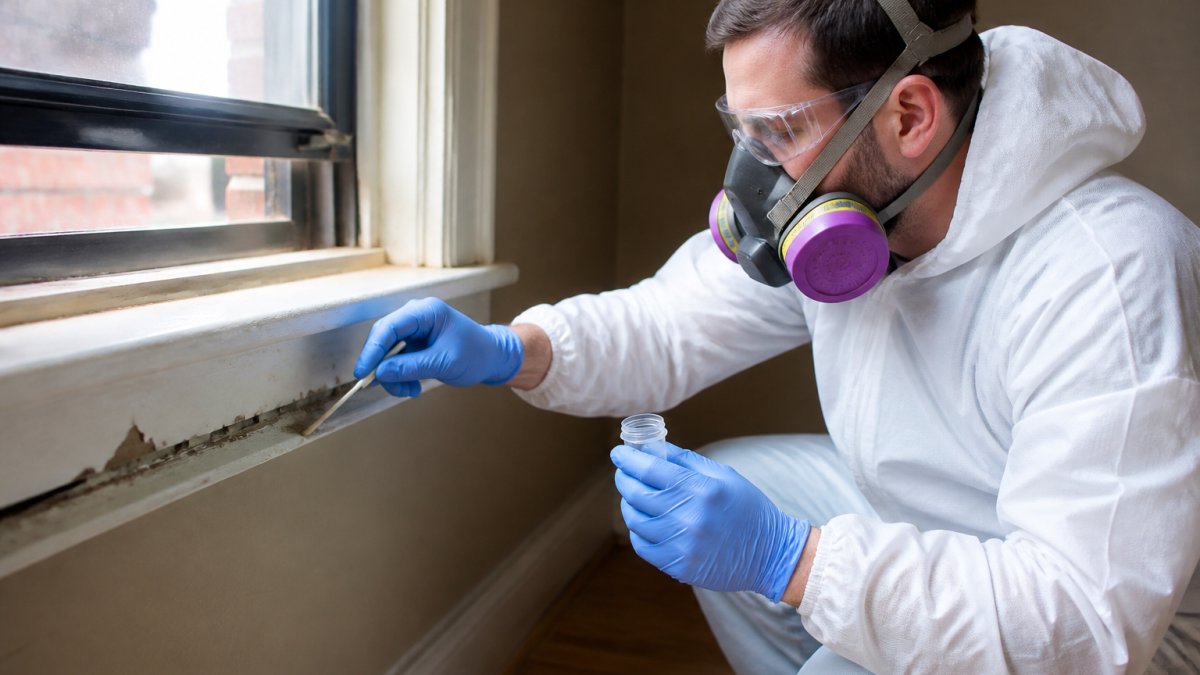
 ultimate-guide
What Does Lead Compliance Mean? Rental Property Guide
Table of Contents
- Lead Compliance Explained: What It Means for Rental Property Owners
- The Federal Rules Behind Lead Compliance
- Lead-Safe Certificate Requirements for Philadelphia Landlords
- Lead Dust Wipe Testing: How It Works and Why It Matters
- How to Pass a Lead-Safe Inspection: A Step-by-Step Checklist
- Lead Inspection Versus Lead Abatement: What's the Difference?
- Consequences of Noncompliance and How to Fix Violations
- Conclusion: Staying Compliant Year After Year
- Frequently Asked Questions
Last Updated: October 12, 2026
Lead Compliance Explained: What It Means for Rental Property Owners
Lead compliance is the ongoing practice of meeting every federal, state, and local rule governing lead-based paint and lead-contaminated dust in a rental property. It is a status you maintain, document, and renew, and for landlords with pre-1978 housing, that distinction decides whether you keep your rental license.
"Lead compliance" sounds like a single certificate, but it is a bundle of obligations: disclosure to tenants, safe work practices during repairs, dust testing at turnover, and certification filed with the city.
Lead Compliance vs. Lead Abatement: A Critical Distinction
Compliance and abatement are not the same thing. Lead abatement permanently removes lead-based paint or lead hazard, usually through replacement, enclosure, or specialized removal by a certified firm. Lead compliance is the broader legal state of satisfying inspection, testing, disclosure, and documentation requirements, often achievable through interim controls rather than full removal.
That gap matters: abatement is expensive and disruptive, while compliance is achievable at far lower cost for many properties.
The Federal Rules Behind Lead Compliance
Three federal frameworks sit underneath every local lead law: renovation work, disclosure to buyers and tenants, and worker protection.
EPA Renovation, Repair, and Painting Rule
The EPA Renovation, Repair, and Painting Rule overview requires that firms performing renovation, repair, or painting work that disturbs paint in pre-1978 housing be certified and use lead-safe work practices. If you hire a contractor to sand, cut, or demolish painted surfaces in an older unit, that contractor must follow the rule.
Ask for the firm's certification before work starts, and keep a copy in your records.
Lead Disclosure and the OSHA Lead Standard
Federal EPA lead disclosure requirements for landlords rules require landlords to disclose known lead-based paint and lead hazard information to tenants before they sign a lease in pre-1978 housing. You must provide the required pamphlet and any records you have.
Separately, the OSHA Lead Standard for general industry protects workers, including maintenance staff, from occupational exposure. If your own employees disturb painted surfaces, that standard applies to them.
Lead-Safe Certificate Requirements for Philadelphia Landlords
Philadelphia ties lead compliance directly to the rental license. Landlords of most pre-1978 rental properties must hold a current lead-safe certificate or a certification of lead-free status for the rental license to remain valid, without one, you cannot legally collect rent in the city.
The Two Pathways to a Certificate
There are two ways a Philadelphia rental property reaches compliant status:
- Certification of lead-free status. A certified lead inspector or risk assessor determines the property contains no lead-based paint. This is rare in pre-1978 rowhouse stock, because lead paint is presumed present until testing proves otherwise.
- Lead-safe certification. The property is certified lead-safe based on lead dust wipe testing at the required locations, with every sample below the applicable clearance threshold. This is the pathway most landlords use, because it does not require removing the paint, only proving the dust is controlled.
What the Dust Wipe Test Actually Measures
A certified technician collects settled dust samples from the surfaces where tenants, especially children under six, are most likely to be exposed:
- Floors, including those in living areas and bedrooms
- Interior windowsills
- Window troughs (the well between the sash and the frame, where dust accumulates most heavily)
Each sample is collected with a single-use wipe over a defined area, packaged separately, and sent to an accredited laboratory. The lab reports lead loading in micrograms per square foot (µg/ft²), and the property passes when every sample falls below the applicable clearance threshold.
A visual walkthrough cannot substitute for this: a unit that passes the eye test can fail the wipe test, because the certificate depends on lab data, not an inspector's impression.
Renewal and Timing
Lead-safe certificates in Philadelphia are not permanent, they carry an expiration date set by the city. Two timing traps catch landlords repeatedly:
- The certificate expires while the rental license is still active. The license does not pause because the certificate lapsed. Calendar the renewal the day you receive the certificate.
- A new tenant signs before the certificate is renewed. Turnover is exactly when dust gets disturbed, so sequence the renewal and the lease signing rather than handling them in parallel.
Norristown and Surrounding Municipalities
For landlords in Norristown and the surrounding municipalities, the framework is similar in intent but administered locally. The certificate requirement, the renewal schedule, and the filing authority can differ from Philadelphia's, so confirm the specifics with the office that issues your rental license. A City of Philadelphia lead paint and rental housing guidance page is the right starting point for properties inside the city; for Norristown, start with the municipal licensing office.
What You File, and With Whom
Compliance is not complete when the lab report comes back clean. The certificate must be filed with the issuing authority and retained with your rental license records. Keep three things together for every property:
- The current lead-safe certificate or lead-free certification
- The underlying lab report showing the dust wipe results
- The rental license it supports
If an inspector or licensing official asks for proof, that bundle is your answer. A clean lab report without a filed certificate is not compliance, it is an unfinished step.
Lead Dust Wipe Testing: How It Works and Why It Matters
Lead dust wipe testing collects settled dust samples from surfaces where children and tenants are most likely to be exposed, then sends them to an EPA-approved laboratory. It is the most common method used to certify a rental property, because lead-contaminated dust, not intact paint, is usually the actual hazard.
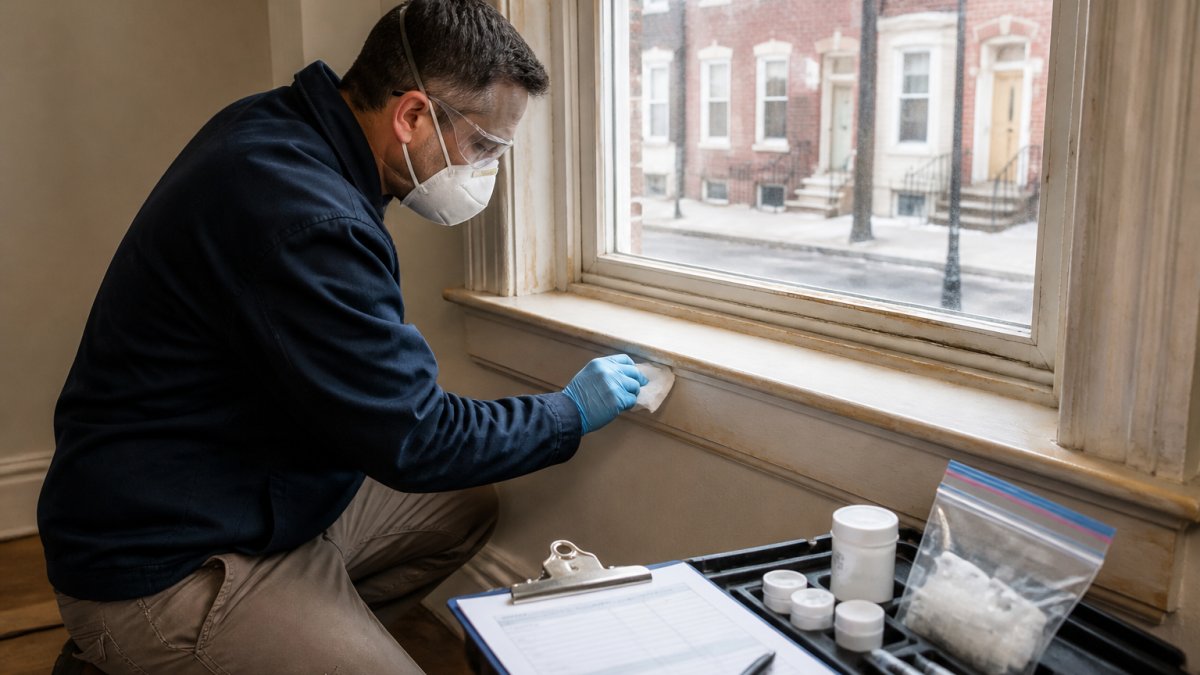
A technician wipes defined areas on floors, windowsills, and window troughs, packages each sample separately, and ships them to the lab. Results typically return within a few business days, and if every sample falls below the applicable threshold, the property can be certified lead-safe.
How to Pass a Lead-Safe Inspection: A Step-by-Step Checklist
Passing means preparing the property before the inspector arrives, not hoping for the best. Use this sequence:
- Confirm your property's build year. Pre-1978 housing carries the presumption of lead-based paint.
- Inspect for paint deterioration. Look at windows, doors, stairs, porches, and any friction surfaces.
- Repair failing paint before testing. Stabilize peeling or chalking surfaces using lead-safe work practices.
- Clean thoroughly. Wet-wipe floors, windowsills, and troughs to remove settled lead-contaminated dust.
- Clear the testing areas. Remove furniture and belongings from surfaces the inspector needs to sample.
- Schedule the inspection. Book with enough lead time before your lease signing or renewal date.
- File your certificate. Keep the documentation with your rental license records.
| Step | Action | Why It Matters |
|---|---|---|
| 1 | Verify build year | Determines whether rules apply |
| 2 | Check paint condition | Failing paint is a common fail trigger |
| 3 | Stabilize paint | Reduces dust generation |
| 4 | Wet-clean surfaces | Lowers dust wipe results |
| 5 | Clear testing areas | Ensures valid samples |
| 6 | Schedule inspection | Meets your deadline |
| 7 | File certificate | Proves compliance to the city |
Lead Inspection Versus Lead Abatement: What's the Difference?
A lead inspection identifies where lead-based paint and lead hazards exist; lead abatement removes them. The inspection produces information and, paired with dust testing, a certification; abatement produces a physically altered property. Most landlords need the first, not the second. A risk assessment goes further by evaluating painted surfaces and identifying specific hazards, which helps you target repairs. If testing reveals a genuine hazard, interim controls such as stabilization, encapsulation, and specialized dust cleanup often bring a property into compliance without full abatement.
Consequences of Noncompliance and How to Fix Violations
Noncompliance in rental housing rarely arrives as a single dramatic penalty. It usually shows up as a licensing problem first, then compounds, understanding the sequence lets you correct a violation before it threatens the rental license itself.
The Enforcement Sequence
Enforcement tends to follow a predictable order:
- A certificate cannot be produced. An inspector, licensing official, or tenant complaint triggers a request for proof of lead-safe certification. If you cannot produce a current certificate, the issue is documented.
- The rental license is exposed. Because the lead-safe certificate is tied to the rental license, a missing or expired certificate can put the license at risk, and a license not in good standing threatens your ability to legally collect rent.
- Federal exposure stacks on top. Federal disclosure violations carry their own penalties, and hiring an uncertified contractor for renovation work in pre-1978 housing adds liability under the Renovation, Repair, and Painting Rule.
- Escalation. Repeated or uncorrected violations draw more attention than a first-time gap, and correction costs rise the longer the condition sits.
The Four Failure Points
When a property fails to demonstrate compliance, it is almost always one of four things:
- Expired certificate. The certificate was valid once but lapsed before renewal.
- Failed dust wipe test. One or more samples exceeded the applicable clearance threshold.
- Missing disclosure. The required lead hazard pamphlet or known-hazard disclosure was not provided to the tenant before lease signing.
Identifying which one applies is the first step, because the correction is different for each.
How to Fix a Violation
Correction follows a predictable path:
- Identify the exact failed requirement, certification, dust test, disclosure, or work practices.
- Correct the underlying condition. For a failed dust test, that usually means stabilizing deteriorated paint on friction surfaces (windows, doors, stairs) and wet-cleaning floors, sills, and troughs.
- Retest to confirm the property passes. A failed test is not the end of the process, it is a signal to repair and retest.
- File the new documentation with the issuing authority and retain it with your rental license records.
- Build a renewal reminder so the same gap does not reopen next cycle.
The Cost of Waiting
The real cost of noncompliance is not the correction itself, it is the rent you cannot legally collect while the license is out of good standing, plus the compounding effect of a documented violation on future licensing. Treat a failed test as a maintenance signal, not a legal crisis.
Conclusion: Staying Compliant Year After Year
Compliance is a cycle, not a finish line. Certificates expire, tenants turn over, and repairs disturb paint. The landlords who avoid trouble treat lead compliance as routine maintenance rather than a one-time errand.
At 99leadsafe.com, we handle lead-safe inspections and lead dust wipe testing for rental properties across the Greater Philadelphia area.
Get started with 99leadsafe.com and keep your rental license, your tenants, and your records in good standing.
Frequently Asked Questions
What does lead compliance mean for a rental property?
For a rental property, lead compliance means the owner has met all applicable federal, state, and local requirements for managing lead-based paint hazards. That includes disclosing known lead paint to tenants, keeping paint intact to prevent lead-contaminated dust, and, in Philadelphia, holding a valid lead-safe certificate or certification for properties built before 1978. Compliance is an ongoing obligation, not a one-time task, and records should be kept for every unit.
What is a lead-safe certificate?
A lead-safe certificate is a document confirming that a rental property has been inspected and tested for lead hazards and meets the required safety standards. In Philadelphia, landlords of pre-1978 rental properties must obtain this certification to maintain a valid rental license. The certificate typically requires a visual inspection and lead dust wipe testing by a certified professional, with results analyzed by an EPA-approved laboratory.
When do landlords need lead testing?
Landlords need lead testing when a rental property was built before 1978 and is subject to local lead-safe certification rules. In Philadelphia, certification is required for most pre-1978 rentals and must be renewed periodically. Testing is also needed after any renovation, repair, or painting work that disturbs painted surfaces, and whenever a tenant reports paint deterioration or possible lead dust.
What does a lead dust wipe test check for?
A lead dust wipe test checks for lead-contaminated dust on surfaces where children and tenants commonly touch, such as windowsills, floors, and window wells. A certified inspector wipes a measured area, sends the sample to an EPA-approved laboratory, and the lab reports the lead level found. If the level exceeds the regulatory threshold, the property fails and requires cleaning or repair before retesting.
How do landlords pass a lead-safe inspection?
To pass a lead-safe inspection, landlords should repair any deteriorating paint, clean dust from windowsills and floors, and address friction surfaces like windows and doors that create dust. Hiring a certified inspector for a pre-inspection walkthrough can catch problems early. After any repair work, follow lead-safe work practices and schedule the official inspection once the unit is clean and paint is intact.
What is the difference between lead inspection and lead abatement?
A lead inspection identifies where lead-based paint and lead hazards exist, often through dust wipe testing and visual assessment. Lead abatement permanently removes or encapsulates the hazard using certified methods. Most landlords only need an inspection and lead-safe certification, not full abatement. Abatement is typically reserved for properties with severe deterioration or when required by a regulatory order.
How long does lead-safe certification last?
Lead-safe certification duration depends on the local jurisdiction and the type of property. In Philadelphia, certificates generally require renewal on a set schedule, often every few years, but landlords should verify current requirements because rules can change. Keeping a calendar reminder and retaining all inspection reports helps avoid gaps in compliance that could jeopardize the rental license.
What records should landlords keep for lead compliance?
Landlords should keep lead inspection reports, dust wipe testing results from EPA-approved laboratories, lead-safe certificates, disclosure forms signed by tenants, and documentation of any repair or renovation work. Retain records for at least the duration required by local law and make them available to inspectors or tenants upon request. Organized records make renewals faster and protect against compliance disputes.