 how-to
Landlord Documentation & Filing for Lead Liability
Table of Contents
- Why Lead-Safe Inspection Preparation Starts With Your Filing System
- The Lead-Safe Inspection Report Checklist Every Landlord Needs
- Lead Dust Wipe Testing Documentation: What to Keep and Why
- Lead-Safe Certificate Requirements for Philadelphia Rental Properties
- How to Organize and Store Your Landlord Documentation
- Common Filing Mistakes That Put Your Liability Protection at Risk
- How 99leadsafe.com Simplifies Your Documentation and Compliance
- Conclusion: Protect Your Investment With a Reliable Filing System
- Frequently Asked Questions
Last Updated: October 6, 2026
Why Lead-Safe Inspection Preparation Starts With Your Filing System
The best professional documentation and filing instructions for property liability protection begin with one simple idea: your paperwork is your defense. In Philadelphia, rental property owners must prove lead safety to keep a rental license.
This guide from 99leadsafe.com walks through the exact records landlords need, where to store them, and how to hand them over during an inspection.
Most landlords treat paperwork as an afterthought. Then a city inspector asks for a certificate, and the scramble begins.
A solid system fixes that. You collect the right documents once, store them in two places, and update them on a schedule.
The Lead-Safe Inspection Report Checklist Every Landlord Needs
A lead-safe inspection report checklist should cover the property address, inspection date, inspector credentials, test locations, lab results, and the final certification. Miss any one of these, and you may have to repeat the test, or worse, lose a liability dispute because your evidence is incomplete.
Here is what to gather for each unit:
- Property address and unit number
- Date of the lead dust wipe testing
- Name, certification number, and expiration date of the inspector
- Rooms and surfaces tested, listed by surface type
Keep one folder per property. Label it by address, not by tenant name. Tenants change. Addresses do not.
What Your Report Must Include
Every report must tie a specific sample to a specific surface. "Kitchen floor, passed" is not enough. You need the lab number, the surface, and the result on one page.
The EPA lead renovation, repair and painting program sets the dust-lead standards labs test against. Ask your inspector which standard they used. A report without that detail is hard to defend later.
How Long to Keep Each Document
Most landlords under-retain. A common pattern is to keep the certificate and discard everything else. That is a mistake. Here is a practical retention schedule:
- Lead-safe certificate: Keep for the life of the property ownership, plus at least 3 years after sale.
- Lab report and chain of custody: Keep at least 3 years past the certificate expiration date, or longer if any tenant has filed a complaint.
- Inspector field notes and photos: Keep 3 years minimum; longer if the unit houses children under 6.
- Tenant disclosure and acknowledgment forms: Keep for the duration of tenancy plus 3 years.
These periods are not arbitrary. If a former tenant files a lead exposure claim years later, your file is your defense. A missing lab report can turn a winnable case into a settlement.
Version Control: The Step Most Landlords Skip
When a unit is retested, do not overwrite the old file. Create a new version and keep the prior one. Use a naming convention that shows the sequence:
123MainSt_2025-03_Certificate_v1123MainSt_2026-04_Certificate_v2
Why keep the old version? Because liability can attach to a past period. If a child lived in the unit in 2025, the 2025 report is the relevant evidence, not the 2026 retest. Deleting old versions destroys your timeline.
Digital Evidence Integrity
Scan the signed certificate and lab report the same day you receive them. Save as PDF, not as a photo. PDF preserves the document layout and is harder to alter.
Do not edit scanned files. If you must annotate, create a separate note file. Altering a scanned certificate can raise questions about authenticity if it is ever produced in a dispute.
Lead Dust Wipe Testing Documentation: What to Keep and Why
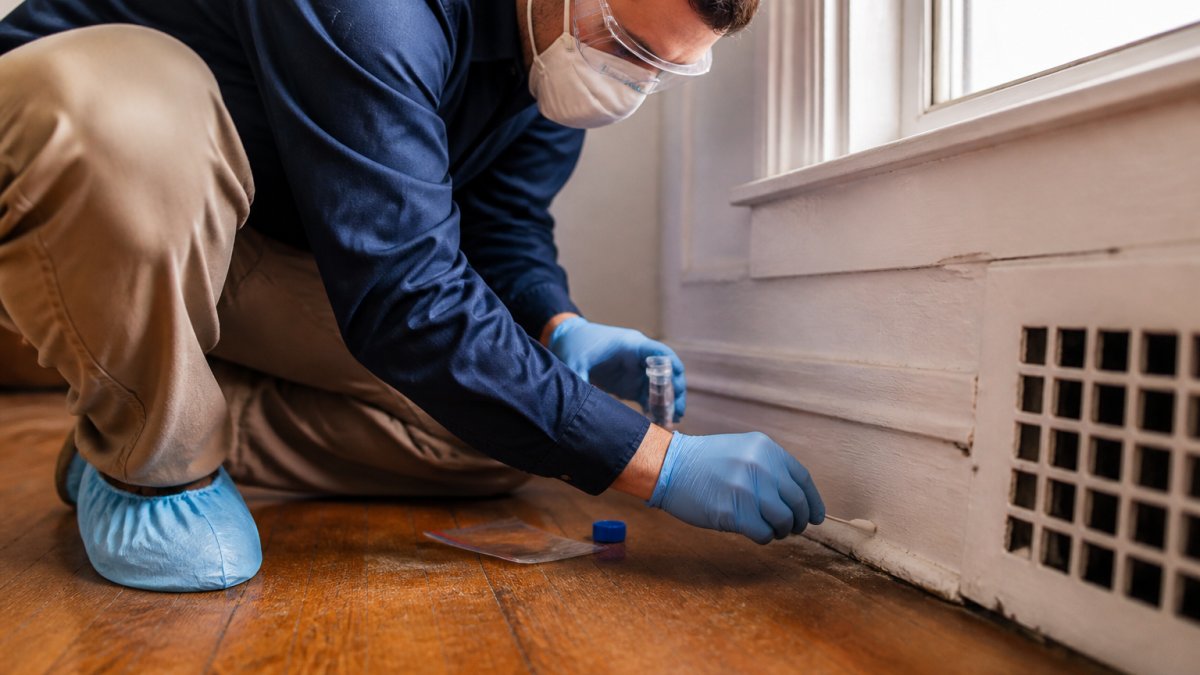
Lead dust wipe testing documentation is the paper trail that proves your property passed. It includes the lab report, the chain of custody form, and the inspector's field notes.
Dust wipe testing measures lead on surfaces where children crawl and play. Floors, windowsills, and tubs matter most.
Store these items for each test:
- Lab report with sample numbers
- Chain of custody form
- Inspector's field notes
- Photos of tested surfaces
- Date the test was performed
Keep the original lab report. A photocopy may not satisfy an inspector who wants the source document.
Lead-Safe Certificate Requirements for Philadelphia Rental Properties
A lead-safe certificate shows that a rental unit passed a lead dust test and is safe to rent. Philadelphia requires this certification for most rental properties built before 1978.
The rules apply to landlords, not tenants. You carry the duty to test and to file the result. Child-care facilities face their own lead-safe rules, so operators should confirm what applies to them.
Who Needs a Certificate and When
Philadelphia's lead-safe requirements apply to most rental units built before 1978. The obligation is triggered by the rental license cycle, not by a tenant complaint. In practice, this means:
- You need a current lead-safe certificate to obtain or renew a rental license for a pre-1978 unit.
- The certificate is tied to a specific unit and a specific test date.
- Certification typically must be renewed on a set cycle, confirm the current interval with the City of Philadelphia lead paint and rental license guidance before each lease cycle.
- If you acquire a property mid-cycle, you inherit the compliance obligation, not just the building.
The Filing Workflow: From Test to License
Getting the test done is only half the job. The certificate must be filed correctly to satisfy the licensing requirement. A practical workflow:
- Schedule the lead dust wipe testing before your rental license renewal window opens. Do not wait until the renewal notice arrives.
- Receive the lab report and certificate from your inspector. Confirm the certificate names the correct property address and unit.
- File the certificate with the rental license application or renewal through the city's licensing portal.
- Store the certificate, lab report, and chain of custody together in your property folder, not in separate locations.
- Set a renewal reminder 60 to 90 days before the certificate expires.
A common failure point is step 3. Landlords often have a valid certificate but fail to attach it to the license renewal, which stalls the license. Treat the certificate and the license filing as one task, not two.
Deadlines and Reporting Requirements
Lead-safe rules operate on deadlines. Missing one can cost you the rental license and expose you to liability. Key deadlines to track:
- Rental license renewal date: The certificate must be current at the time of renewal.
- Certificate expiration date: Track this separately from the license date; they do not always align.
- Tenant notification: If a unit has a lead hazard or a failed test, notification requirements may apply. Confirm the current rules with the city.
- Post-remediation retest: If a unit fails, a retest is required before the unit can be certified. Do not rent during the gap.
Liability Consequences of a Lapsed or Missing Certificate
A missing or expired certificate is not just a paperwork problem. It creates liability exposure on multiple fronts:
- License action: The city can block or revoke the rental license, forcing you to stop renting the unit.
- Fines: Civil penalties can accrue for non-compliance.
- Tenant claims: If a child is exposed to lead in an uncertified unit, the absence of a certificate weakens your defense significantly.
- Insurance disputes: Some liability policies require proof of compliance with local lead laws. A missing certificate can complicate a claim.
This is where documentation and liability protection connect. The certificate is not just a compliance box, it is evidence that you met your duty as a landlord. Keep it with the lab report so the proof chain is complete.
For the current rules and forms, check the City of Philadelphia lead paint and rental license guidance. Requirements can change, so confirm before each lease cycle.
How to Organize and Store Your Landlord Documentation
Organize landlord documentation by property, then by date, in both a physical binder and a digital folder. This dual system protects you if a fire, flood, or hard drive failure destroys one copy.

Set up your folders like this:
- Create one main folder named "Lead Compliance."
- Add a subfolder for each property address.
- Inside each, add a folder per inspection year.
- Save the certificate, lab report, and photos together.
- Back up the digital copy to cloud storage.
A simple naming rule keeps everything findable. Use "Address_Year_Certificate" and "Address_Year_LabReport."
Digital vs. Physical Filing
Digital filing wins on search and backup. Physical filing wins on court and handoff. Use both.
Digital lets you pull a certificate in seconds during a phone call. Physical gives you something to hand an inspector on the spot. Keep the originals in the binder and scan everything the same day.
Common Filing Mistakes That Put Your Liability Protection at Risk
The biggest filing mistake is storing documents in too many places with no master list. Files end up in email, on a phone, and in a drawer, and no single record is complete.
Other mistakes that cost landlords:
- Keeping only the certificate and not the lab report
- Filing by tenant name instead of address
- Letting certificates expire without a renewal reminder
- Skipping backups until a drive fails
- Mixing units from one building into one folder
Each gap weakens your liability protection. If you cannot produce the record, it may as well not exist.
How 99leadsafe.com Simplifies Your Documentation and Compliance
99leadsafe.com handles the inspection and the paperwork in one visit.
We built our process around what landlords actually struggle with: missing documents and slow turnaround.
Our pricing is transparent and posted on our site. You can see what you are paying for before you book.
Landlords across the area have trusted us to meet deadlines and get the details right.
Conclusion: Protect Your Investment With a Reliable Filing System
Lead compliance is not just about passing a test. It is about proving you passed, years later, when someone asks. A filing system that pairs the certificate with the lab report and backs it up in two places does that work for you.
99leadsafe.com makes the documentation side easy. We provide EPA-approved lab analysis, results in 2 to 7 business days, and the clear records you file with confidence.
Frequently Asked Questions
What documents should landlords keep after a lead-safe inspection?
After a lead-safe inspection, keep the full inspection report, any lead dust wipe testing results, the lead-safe certificate, and all correspondence with your inspector. Also retain proof of any remediation work, such as contractor invoices and clearance reports. These documents prove compliance and protect you if a tenant or the city questions your property's safety status.
How long should landlords keep lead inspection records?
Keep lead inspection records for at least the duration of the tenancy plus a minimum of three years, but many landlords retain them for the life of the property. Because lead paint hazards can persist, and liability claims may arise years later, a permanent digital archive is the safest approach. Always check local Philadelphia requirements, as they may specify longer retention periods.
What is the difference between a lead inspection report and a lead-safe certificate?
A lead inspection report details the findings of a lead hazard inspection, including dust wipe test results, XRF readings, and any identified hazards. A lead-safe certificate is the official document issued after a property passes inspection, confirming it meets safety standards. The report provides the evidence; the certificate is the compliance credential you show to the city or tenants.
How can landlords prepare a rental property for a lead-safe inspection?
Start by gathering any previous lead reports and certificates. Clean all surfaces, especially windowsills and floors, to remove dust that could cause false positives. Repair peeling paint and address any visible deterioration. Ensure your inspector has access to all rooms and common areas. Proper preparation helps you pass the first time and keeps your documentation clean.