 how-to
Fast Lead Dust Testing: Your Philadelphia Compliance Guide
Table of Contents
- Why Fast Lead Dust Testing Matters for Philadelphia Landlords
- Philadelphia Rental Lead Inspection Requirements You Must Know
- Understanding the Lead Dust Wipe Testing Procedure
- How to Pass a Lead-Safe Inspection: Step-by-Step
- Lead Inspection in Norristown PA and the Greater Philadelphia Area
- What Happens After Your Lead Dust Test Results Arrive
- Getting Fast Results Without Sacrificing Accuracy
- Frequently Asked Questions
Last Updated: September 30, 2026
Why Fast Lead Dust Testing Matters for Philadelphia Landlords
Lead dust testing philadelphia is a legal requirement for rental property owners in Philadelphia and Norristown. Without current lead-safe certification, you cannot legally rent units to tenants. When lease signings are scheduled, speed matters, but speed without accuracy costs more in retesting, delays, and tenant disputes. This guide covers what lead dust testing involves, how to prepare your property to pass on the first attempt, and what happens after results arrive.
Philadelphia Rental Lead Inspection Requirements You Must Know
Philadelphia requires landlords to obtain a Lead-Safe Certificate before renting any unit in a building constructed before 1978. This is a condition of your rental license and applies to all residential rental properties with pre-1978 construction, regardless of unit count.
The Legal Timeline: When You Need Testing and Certification
Before listing or re-renting: Schedule testing at least 4-6 weeks before your target lease start date to account for inspection scheduling, lab processing (5-10 business days standard, 2-3 days expedited), and any remediation if needed.
Certificate validity and renewal: Schedule retesting 6-8 weeks before expiration to avoid gaps in compliance. An expired certificate means you cannot legally rent units.
Tenant notification requirement: Provide a copy of your Lead-Safe Certificate to every tenant in writing before lease signing and keep dated copies on file for at least three years.
City enforcement and inspections: Maintain current certification and keep proof accessible. Missing or expired certificates result in fines and license suspension.
EPA-Approved Sampling Standards and Clearance Levels
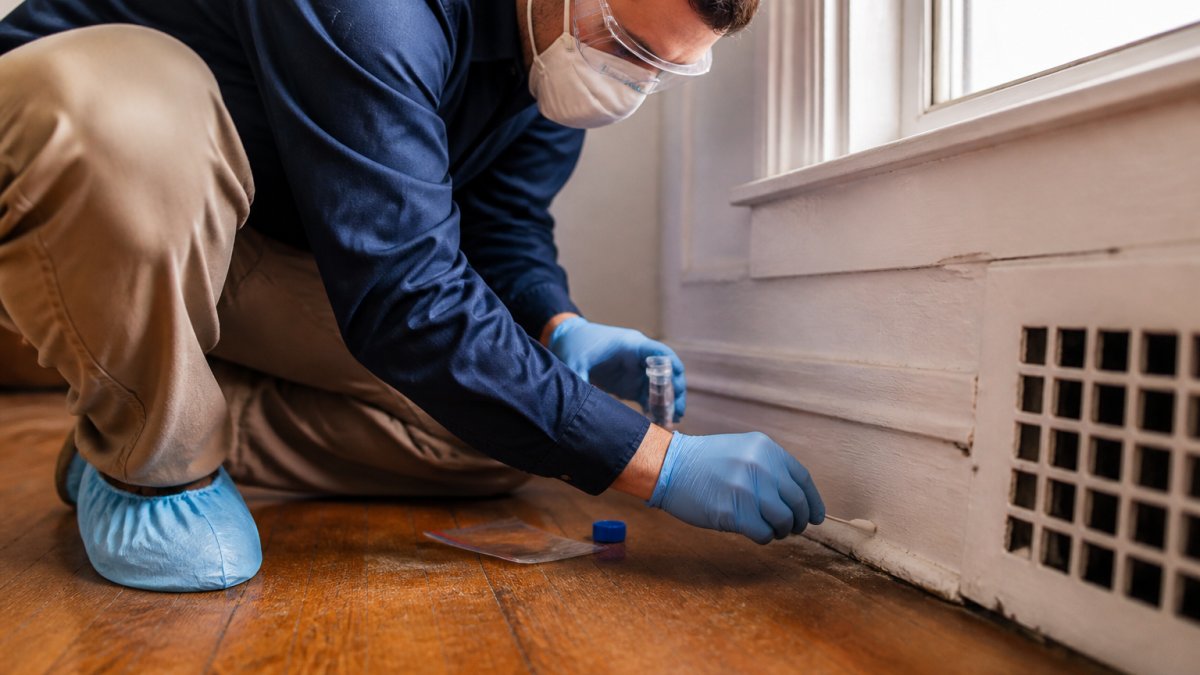
The EPA established clearance levels for lead dust to protect occupant health, particularly children under six (the EPA). A certified lead inspector samples high-contact surfaces where dust accumulates: floors, windowsills, window wells, door frames, baseboards, and kitchen/bathroom surfaces. Every sample location is photographed and recorded with chain of custody maintained from collection through lab analysis.
Lab Analysis and What Clearance Means
Samples go to an EPA-certified laboratory for analysis. Results are measured in micrograms per square foot (µg/ft²) and compared to EPA clearance levels: Floors 40 µg/ft² or less, Windowsills 250 µg/ft² or less, Window wells 400 µg/ft² or less. Standard analysis takes 5-10 business days; expedited services deliver results in 2-3 business days.
Understanding the Lead Dust Wipe Testing Procedure
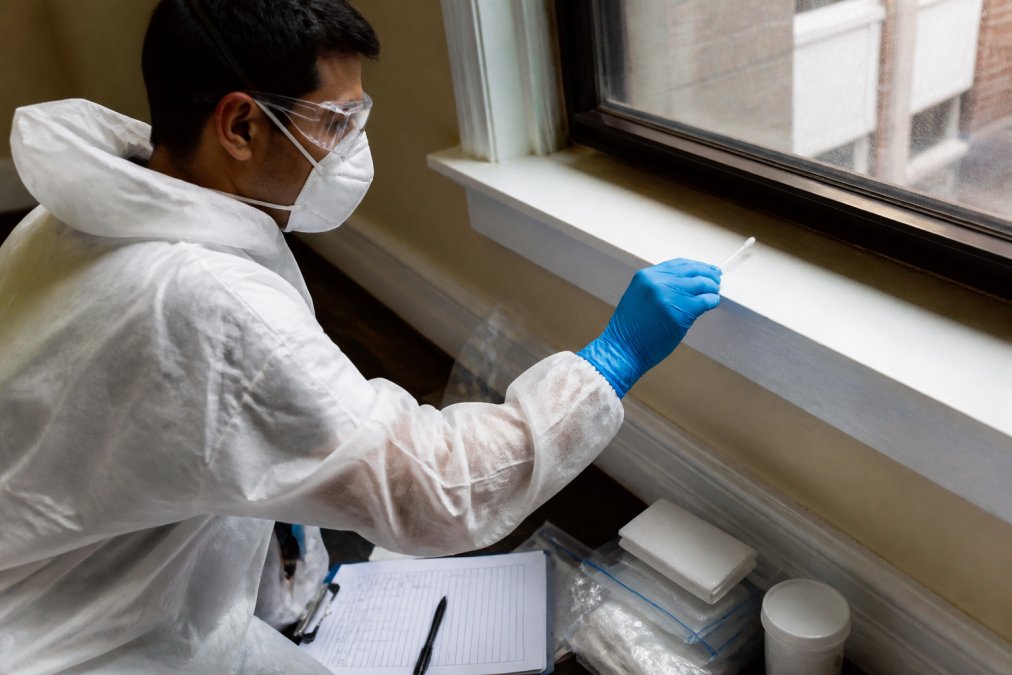
Lead dust wipe sampling is a standardized protocol designed to measure lead contamination on interior surfaces. A certified lead professional collects dust samples using specialized wipes, following EPA guidelines for location, technique, and documentation.
EPA-Approved Sampling Standards
The EPA established clearance levels for lead dust to protect occupant health, particularly children under six. These standards define safe thresholds on floors, windowsills, and window wells. Testing must follow strict protocols to ensure results are defensible if the city or a tenant questions them.
A certified lead inspector knows exactly where to sample, high-contact surfaces where dust accumulates and where children are most likely to encounter it. The sampling locations are not arbitrary. They're selected based on EPA guidance and the property's construction and use patterns.
Documentation is part of the standard. Every sample location is photographed and recorded. Chain of custody is maintained from collection through lab analysis. This creates the audit trail that holds up if someone later challenges your certification.
Lab Analysis and Clearance Testing
After collection, samples go to an EPA-certified laboratory for analysis. The lab measures lead concentration in micrograms per square foot (µg/ft²). Results come back with a clear pass or fail determination based on EPA clearance levels.
Turnaround time varies. Standard analysis typically takes 5-10 business days from lab receipt. Expedited services compress this to 2-3 business days if your timeline is tight. The lab provides a detailed report showing each sample location, the lead level found, and whether it meets clearance standards.
If results show lead above clearance levels, the property fails. Remediation is then required, cleaning, encapsulation, or component replacement depending on the severity and location of contamination. Retesting follows remediation to confirm clearance.
How to Pass a Lead-Safe Inspection: Step-by-Step
Passing a lead dust test starts before the inspector arrives. Property preparation reduces the likelihood of failure and demonstrates to tenants that you take safety seriously.
Pre-Inspection Property Preparation
Begin with thorough cleaning 2-3 weeks before testing. Use a HEPA-filter vacuum on all floors and damp-wipe all hard surfaces, windowsills, baseboards, and door frames. Repair any deteriorating paint or plaster. Restrict foot traffic for 48 hours before testing to allow dust to settle. Be present on inspection day to answer questions about the property's history and condition.
Common Reasons Properties Fail and How to Avoid Them
Properties fail most often due to inadequate pre-cleaning or visible paint deterioration. Dust accumulation on windowsills and floors is the primary culprit. Neglected window frames and peeling paint are frequent failure points. If you've had recent renovations, allow extra time for thorough cleaning and dust settling before testing. Proper preparation the first time is the most cost-effective approach.
Lead Inspection in Norristown PA and the Greater Philadelphia Area
EPA standards for lead dust wipe testing are the same in Philadelphia and Norristown, but local rental licensing requirements may differ. Before scheduling testing, confirm what your specific municipality requires and whether your testing service can provide documentation that satisfies local standards.
What Happens After Your Lead Dust Test Results Arrive
Once the lab completes analysis, you receive a detailed report. This is where the real work begins if results show contamination, or where relief sets in if you've passed. Understanding what comes next, whether you pass or fail, is critical to your compliance timeline and budget.
If You Pass: Understanding Your Lead-Safe Certificate
A passing result generates your Lead-Safe Certificate, valid for a set period (typically 1-3 years). Provide a copy to every tenant in writing before lease signing and keep copies on file. Schedule renewal testing 6-8 weeks before expiration to avoid gaps in compliance.
If You Fail: Understanding Your Remediation Options
If testing reveals lead above clearance levels, remediation is the next step. The type and scope depend on where contamination was found, how severe it is, and your property's condition. Understanding your options helps you make cost-effective decisions.
Professional cleaning and dust control: If lead levels are slightly above clearance (for example, 50-75 µg/ft² on a floor when 40 µg/ft² is the standard), professional lead-safe cleaning may be sufficient. This involves HEPA-filtered vacuuming, damp-wiping all surfaces, and specialized cleaning of high-contact areas. Cost is typically lower than other remediation methods. Turnaround is fast, cleaning can be completed in one to two days, followed by clearance testing within a week.
Paint stabilization and encapsulation: If peeling or deteriorating paint is the source of lead dust, stabilizing the paint (scraping, sanding, and repainting with lead-safe paint) or encapsulating it (sealing with a protective coating) addresses the root cause. Encapsulation is faster and less disruptive than full paint removal; it seals lead in place rather than removing it. This approach works well for window frames, baseboards, and other painted surfaces. Timeline is typically 3-7 days depending on the property size. Cost varies based on square footage and surface area.
Component replacement: If lead contamination is severe or concentrated in specific components (for example, heavily deteriorated window frames or doors), replacement may be the most effective long-term solution.
The Clearance Testing Process and Timeline
After remediation is complete, you must schedule a clearance test to confirm the work was effective. This is a separate testing event that follows the same EPA protocol as your initial inspection. The same certified lead inspector typically performs clearance testing, using the same sampling locations as the original test.
Clearance testing timeline depends on your remediation scope:
- After professional cleaning: Schedule clearance testing 3-5 days after cleaning is complete, allowing dust to resettle and become measurable.
- After paint stabilization or encapsulation: Wait 7-14 days for paint or sealant to fully cure before clearance testing.
- After component replacement: Allow 7-10 days for dust from the work to settle and be cleaned before clearance testing.
Creating a Remediation Budget and Timeline
If your property fails, create a realistic budget and timeline before you panic. Most remediation scenarios for rental properties fall into manageable time ranges:
- Professional cleaning only: 3-7 days total (cleaning + clearance testing), modest cost
- Paint stabilization + clearance testing: 10-21 days total, moderate cost
- Encapsulation + clearance testing: 14-28 days total, moderate to higher cost
- Component replacement + clearance testing: 21-45 days total, higher cost
Getting Fast Results Without Sacrificing Accuracy
Speed in lead dust testing comes from efficient scheduling and lab processing, not from cutting corners on methodology. The testing procedure itself cannot be rushed, EPA protocols are fixed. But the timeline from your call to results in hand can be compressed.
Frequently Asked Questions
What are the lead certification requirements for rental properties in Philadelphia?
Philadelphia's Lead Paint Disclosure and Certification Law requires landlords to provide lead-safe certification for rental properties built before 1978. Properties must pass EPA-approved lead dust wipe sampling on floors, windowsills, and other common surfaces to qualify for a Lead-Safe Certificate. This certification is mandatory for rental license compliance and must be renewed according to local regulations. Non-compliance can result in fines and license suspension.
How long does fast lead dust testing take from inspection to certification?
Fast lead dust testing in Philadelphia typically delivers results within 2-7 business days from the date of inspection. This expedited timeline includes EPA-certified lab analysis of your dust samples and professional documentation of your lead-safe status. The exact turnaround depends on lab processing volume and whether you select standard or expedited service options. Once results arrive, your Lead-Safe Certificate is ready for rental license filing.
What is the difference between lead-safe and lead-free certification?
Lead-safe certification confirms that lead dust levels on surfaces meet EPA clearance standards for safe occupancy, even if trace amounts of lead remain. Lead-free certification is rare and means no detectable lead is present. For rental properties, Philadelphia requires lead-safe certification, not lead-free. Properties built after 1978 or those that have undergone professional lead abatement may achieve either status, but lead-safe is the standard compliance requirement.
What should I do if my property fails the lead dust test?
If your property fails lead dust testing, you have two options: remediation or retesting after cleanup. Professional lead abatement removes lead-based paint hazards and reduces dust contamination to safe levels. After remediation, you can schedule a follow-up clearance test. Some properties fail due to minor contamination that responds well to deep cleaning and dust control measures. Your inspection report will identify which surfaces triggered the failure, guiding your remediation strategy.