 How-to
Lead Inspection Documentation for City Compliance
Last Updated: November 17, 2026
Quick Summary
Lead inspection documentation for city compliance is the set of records proving a rental unit was tested for lead dust and met the standard on the test date. Keep the lab report, the certificate, and proof of submission together, since a certificate filed without its lab report is the most common incomplete filing.
- Every certificate and lab report should list the property address, unit number, inspection and analysis dates, inspector, laboratory, and pass or fail result per sample.
- Norristown landlords must send the Department of Buildings & Code Compliance the lead-free certificate along with the XRF testing under Municipal Code Chapter 200.
- Save each document as a dated PDF in one master folder per property with a subfolder per unit, and never overwrite a file.
- Confirm the current requirement with your licensing department before assembling a packet, because requirements change between license terms.
- The EPA reports its regional divisions issued over 1,000 compliance orders through the end of fiscal year 2026.
Table of Contents
- What Counts as Lead Inspection Documentation for City Compliance
- The Lead Inspection Documentation Template Every Landlord Should Keep
- What a Lead Inspection Documentation Sample Looks Like
- How Lead Dust Wipe Testing for Landlords Fits Into the File
- Getting a Lead-Safe Certificate for a Rental Property
- Submitting and Retaining Records for City Compliance
- Book Your $99 Lead Dust Inspection
- Frequently Asked Questions
What Counts as Lead Inspection Documentation for City Compliance
Lead inspection documentation for city compliance is the set of records that shows a rental property was tested for lead dust and met the standard at the time of testing. The paperwork matters as much as the test itself.
Three records form the core of the file:
- The laboratory report from dust-wipe samples
- The certificate issued when results meet applicable requirements
- Proof the documents reached the city department that asked for them
Norristown's guide is a useful example of how specific these rules get. It states that landlords must send the Department of Buildings & Code Compliance a copy of the lead-free certificate along with the XRF testing, as set out in Norristown's lead inspection guide under Municipal Code Chapter 200. Miss one attachment and the submission is incomplete.
The Lead Inspection Documentation Template Every Landlord Should Keep
A working template is a single folder per unit, with the same fields filled in every time. Build it once, reuse it for every property you own. A master checklist helps show what acceptable evidence looks like for each event.
Required Fields on the Certificate and Report
Every certificate and lab report should carry these details:
- Property address, including unit number
- Date of inspection and date of lab analysis
- Name of the inspector and the laboratory
- Rooms and components sampled
- Pass or fail result for each sample
If any field is blank or inconsistent between the certificate and the lab report, treat that as a rejection risk and resolve it before filing.
The Master Record Checklist
Use this checklist for every unit. Each row names the record, the acceptable evidence, and the event it documents.
| Record | Acceptable evidence | Event |
|---|---|---|
| Lab report | Original report with sample locations and results | Inspection |
| Certificate | Current certificate matching the unit address | Inspection |
| Inspector report | Signed report naming the inspector and lab | Inspection |
| Sample log | Room-by-room list of components sampled | Inspection |
| Cleaning log | Dated notes on cleaning before the visit | Pre-inspection |
| Photos | Dated images of the unit at testing | Inspection |
| Repair records | Invoices or work orders for hazard control | Corrective action |
| Clearance record | Retest or clearance result after repairs | Clearance |
| Proof of submission | Portal confirmation, receipt, or sent email | Submission |
A downloadable version of this checklist, kept in the unit folder, turns a scattered file into an audit-ready record.
Records to Retain Beyond the Certificate
The certificate alone is thin. Keep the full chain: the original lab report behind the certificate, photos of the unit at the time of testing, your cleaning log from the days before the visit, and proof of submission to the city. For units that failed and were retested, keep both the failed and passing reports plus a short note explaining the gap, a reviewer should be able to follow the story in under a minute.
Our guide to lead safe certification paperwork covers the exact records and renewal rules in more depth.
What a Lead Inspection Documentation Sample Looks Like
A usable sample is short and boring, and that is the point. It lists the unit, the date, the lab result, and the certificate number in one place.
Picture a two-unit building. Unit A passed in March, Unit B failed and was retested in May. The file holds two lab reports, two certificates, and a note explaining the gap. A city reviewer can follow that story in under a minute.
Most guides skip this part. They explain the test but not the paper trail that follows it.
How Lead Dust Wipe Testing for Landlords Fits Into the File
Lead dust wipe testing for landlords is the step that produces the numbers the rest of the file depends on. Our guide on what a lead dust wipe test is explains how samples are taken and how results work for your compliance file.
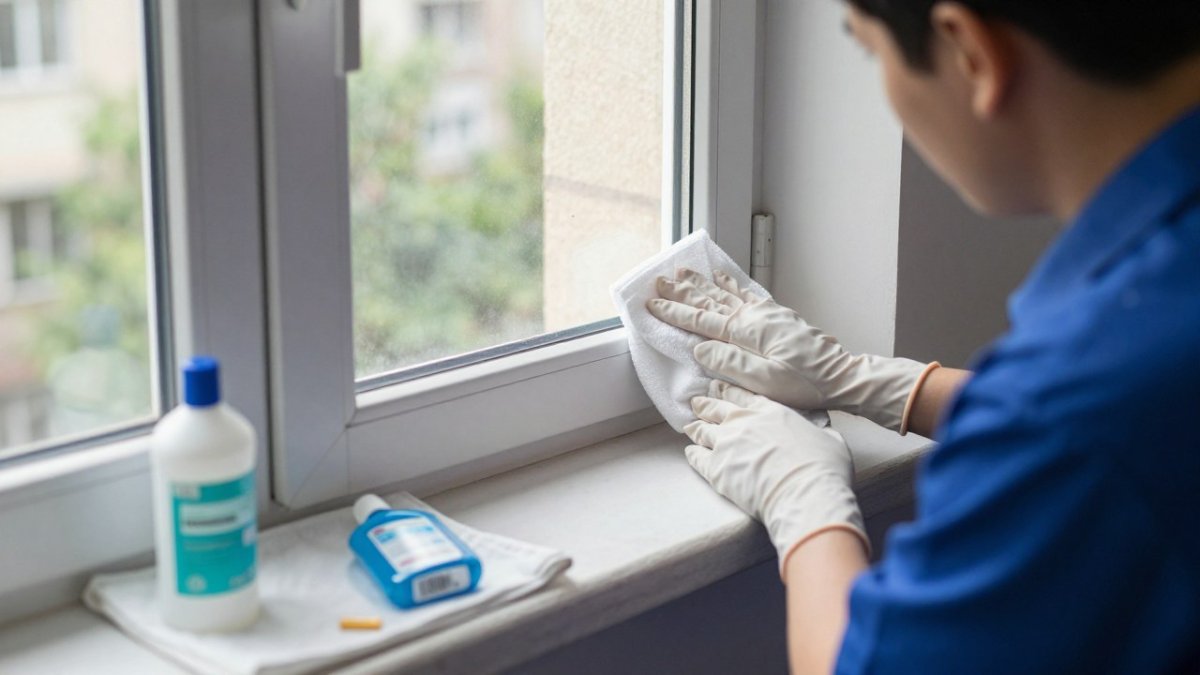
Dust can be present even when painted surfaces look clean. That is why the lab report, not a visual check, drives the certificate. Samples are submitted to a qualified laboratory for analysis.
Preparing the Unit Before the Inspector Arrives
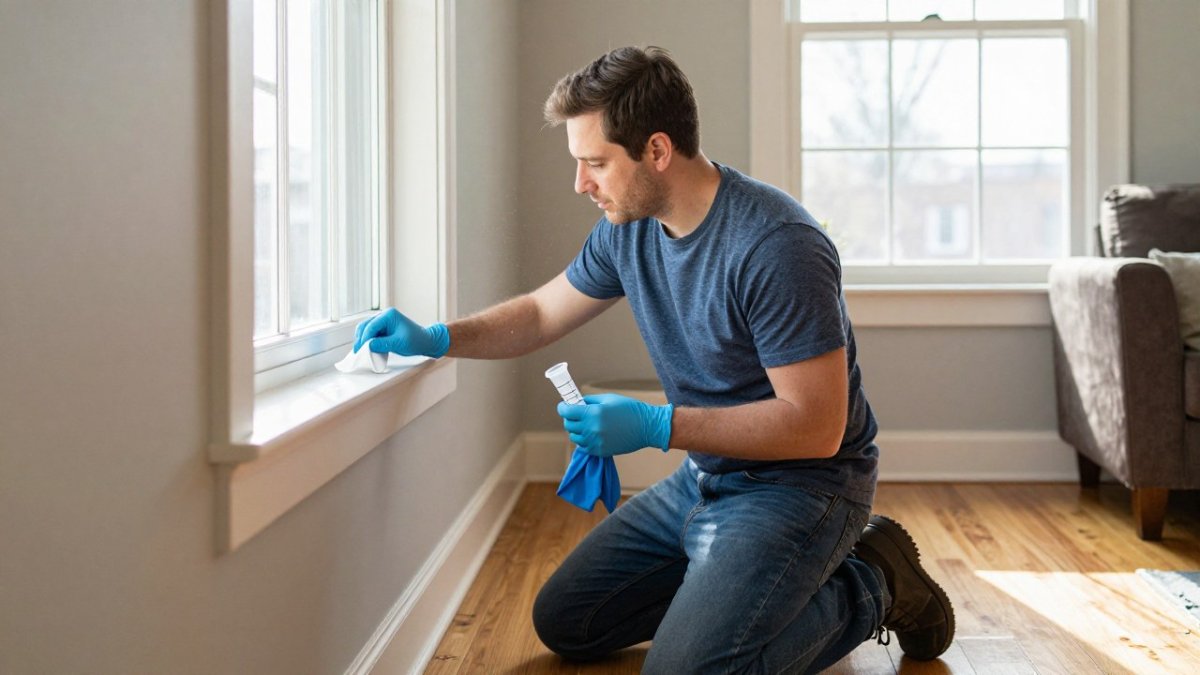
Clean first, then test. Wipe floors, sills, and troughs with lead-safe methods, and clear access to every window. A clean unit gives a truer reading of the property's condition. Our step-by-step prep guide walks through the cleaning and documentation steps.
Getting a Lead-Safe Certificate for a Rental Property
A Lead-Safe Certificate for a rental property confirms the unit met applicable lead dust safety standards at the time of testing. It is not a permanent status. It reflects one test on one day.
That distinction trips up landlords constantly. A certificate from three years ago may not satisfy a current licensing request.
Lead Safe vs. Lead Free: Different Documents
Many landlords don't realize these are two separate certifications. Lead Free status involves different inspection requirements, usually an XRF test of painted surfaces rather than dust wipes. Lead Safe confirms dust levels passed.
If you are unsure which one your property needs, our page on lead safe certification status explains validity periods and how to check where you stand.
Submitting and Retaining Records for City Compliance
Submission is where good files still fail. The fix is to treat filing as an ordered workflow with checkpoints, not a one-time email. A five-step sequence can help catch common rejections before submission.
The City-Ready Documentation Workflow
- Confirm the current requirement with the licensing department. Before you assemble anything, verify which documents the department wants for this license term and which portal or address accepts them. Requirements change between terms, and a packet built to last year's list is a common rejection.
- Assemble the unit packet. One packet per unit: the lab report, the certificate, the inspector's report, and any attachments the department names. Norristown, for example, asks landlords to send the Department of Buildings & Code Compliance a copy of the lead-free certificate together with the XRF testing under Municipal Code Chapter 200.
- Run the pre-submission check. Match every unit identifier, address, and certificate number across documents. Confirm the certificate is valid for the current license term, not a prior one.
- Submit and capture proof. Save the portal confirmation, the sent email with headers, or a dated receipt. Proof of submission is the record that saves you when a reviewer says nothing arrived.
- Log and file. Record the submission date, the recipient, and the documents sent in your master folder, then set a reminder for the certificate's expiration.
Watch out: submitting the certificate without the lab report behind it is the single most common incomplete filing, the certificate summarizes the result, but reviewers want the underlying sample data.
Record Retention, Version Control, and Audit Readiness
Retention deserves a system, not a shoebox. Save each document as a dated PDF, keep one master folder per property with a subfolder per unit, and never overwrite a file, add a version suffix instead. A simple naming convention such as address-unit-document-date lets you retrieve any record in seconds when a reviewer asks.
Audit readiness means you can answer three questions on demand: what was tested, when it was tested, and where the proof of submission lives. If any of those takes more than a few minutes to produce, the file is not audit-ready.
Documentation Differences by City
Rules vary by municipality, and the variation is usually in the details rather than the principle. Norristown asks for the certificate and XRF testing together. Other jurisdictions want different forms, different portals, or unit-by-unit registration before inspection. Always confirm the current requirement with the department that licenses your rental, and keep a note of who you spoke with and when.
Common Filing Errors and How to Fix Them
The same mistakes show up again and again:
- Submitting the certificate without the lab report. Fix: make the lab report a required attachment in your packet checklist.
- Using an expired certificate for a new license term. Fix: log the expiration date and set a reminder well before renewal.
- Sending documents to the wrong department. Fix: confirm the recipient in writing before you submit.
- Keeping no proof of submission. Fix: save the confirmation or receipt every time.
- Mismatched unit identifiers. Fix: run the pre-submission check against the address and unit number on the certificate.
Each one is fixable with a checklist and a dated folder. Enforcement is not theoretical: the EPA reports that its regional divisions had issued over 1,000 compliance orders through the end of fiscal year 2026, according to its lead law enforcement page. A clean paper trail is your best defense if a question ever reaches your desk.
Book Your $99 Lead Dust Inspection
You can assemble the paperwork yourself, or start with a clean test result and build the file from there. 99leadsafe.com provides lead dust wipe inspections for rental properties in Philadelphia and Norristown. Pricing depends on the property and inspection scope, so visit https://99leadsafe.com for current prices or a quote.
Here is what you get:
- Dust samples analyzed by a qualified laboratory
- Results in 2-7 business days
- A Lead Safe Certificate when results meet applicable requirements
- Clear guidance on filing and next steps
If a unit does not pass, ask what happens next before you commit to anything. You can book a lead-safe inspection online or by phone.
The hardest part of compliance is rarely the test. It is keeping every record straight across every unit you own. 99leadsafe.com makes that simpler with flat $99 pricing, EPA-approved lab analysis, and documentation you can hand to the city without rework.
Frequently Asked Questions
What documents should be included in a lead inspection file?
A complete file typically holds the inspection report, laboratory results for the dust-wipe samples, the lead-safe certificate when results meet applicable requirements, and proof of when and how you submitted records to the city. Keep unit-level records for each rental rather than one folder for the whole building. Local licensing departments may specify exactly which documents to send, so confirm the requirement before you submit.
How long should landlords keep lead inspection records?
Retention rules vary by jurisdiction, so confirm the current requirement with your local code office before purging anything. A practical approach is to keep the full lead inspection documentation for as long as you own the property, plus any period the city requires after that. Store the certificate, lab report, and submission confirmation together so you can produce them during a compliance check, a license renewal, or a tenant dispute without hunting through old emails.
What happens if a lead dust wipe test does not pass?
A failed result means lead dust was found at or above the applicable standard at the time of testing, so the unit needs cleaning and corrective action before it can be certified. Ask your inspector what happens next and what a retest involves, including any additional cost, before you book. At 99leadsafe.com, samples go to a qualified laboratory, and a Lead Safe Certificate is issued only when results meet applicable requirements. Budget time for cleaning floors, windowsills, and window troughs before the retest.
What is the difference between a lead paint inspection and a lead dust wipe test?
A lead paint inspection checks painted surfaces, often with an XRF analyzer, to identify lead-based paint and its condition. A lead dust wipe test collects samples from floors, windowsills, and window troughs and sends them to a laboratory for analysis. For rental compliance, the dust wipe result is usually what determines whether a lead-safe certificate can be issued. Lead dust can be present even when painted surfaces look clean, which is why the wipe test matters alongside a visual inspection.