 ultimate-guide
Lead Safe Certification Philadelphia: Know Your Status
Table of Contents
- Lead Safe vs. Lead Free: Which Status Does Your Property Hold?
- Philadelphia Rental Lead Inspection Requirements
- Lead Dust Wipe Testing for Landlords: What the Lab Actually Checks
- How to Pass a Lead-Safe Inspection
- Lead-Safe Certification Validity Period and Renewal
- What to Do When a Property Fails or Records Are Missing
- Frequently Asked Questions
Last Updated: October 9, 2026
Lead Safe vs. Lead Free: Which Status Does Your Property Hold?
Two certifications sound interchangeable to most landlords. They are not, and the gap between them decides how often you pay for testing and paperwork.
At 99leadsafe.com, we inspect rental units across the Greater Philadelphia area.
That distinction drives everything else in this guide: which test you book, what the lab checks, how long the certificate lasts, and what happens when a unit fails.
What Each Certification Proves
A lead-free certificate proves the painted surfaces tested contain no lead-based paint. It is the stronger status, and under Philadelphia's rules it does not expire.
A lead safe certification proves something narrower but still valuable: lead paint may exist, but it is not deteriorated, flaking, or chipping, and no lead dust hazards were found. The paint is intact and contained.
Here is the practical difference, side by side:
| Certification | What It Proves | Lead Paint Present? | Validity |
|---|---|---|---|
| Lead-free | No lead-based paint on tested surfaces | No | Does not expire |
| Lead-safe | No accessible lead hazards; paint intact | Possibly, if intact | Four years |
Philadelphia Rental Lead Inspection Requirements
Philadelphia requires landlords of pre-1978 rental properties to certify the unit is lead-safe or lead-free before renting it, and to renew that certification on schedule. The City of Philadelphia's lead certification FAQ confirms that lead-safe certifications completed under the current program run for four years, while lead-free certifications do not expire.
Two deadlines trip up owners more than any other. First, certification is tied to the rental license process, so a lapsed certificate can stall a license renewal. Second, the requirement applies per unit, not per building.
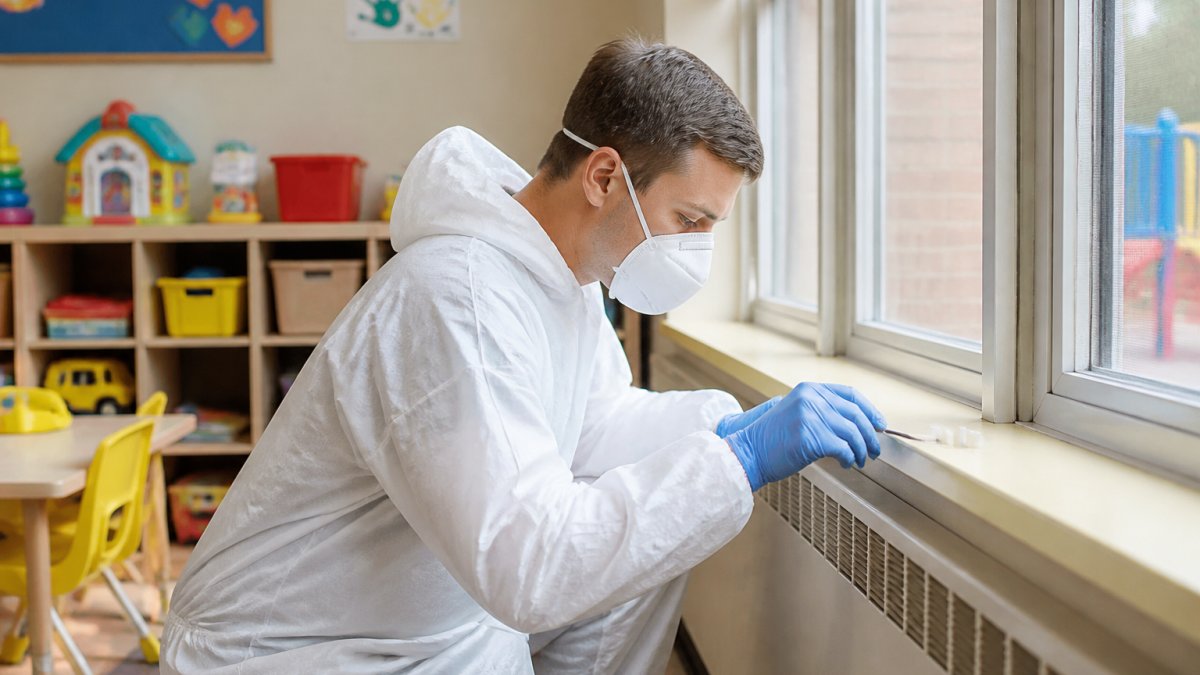
Child-care facilities face their own lead requirements under state and federal rules, separate from the rental certification. If you operate a home-based daycare in a pre-1978 building, check which standard actually applies to you before booking anything.
Lead Dust Wipe Testing for Landlords: What the Lab Actually Checks
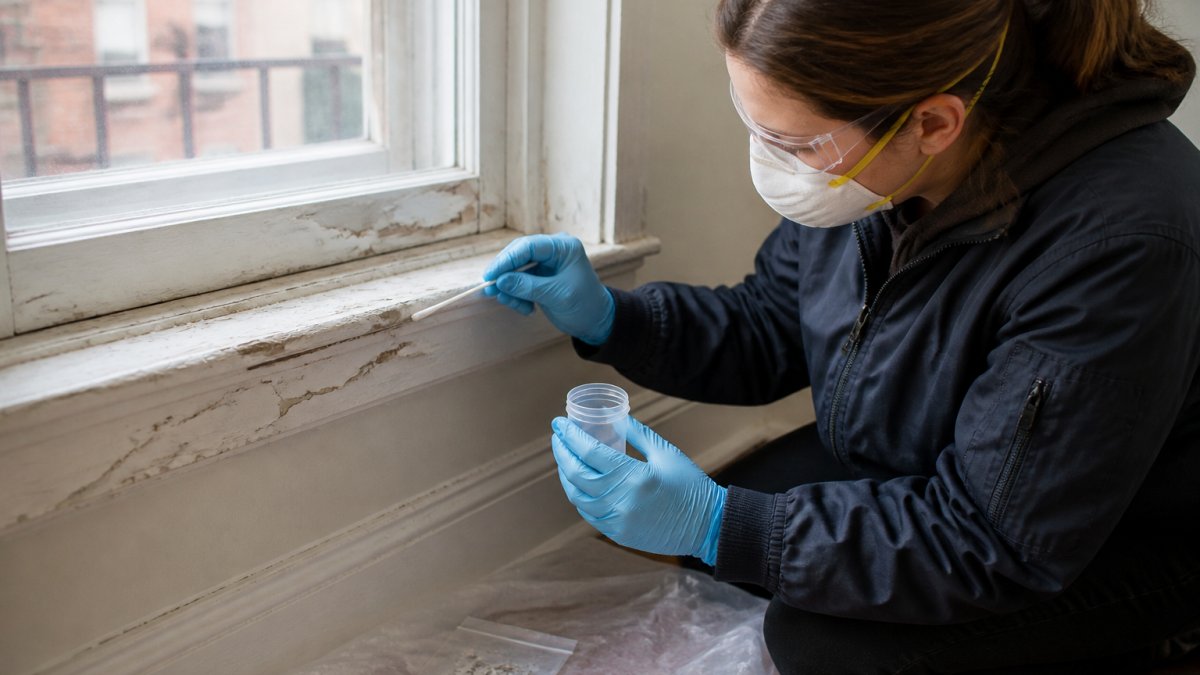
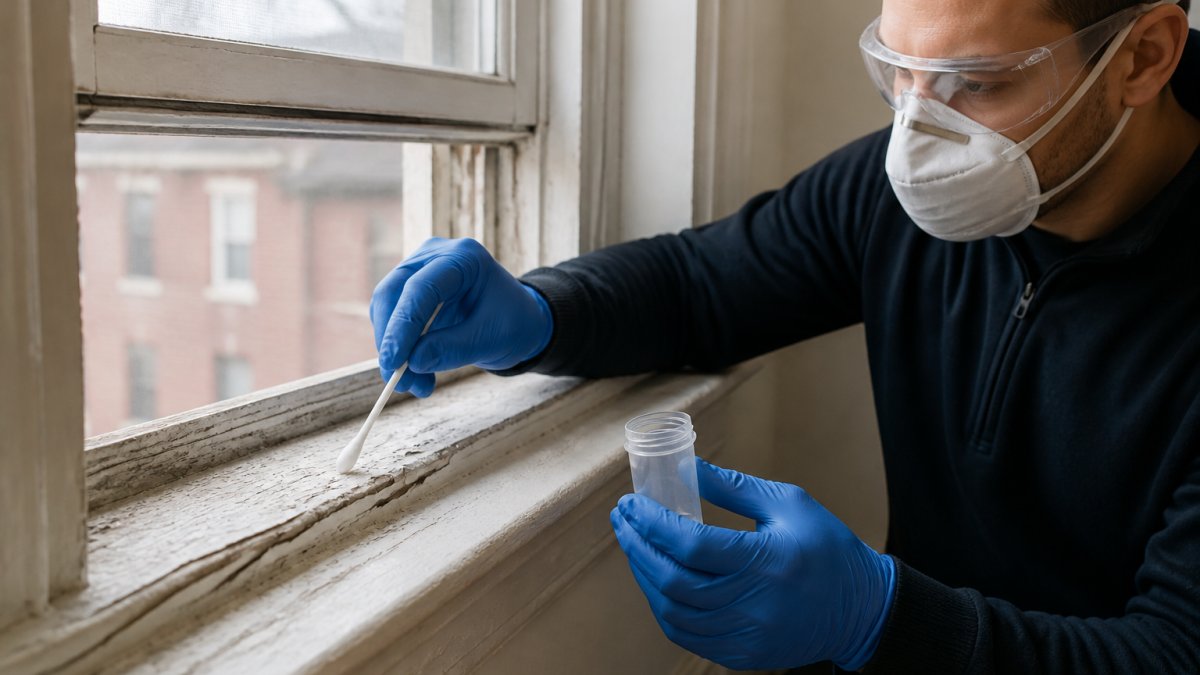
Lead dust wipe testing measures lead in dust on surfaces where tenants actually live, not lead in the paint itself.
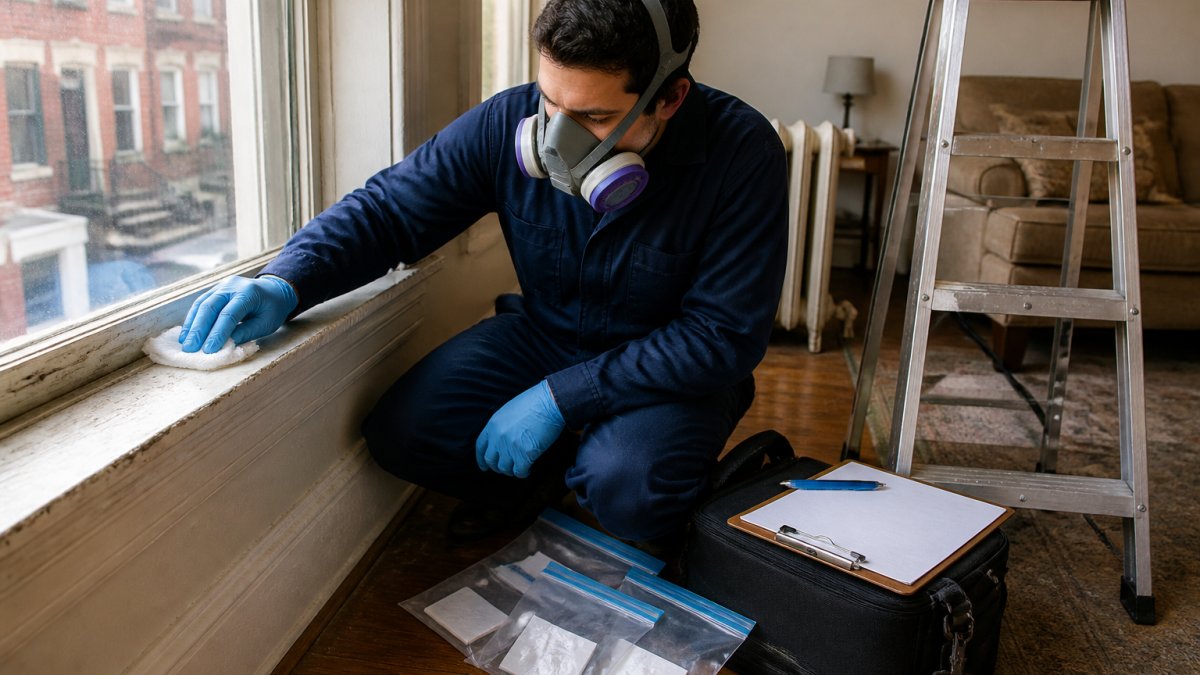
The lab reports lead loading per surface, and the numbers are compared against federal clearance thresholds. Three locations get sampled in most units:
- Floors, including the areas under windows and near doors
- Interior windowsills, a common collection point for dust
- Window troughs, the exterior channel where paint debris settles
Paint in good condition with clean surfaces passes. The same paint with a dust layer above the threshold fails, which is why a thorough cleaning before inspection matters so much.
Results from an EPA-approved lab typically come back within a few business days, and expedited turnaround is available when a lease signing is close.
How to Pass a Lead-Safe Inspection
Passing is mostly preparation, not luck. Inspectors evaluate paint condition and dust, so the work you do beforehand directly affects the result.
Work through this checklist in the weeks before your appointment:
- Walk every room and note cracked, chipping, or flaking paint on walls, trim, doors, and window frames
- Repair deteriorated paint using lead-safe work practices, with containment and wet cleanup
- Wet-wipe floors, sills, and troughs, then repeat after any repair work
Lead-Safe Certification Validity Period and Renewal
A lead-safe certificate issued under Philadelphia's program is valid for four years. Lead-free certification does not carry an expiration date. That part is simple. The harder question, and the one most landlords get wrong, is how to confirm that a certificate you are holding actually covers the unit you are renting right now.
What the certificate itself must show
Before you rely on any certificate, read it for four things:
- The property address and unit number. Certification is per unit, not per building. An eight-unit rowhouse needs eight certificates, and a certificate for Unit 3 does nothing for Unit 4.
- The certification type. Lead-safe and lead-free are not interchangeable, and the obligations that follow differ.
- The issue date and expiration date. A lead-safe certificate runs four years from issue; a lead-free certificate has no expiration.
How to verify current status
Three checks catch almost every problem:
- Match the address and unit. Confirm the certificate names the exact unit being rented, not a neighboring unit or the building as a whole.
- Check the expiration against the lease start date. A certificate that expires two months into a twelve-month lease is a problem waiting to happen. Renew before the lease starts, not after.
- Confirm the certificate is on file with the city. Philadelphia ties lead certification to the rental license process, so a certificate that was never submitted or was rejected does not protect the unit even if you have a copy in hand.
If any of those three checks fails, treat the unit as unverified and book a new inspection rather than relying on the paperwork.
Renewal triggers beyond the calendar
The four-year clock is the obvious trigger, but it is not the only one. A unit's status can change between certifications:
- Tenant turnover. Repainting, repairs, or renovation between certifications can change a unit's condition.
- Renovation or repair work. Any work that disturbs painted surfaces can create dust and invalidate the conditions the certificate was based on.
- A complaint or city inquiry. If the city questions a unit's status, the certificate is only as good as the inspection it reflects.
In each case, a fresh inspection is the cleanest way to confirm status before a new lease starts.
Keeping the file audit-ready
Renewal is not automatic, and nothing in the process reminds you when the clock runs out. Log each unit's certification date in a spreadsheet alongside its rental license renewal, and book the next inspection a few months early. Keep the certificate, the inspection report, and the lab results together for the full certification period plus a buffer. If the city questions a unit's status, that file is your answer, and a complete file is far easier to produce than a reconstruction.
What to Do When a Property Fails or Records Are Missing
A failed inspection is a to-do list, not a dead end, but the fix depends on what failed. Lead dust wipe failures and paint-condition failures follow different remediation paths, and mixing them up wastes a retest.
If the failure is a dust wipe result
Dust is the most common failure point, and it is also the cheapest to fix. The lab report lists lead loading per surface in micrograms per square foot (µg/ft²), and the inspector compares each number against the federal clearance thresholds used for the unit's surface type.
The remediation sequence that works:
- Identify every surface that exceeded its threshold from the lab report, not just the worst one.
- Repair any deteriorated paint on or near those surfaces first, using lead-safe work practices (containment, wet methods, HEPA vacuuming, wet cleanup).
- Wet-wipe floors, sills, and troughs after repairs are complete and surfaces are dry.
- Book clearance testing, a fresh dust wipe on the same surfaces, rather than assuming the cleaning worked.
Do not rely on a visual check. Dust is invisible at the concentrations that fail units, and a surface that looks clean can still read above threshold.
If the failure is a paint-condition finding
The inspector flags deteriorated paint, cracking, chipping, flaking, or chalking, on walls, trim, doors, or window components. This is a repair problem, not a cleaning problem. Address the specific components named in the report, then re-inspect. Friction surfaces (sticking doors, rubbing window sashes) deserve extra attention because they generate dust every time they are used, and a unit that passes once can fail again after a season of tenant use if the friction is not corrected.
If records are missing
Missing records are more common than outright failures. Landlords inherit properties, change managers, or lose a certificate from a prior owner. When you cannot produce documentation, the unit's status is effectively unverified, and an unverified unit is treated the same as an uncertified one for rental-license purposes.
The safest path is a new inspection, not a guess. Before booking, gather whatever you can find: prior inspection reports, lab results, repair invoices, and any certificate copies from the seller or previous manager.
Closing out the file
Once the unit passes, keep the certificate, the inspection report, and the lab results together for the full certification period plus a buffer. If the city questions a unit's status during a license renewal or a complaint investigation, that file is your answer. Landlords who manage multiple units should log each certificate's issue date and expiration alongside the rental license renewal date so a lapsed certificate never surfaces mid-lease.
Frequently Asked Questions
What is the difference between lead-safe and lead-free certification?
Lead-free means the property contains no lead-based paint at all, and that status never expires. Lead-safe means lead paint may still be present but it is intact and not deteriorated, with no lead dust hazards found. In Philadelphia, a completed lead-safe certification is valid for four years, while lead-free certification is valid indefinitely. Most pre-1978 rentals pursue lead-safe status because full paint removal is rarely practical.
How long does a lead-safe certification last in Philadelphia?
A completed lead-safe certification is valid for four years under Philadelphia's rules, beginning February 1, 2020. Lead-free certifications do not expire. Because many landlords lose track of renewal dates, keep the certificate and inspection report together and set a reminder well before the four-year mark, especially if you plan to sign new leases or renew your rental license.
What does a lead dust wipe test check for?
A dust wipe test measures lead dust on surfaces where it accumulates: windowsills, window troughs, floors, and sometimes stairs. An inspector wipes a measured area with a treated cloth, and an EPA-approved lab analyzes the sample. This matters because deteriorated or flaking paint can generate dust that tenants, especially children, may ingest. Dust wipe results are often the deciding factor in whether a property earns certification.
How can a landlord prepare a rental property for a lead-safe inspection?
Fix the obvious problems first: repair deteriorated or flaking paint, address water damage that causes peeling, and clean windowsills and floors of visible dust and debris. Confirm the inspector can access every room and unit, and gather any prior inspection reports. If you have multiple units, schedule them together so one visit covers the whole property and your documentation stays consistent.
When do landlords need lead testing for a rental property?
Testing is tied to pre-1978 housing. If your rental was built before 1978 and you need a lead-safe certificate to satisfy Philadelphia's rental license requirements, you need an inspection and dust wipe testing. Testing is also triggered at tenant turnover in some cases and whenever you cannot document the property's current lead-safe status. If records are missing, treat the property as unverified until a new inspection proves otherwise.
What happens if a rental property does not pass a lead dust inspection?
A failed dust wipe means lead hazards were found and the property is not certifiable until they are corrected. The fix usually involves cleaning, repairing deteriorated paint, and sometimes containment or remediation using lead-safe work practices, followed by clearance testing. Once clearance passes, you can schedule the certification inspection. Expect the retest to be a separate visit, so budget time before any lease signing deadline.
What is a lead certificate for a rental property?
A lead certificate is the document proving a rental property's lead status, either lead-free or lead-safe, based on an inspection by a qualified inspector. Philadelphia landlords use it to show compliance with local lead paint laws when obtaining or renewing a rental license. The certificate should match the property address and unit count, and it should be stored with the underlying inspection report in case the city requests verification.
How do I verify a lead-safe certificate is still current?
Check the issue date against the four-year validity window, then confirm the certificate names the correct property and units. Compare it to the inspection report to make sure dust wipe results and any remediation work are documented. If the certificate is expired, missing, or does not match the property, order a new inspection rather than relying on an older document that the city may not accept.
Lead compliance in Philadelphia rewards landlords who stay ahead of it and punishes those who wait for a notice. If you are unsure whether your units hold a current lead-safe certificate, 99leadsafe.com makes the answer simple: a $99 lead-safe inspection, EPA-approved lab analysis, results in two to seven business days, and professional documentation with filing instructions so your records hold up. Get started with 99leadsafe.com and know exactly where every property stands.