 how-to
Child Care Lead Certification Requirements in PA
Table of Contents
- Why Lead Safety Matters in Child Care Settings
- Understanding Child Care Lead Certification Requirements in Pennsylvania
- Lead Dust Testing Philadelphia and Your Facility
- Obtaining Your Lead Safe Certification Philadelphia
- Lead Inspection Norristown PA: Local Compliance Steps
- Documentation and Ongoing Compliance
- Common Mistakes to Avoid
- Conclusion
- Frequently Asked Questions
Last Updated: September 27, 2026
Why Lead Safety Matters in Child Care Settings
Lead exposure poses serious health risks to young children. Their developing brains absorb lead more readily than adults do, and even low levels can cause learning delays, behavioral problems, and developmental issues. Child care facilities have a responsibility to protect the children in their care from this invisible hazard.
Lead dust accumulates on surfaces, windowsills, and floors in older buildings. Children touch these surfaces, then put their hands in their mouths. This is how lead enters their bodies. The younger the child, the greater the risk.
Many child care operators don't realize they need lead testing at all. They assume lead safety applies only to rental housing. In reality, any facility caring for children in a pre-1978 building needs to address lead hazards. Pennsylvania recognizes this risk, which is why child care lead certification requirements pennsylvania exists as part of the licensing framework.
Understanding Child Care Lead Certification Requirements in Pennsylvania
Child care lead certification pennsylvania means your facility has been tested for lead dust and meets EPA safety standards. It's not optional if your building was constructed before 1978. The state requires this certification as part of your licensing process.
The certification proves your facility is safe for children. It documents that lead dust levels fall below the EPA threshold of 40 micrograms per square foot on floors and 250 micrograms per square foot on windowsills and other surfaces. Without this documentation, you cannot legally operate a licensed child care facility in Pennsylvania.
The process starts with understanding what child care lead certification pennsylvania actually requires. You need a professional inspection. The inspector collects dust samples from specific locations in your facility. These samples go to an EPA-approved laboratory for analysis. Once results come back showing compliance, you receive your Lead-Safe Certificate.
This certificate becomes part of your licensing file. It shows the state that you've met the health and safety requirements. Families who tour your facility can see this documentation. It builds trust and demonstrates your commitment to child safety.
| Requirement | What It Means | Timeline |
|---|---|---|
| Lead dust testing | Professional collection of samples from floors, windowsills, doors | Before licensing |
| Lab analysis | EPA-approved testing of dust samples | 2-7 business days |
| Results review | Confirmation that levels meet EPA standards | Upon receipt |
| Certification | Official Lead-Safe Certificate issued | After passing |
| Renewal | Testing may be required periodically | Per state guidelines |
Lead Dust Testing Philadelphia and Your Facility
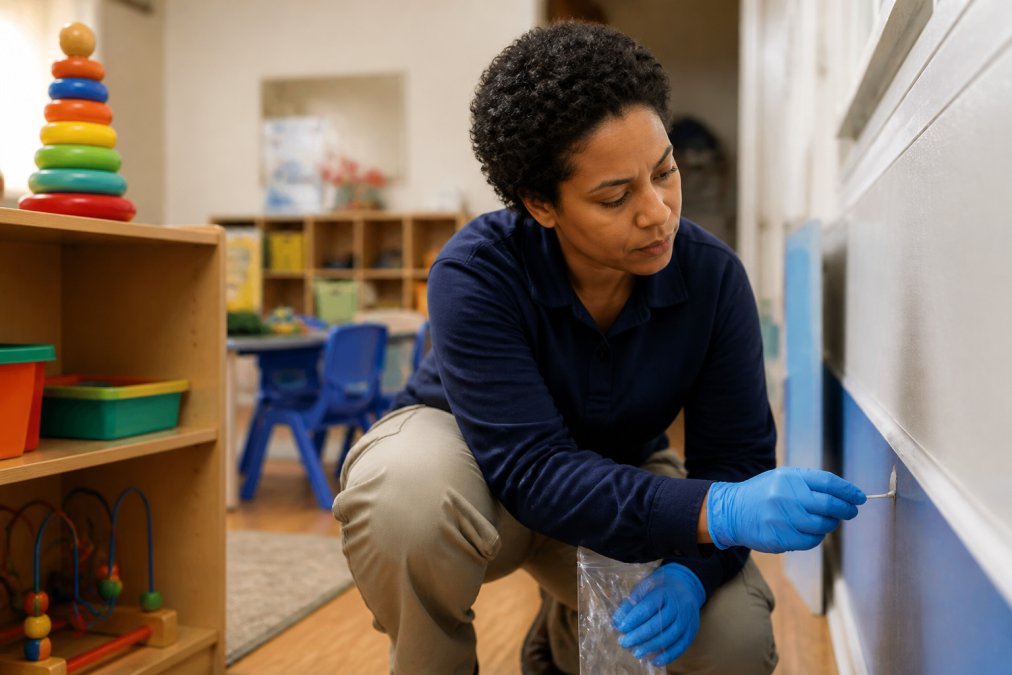
Lead dust testing philadelphia is the most direct way to determine if your child care facility has a lead problem. It's not expensive, and it's fast. Professional testers know exactly where to sample and how to collect dust properly.
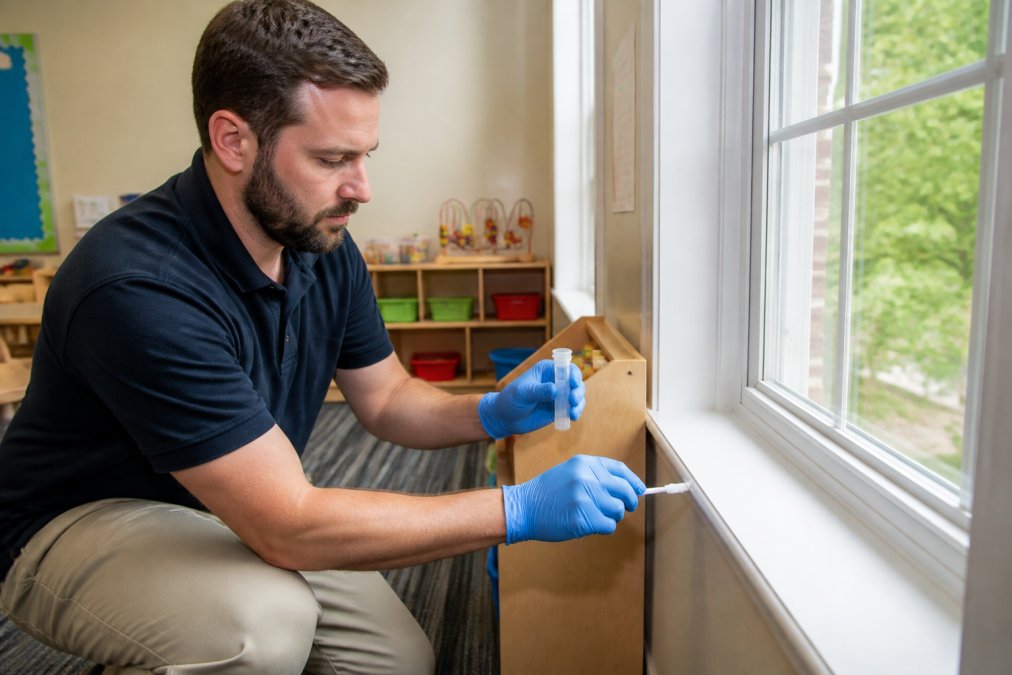
The testing process is straightforward. An inspector visits your facility and collects dust samples from:
- Interior windowsills
- Window frames
- Door frames
- Floors near windows and doors
- Any surfaces where children play or eat
Each sample gets sealed and labeled. The samples go to an EPA-approved laboratory for analysis. Results typically come back within 2-7 business days. You receive a detailed report showing dust lead levels at each location.
If levels are below EPA standards, you pass. If any area exceeds the threshold, you'll need remediation. This might mean professional cleaning, encapsulation, or replacement of affected surfaces. Once remediation is complete, you can schedule retesting.
Many child care operators worry about the cost. Lead dust testing philadelphia through providers like 99leadsafe.com is affordable and transparent. You know the price upfront. There are no hidden fees or surprise charges. The results are documented and ready to submit to the state.
The key is getting tested before you apply for licensing. Don't wait until the state asks. Proactive testing shows you're serious about safety. It also gives you time to address any issues before your licensing inspection.
Obtaining Your Lead Safe Certification Philadelphia
Getting your lead safe certification philadelphia requires following a specific process. Start by scheduling your inspection with a qualified professional. The inspector will visit your facility, collect samples, and send them for analysis.
Once your samples pass testing, you receive your Lead-Safe Certificate. This document is official proof that your facility meets EPA safety standards. Keep it in your licensing file. Make copies for your records.
The certification process typically takes 1-2 weeks from start to finish. You schedule the inspection, samples are collected, lab analysis happens, and results are returned. Then you receive your certificate. This timeline works well if you're preparing for a licensing application.
If your initial test shows elevated lead levels, don't panic. Remediation is possible. Work with professionals to clean or encapsulate affected areas. Schedule retesting after remediation is complete. Most facilities pass on the second attempt after proper cleanup.
Your lead safe certification philadelphia becomes part of your permanent licensing record. It may need renewal depending on state requirements. Check with your local licensing agency about renewal schedules. Some facilities need annual testing. Others may test less frequently once initial certification is established.
Lead Inspection Norristown PA: Local Compliance Steps
Lead inspection norristown pa follows the same process as Philadelphia, but local requirements may have specific details. Check with your local health department about any Norristown-specific regulations.
The steps are consistent across the region:
- Contact a certified lead inspector
- Schedule your facility inspection
- Inspector collects dust samples from all required locations
- Samples are sent to EPA-approved laboratory
- Lab results are returned within 2-7 business days
- You receive your Lead-Safe Certificate if results pass
- Submit documentation to your licensing agency
Lead inspection norristown pa requirements are part of the broader Pennsylvania child care lead certification requirements pennsylvania framework. Your facility must meet the same EPA safety standards whether you're in Norristown, Philadelphia, or anywhere else in the state.
Local licensing officials in Norristown can tell you exactly what documentation they need. They'll explain whether testing is required before licensing or if it can be done within a certain timeframe after licensing begins. Get this clarification in writing so you know you're compliant.
Many operators use the same professional for inspections across multiple facilities. If you manage several child care centers, you can schedule all inspections at once. This saves time and ensures consistent testing across your properties.
Documentation and Ongoing Compliance
Your lead safe certification philadelphia and all related testing documentation must be kept on file. These records prove your facility is safe. They also protect you legally if questions arise about lead safety.
Keep these documents organized:
- Original Lead-Safe Certificate
- Lab reports with dust test results
- Inspection photos or notes
- Remediation records if applicable
- Retesting results if you had elevated levels
- Correspondence with your licensing agency
Store originals in a secure location. Make digital copies as backup. Your licensing agency may request these documents at any time. Having them organized and accessible shows professionalism and compliance.
Ongoing compliance means staying aware of any changes to child care lead certification requirements pennsylvania. The state updates regulations periodically. Subscribe to your licensing agency's updates or check their website regularly.
If your facility undergoes renovation or construction, lead dust can be disturbed. You may need retesting after major work. If you replace windows, doors, or flooring in pre-1978 areas, dust levels could change. Test again to confirm safety.
Common Mistakes to Avoid
Many child care operators make preventable mistakes with lead certification. Understanding these pitfalls helps you stay compliant.
Waiting too long to get tested. Don't assume your facility is safe just because it looks clean. Lead dust is invisible. You can't see it or smell it.
Conclusion
Child care lead certification requirements pennsylvania exist to protect young children from lead hazards. Your facility must be tested, and results must meet EPA safety standards. This certification is not optional for pre-1978 buildings.
Frequently Asked Questions
What certifications do I need to operate a child care facility in Pennsylvania?
Child care operators in Pennsylvania must obtain licensing from the Department of Human Services Office of Child Development and Early Learning (OCDEL). This includes health and safety training, background clearances, pediatric CPR and First Aid certification, and completion of required continuing education units. Lead safety certification is a specific requirement for facilities in buildings constructed before 1978. The exact credentials depend on whether you operate a family child care home, group child care home, or child care center.
How does lead dust testing work for child care environments?
Lead dust testing uses wipe samples collected from surfaces in your facility. A certified professional collects samples from windowsills, floors, and other areas where children may contact dust. Samples are sent to an EPA-approved laboratory for analysis. Results show whether lead dust levels exceed EPA safety standards. For child care facilities, this testing is critical because young children are at highest risk from lead exposure through hand-to-mouth contact and ingestion of contaminated dust.
Do I need lead-safe certification if my child care facility is in a newer building?
Lead-safe certification requirements apply specifically to child care facilities in buildings constructed before 1978, when lead paint was commonly used. If your facility is in a building constructed after 1978, you may not need lead-safe certification, but you should verify this with your state regulatory agency and local health department. Even in newer buildings, it's wise to confirm there are no lead hazards. Contact your state's early childhood education licensing office or local health department for clarification on your specific situation.
What happens if my child care facility fails a lead dust test?
If your facility fails a lead dust test, you must take corrective action to reduce lead dust levels below EPA standards. This may include professional cleaning, lead paint abatement, or encapsulation of lead-painted surfaces. After remediation, you'll need to conduct follow-up testing to confirm that lead dust levels now meet safety standards. Once corrected, you can obtain your lead-safe certification. The specific remediation steps depend on the source and severity of the lead contamination in your facility.