 ultimate-guide
Pre-1978 Rental Property Lead Laws: A Landlord's Guide
Last Updated: November 4, 2026
Quick Summary
Pre 1978 rental property lead laws require landlords of most housing built before January 1, 1978 to disclose known lead hazards, deliver the EPA pamphlet, and collect a signed acknowledgment before a lease begins. Federal rules require disclosure only, while local rules like Philadelphia's tie rental licensing to lead-safe certification.
- Federal disclosure is a paperwork duty, not a testing mandate for every unit.
- Retain disclosure records for at least three years after the lease begins.
- Philadelphia requires lead-safe certification for pre-1978 units at license renewal.
- A certificate from one municipality should not be assumed to satisfy another's requirements.
- Retest failed surfaces with dust wipe sampling before the unit is re-leased.
Table of Contents
- Which Properties Fall Under Pre-1978 Lead Paint Laws
- Federal Lead-Based Paint Disclosure for Tenants
- Philadelphia Rental Lead Requirements and Local Enforcement
- Lead Dust Wipe Testing: What It Measures and When You Need It
- Getting a Lead-Safe Certificate in Philadelphia
- What to Do After a Lead Hazard Is Identified
- Book Your Lead-Safe Inspection and Protect Your Rental
- Frequently Asked Questions
Which Properties Fall Under Pre-1978 Lead Paint Laws
Pre-1978 rental property lead laws apply to most residential buildings constructed before January 1, 1978, the date the federal government banned lead-based paint in housing, and this guide covers what those rules require.
The date matters because lead was a standard paint ingredient for decades. Any unit built before the ban may still contain lead-based paint under layers of newer coatings, and that paint becomes a hazard when it chips, peels, or turns to dust.
The 1978 Cutoff and Why It Matters
The 1978 cutoff is the dividing line for the federal disclosure framework. A property built before that year is presumed to carry some risk; a property built after it generally falls outside that framework.
That presumption does not mean every older building has a hazard. It means the burden shifts: you must disclose what you know, and in many jurisdictions prove the unit is lead-safe before renting it.
Exemptions and Edge Cases Landlords Should Know
Federal disclosure rules carry narrow exemptions, and the boundaries of those exemptions depend on the facts of each property. When a property may straddle an exemption, consult the official EPA guidance and document your reasoning in writing before you sign a lease.
Federal Lead-Based Paint Disclosure for Tenants
Federal lead-based paint disclosure for tenants is a paperwork obligation, not a testing mandate. Under the federal lead disclosure framework, landlords of pre-1978 housing must disclose known lead hazards and give tenants the EPA pamphlet before a lease begins (the EPA). The EPA lead disclosure rule overview spells out the requirement in full.
The distinction trips up many owners: federal law requires disclosure of known hazards rather than an inspection of every unit. Testing becomes decisive when renovation triggers the EPA Renovation, Repair and Painting Rule, which governs paid work that disturbs paint in pre-1978 housing.
Here is the disclosure workflow we walk landlords through:
- Disclose any known lead-based paint or lead hazard in the unit
- Provide the EPA pamphlet "Protect Your Family From Lead in Your Home"
- Include the lead warning statement in the lease
- Collect the tenant's signed acknowledgment
- Retain disclosure records for at least three years
Our guide to handling lead paint disclosure for tenants walks through each step. Skipping the acknowledgment is the most common failure we see, and it is the easiest to fix.
Philadelphia Rental Lead Requirements and Local Enforcement
Philadelphia rental lead requirements go further than federal disclosure. The city ties rental licensing to lead-safe certification for pre-1978 units, which means a landlord here must do more than hand over a pamphlet.
The practical consequence: in Philadelphia, "I disclosed it" is not the same as "I complied." Federal Title X disclosure and local lead-safe certification are two separate obligations that run on two separate clocks. A landlord can satisfy the EPA pamphlet and acknowledgment requirement and still fail a city license review because no lead-safe certificate is on file.
How the Local Requirement Differs From Federal Disclosure
The cleanest way to keep the two straight is to separate what each rule actually demands:
| Obligation | Federal (Title X, Section 1018) | Philadelphia rental licensing |
|---|---|---|
| Trigger | Lease or renewal of pre-1978 housing | Rental license issuance or renewal for pre-1978 units |
| Core duty | Disclose known hazards, deliver EPA pamphlet, collect signed acknowledgment | Demonstrate the unit is lead-safe through testing and certification |
| Testing required? | No, disclosure of known hazards only | Yes, dust wipe results and certificate documentation |
| Record retention | At least three years | Certificate and lab documentation retained for license file |
| Who enforces | EPA | City rental licensing authority |
The distinction between federal disclosure and local certification is one that is easy to blur. Federal disclosure requires handing over a pamphlet; the local requirement continues until a certified inspector has tested the unit and the certificate is filed.
What the Certificate Actually Documents
A Lead-Safe Certificate in Philadelphia is documentation that a pre-1978 unit has been tested for lead hazards. Because the certificate is tied to a specific unit and a specific test date, a landlord with multiple pre-1978 units should confirm the certification requirement for each one.
Norristown and Other Municipal Processes
Owners in Norristown should confirm the current local requirement with the municipality before renewing, since local processes vary.
Watch out: a certificate from one municipality should not be assumed to satisfy another's requirements.
For the full statutory picture, see our Philadelphia rental property lead laws guide. If you are unsure which local process applies to a specific address, contact our team before the renewal deadline rather than after.
Lead Dust Wipe Testing: What It Measures and When You Need It
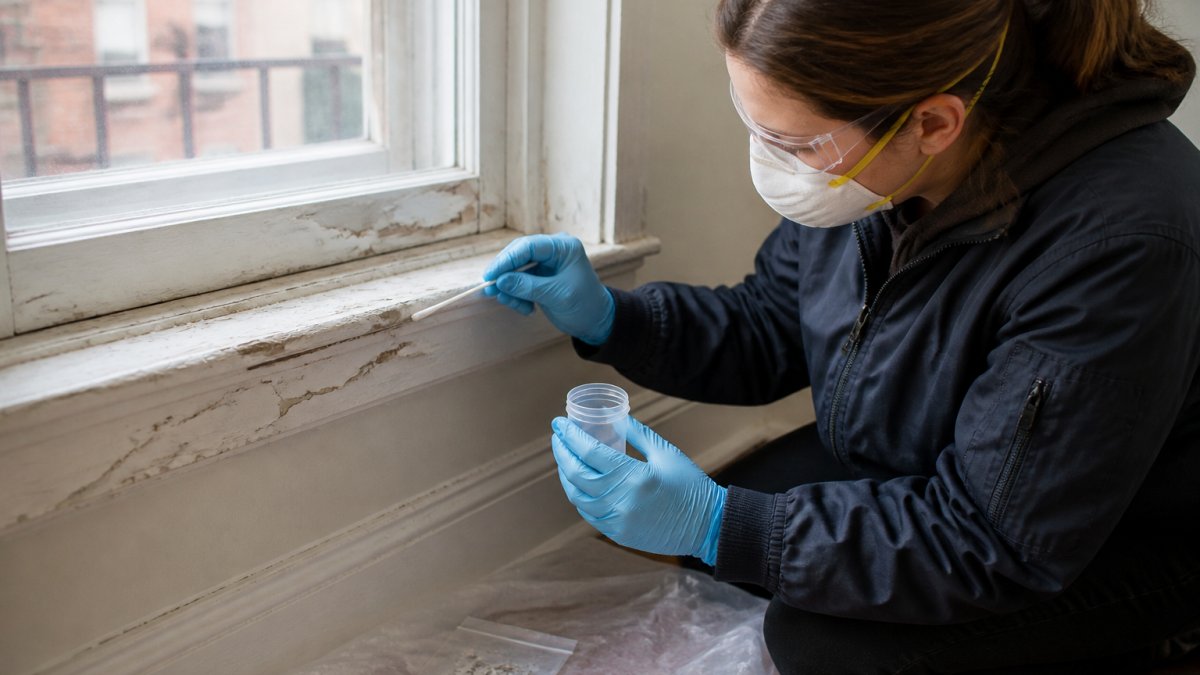
Lead dust wipe testing measures lead residue on surfaces where children crawl and play: windowsills, floors, and window wells. A technician wipes a measured area, and an EPA-approved lab reports the lead loading per surface.
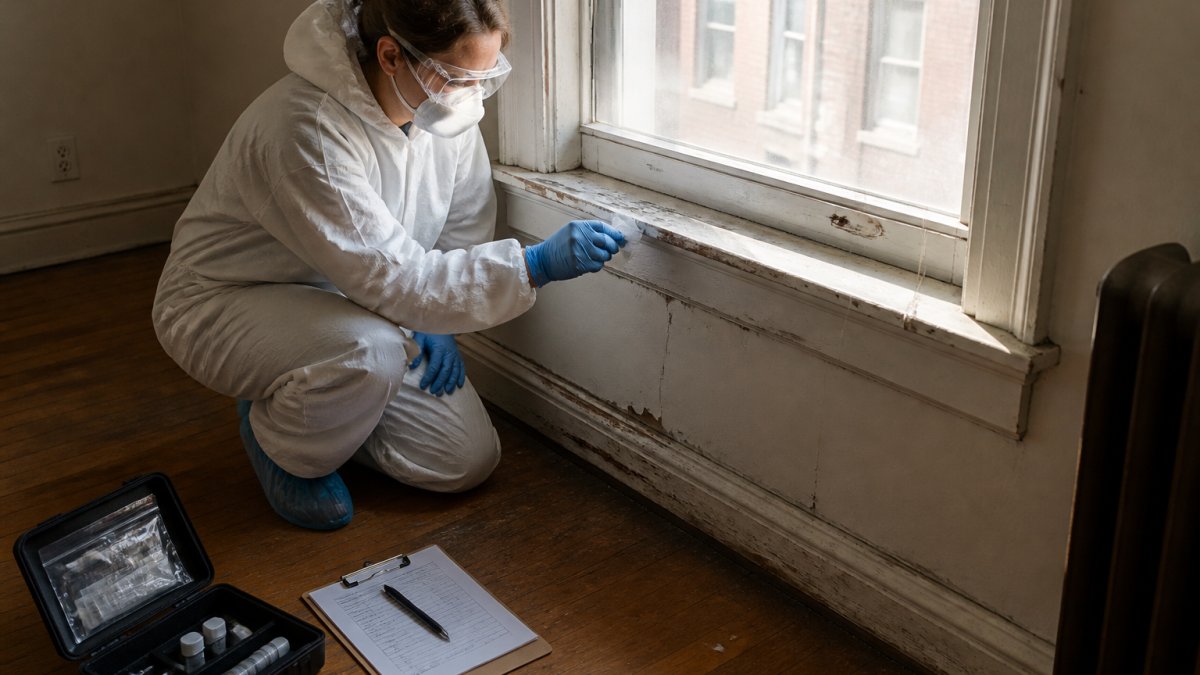
You need dust wipe testing when a child under six lives in or visits a pre-1978 unit, after any renovation that disturbs paint, and when a local certificate depends on lab results. Our lead dust wipe test guide explains sampling in detail.
| Situation | Test Needed | Why |
|---|---|---|
| Pre-1978 unit, new tenant with young child | Dust wipe test | Proves surfaces are clean |
| Renovation disturbed paint | Dust wipe test after cleanup | Confirms work area is safe |
| Deteriorating paint observed | Risk assessment | Identifies the hazard source |
| Post-1978 construction | Usually none | Outside federal framework |
Getting a Lead-Safe Certificate in Philadelphia
A Lead-Safe Certificate in Philadelphia is issued after a certified inspector tests the unit and finds no lead hazards above the applicable standard. The certificate documents that a pre-1978 rental is safe to lease, and it is what local enforcement looks for at license renewal.
The process runs in a predictable order:
- Schedule an inspection with a certified firm
- Have dust wipe samples collected and sent to an EPA-approved lab
- Receive results, typically within days
- Address any failing surfaces and retest
- File the certificate with your rental license
99leadsafe.com offers lead-safe inspection services, and current pricing is available on our website. Expedited service is available when a lease signing is close. Our guide to getting Lead-Safe Certification covers the filing steps.
What to Do After a Lead Hazard Is Identified
A failed test is not a crisis; it is a to-do list. Disclosure obligations are only part of the picture. When a dust wipe comes back above the standard, a landlord needs a sequence of steps, not only a legal summary. Here is a workflow for responding to a failed result, in order.
Step 1: Pause Leasing and Document the Result
Stop leasing the unit until the hazard is corrected. Pull the lab report and note the specific surfaces that failed, windowsill, floor, window well, because the remediation scope follows the failed surface, not the whole unit. Keep the original lab report; it establishes the baseline that the retest will be measured against.
Step 2: Notify the Tenant in Writing
Notify the tenant in writing of the identified hazard and the planned response. A written notice with a date protects both sides: it shows the tenant was informed promptly, and it starts the clock on your response timeline. Verbal notice alone is hard to prove later if an inspector or tenant questions the timeline.
Step 3: Choose Interim Controls or Abatement
The response depends on what failed and how badly:
- Interim controls, stabilizing deteriorating paint, sealing or enclosing surfaces, cleaning with lead-safe methods, and controlling dust. These are appropriate when the hazard is localized and the paint is intact enough to stabilize.
- Abatement, permanently eliminating the hazard through removal, enclosure, or replacement of the lead-painted component. This is a larger scope and typically requires a certified abatement contractor.
Localized dust failures on windowsills and floors are often addressed with interim controls plus a thorough lead-safe cleaning, while deteriorated paint on multiple components may call for abatement. The failed surface tells you which path applies.
Step 4: Use Lead-Safe Work Practices, Not Dry Sanding
Watch out: dry scraping or power sanding a painted surface spreads lead dust through the unit and can create a bigger violation than the one you started with. Deteriorating paint should be stabilized, not sanded dry. Use lead-safe work practices, wet methods, plastic containment, HEPA cleanup, and hire a certified firm for the repair work rather than a general handyman.
Step 5: Retest Before Re-Occupancy
Retest the failed surfaces with dust wipe sampling before the unit is re-leased or re-occupied. The retest is what converts a corrected hazard into a documented clean result, and it is the evidence a licensing reviewer or tenant will ask for. Do not rely on a visual inspection alone; lead dust is invisible when it is at hazardous levels.
Step 6: Keep Every Record
Keep every invoice, contractor certification, lab report, and retest result. They are your defense if a tenant or inspector questions the timeline, and they form the paper trail that supports the certificate filing. A clean retest with no documentation is weaker than a clean retest with a complete file.
What This Means for Your Certificate
If the failed unit was headed toward a Lead-Safe Certificate, the remediation and retest are what get you there. Our guide to getting Lead-Safe Certification covers the filing steps, and our lead dust wipe test guide explains dust wipe sampling. If a hazard has already been identified and you need a retest scheduled quickly, contact our team to book the inspection.
Book Your Lead-Safe Inspection and Protect Your Rental
Documenting early tends to make the process smoother than waiting for a renewal deadline. The rules are layered, federal disclosure on one side and local certification on the other, but the path through them is short when you start with a clean test result.
99leadsafe.com provides lab analysis, professional documentation with filing instructions, and expedited service for landlords across Greater Philadelphia. If you are unsure where your property stands, contact our team to schedule your inspection.
Frequently Asked Questions
Do all homes built before 1978 have lead paint?
No. The 1978 ban on lead-based paint in residential housing means homes built before that year may contain it, but not every pre-1978 property does. Paint was used less in the 1970s, and some homes have been renovated or repainted. The only way to know is a lead inspection or lead dust wipe test. Federal law requires disclosure of known hazards, not automatic testing, so landlords should verify conditions rather than assume.
Do landlords need to disclose lead-based paint to tenants?
Yes, for most pre-1978 rental properties. Federal disclosure rules under Title X require landlords to disclose known lead-based paint and lead hazards, provide the EPA pamphlet Protect Your Family From Lead in Your Home, include a lead warning statement in the lease, and obtain tenant acknowledgment. Keep these disclosure records for at least three years.
When is a Lead-Safe Certificate required for a Philadelphia rental property?
A Lead-Safe Certificate is documentation that a pre-1978 rental unit has been tested for lead hazards. Confirm current Philadelphia requirements with the city and schedule testing before lease signings to avoid delays.
How can a landlord prepare for a lead dust wipe test?
Clean the unit thoroughly before testing, but avoid dry sweeping or sanding painted surfaces, which spreads lead dust. Repair deteriorating paint and address water damage. Remove debris and wipe windowsills and floors with a damp cloth. Do not repaint or renovate right before testing without guidance, since improper work can create new hazards. A pre-inspection walkthrough with your inspector helps identify problem areas early.
How long does lead dust testing take?
Expedited service is available when a lease signing is close. Build in time for any repairs if the first test fails.
What happens if my rental property fails the lead dust test?
A failed test means lead dust levels exceed the applicable standard. You will need to address the source, often deteriorating paint or contaminated dust, using lead-safe work practices, then retest to confirm clearance. Work with your inspector on a remediation plan and budget for retesting. Keep all documentation, since the Lead-Safe Certificate depends on passing results and tenants may need notification.
The deadline that catches most landlords is the one attached to a license renewal, not a lease. Get ahead of it with a $99 lead-safe inspection from 99leadsafe.com and lease your pre-1978 unit with documentation in hand.