 how-to
What Is a Lead Dust Wipe Test? Landlord Guide
Table of Contents
- What a Lead Dust Wipe Test Measures and Why Landlords Need One
- Where Lead Dust Collects in Pre-1978 Rental Properties
- How to Take a Lead Wipe Sample: Step-by-Step
- Understanding Lead Dust Wipe Test Results
- Lead Dust Clearance Testing After Renovation or Repair
- Common Sampling Errors That Invalidate Your Test
- When to Hire a Certified Lead Professional Instead
- Frequently Asked Questions
Last Updated: October 13, 2026
What a Lead Dust Wipe Test Measures and Why Landlords Need One
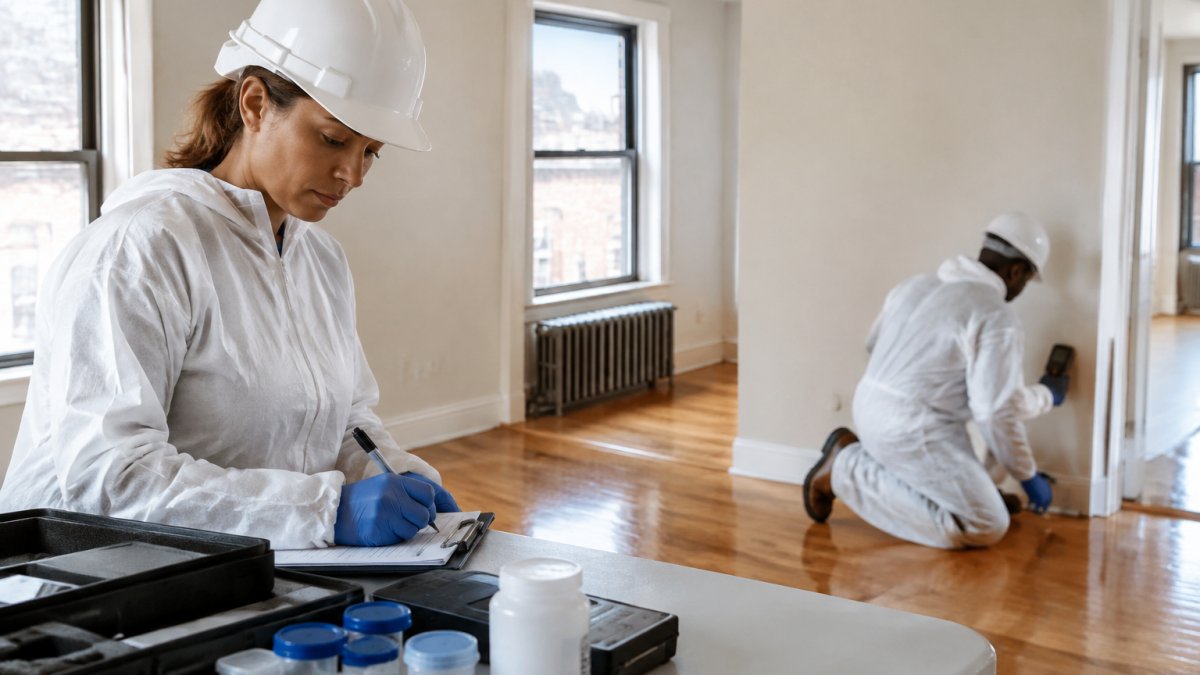
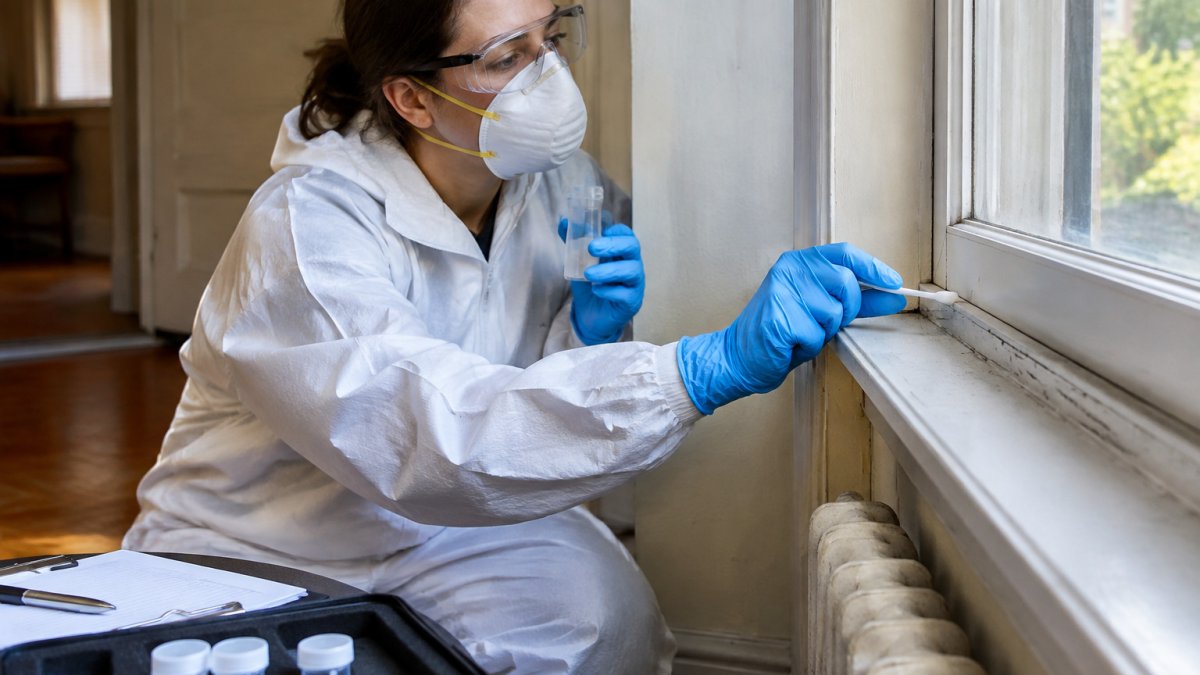
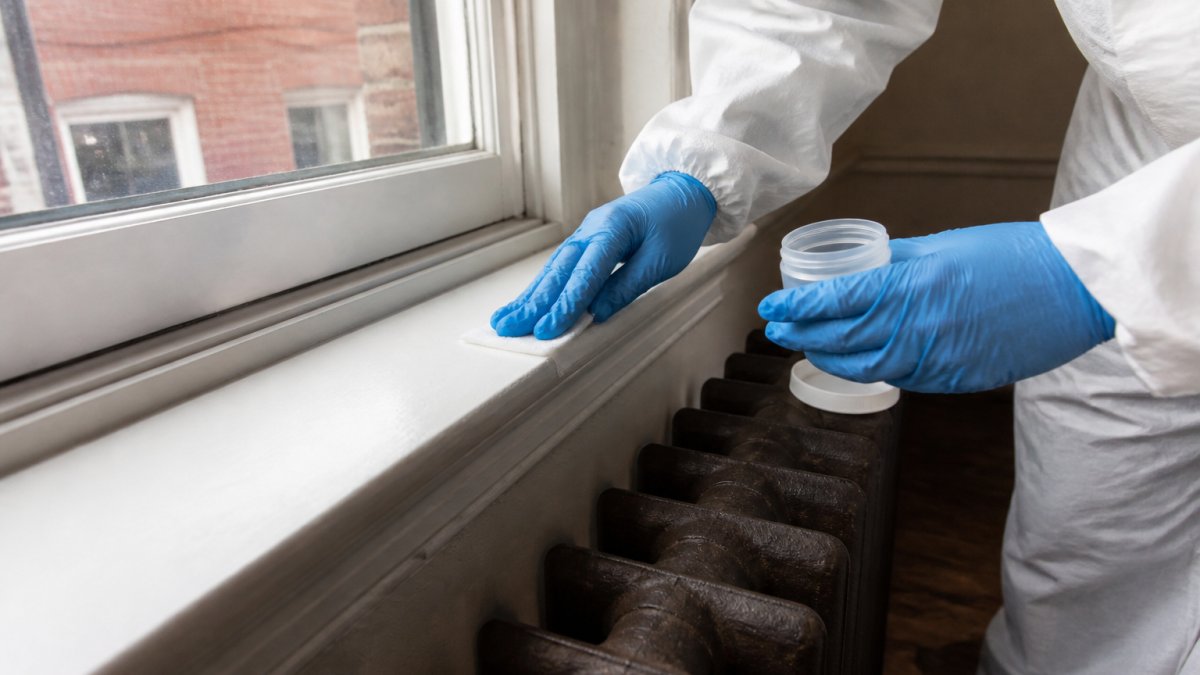
A lead dust wipe test is a lab-analyzed surface sample that measures how much lead dust sits on a floor, windowsill, or other surface in a rental unit. You wipe a measured area with a special cloth, seal it in a tube, and send it to a lab. This guide from 99leadsafe.com explains the whole process, from picking the right spot to reading your results.
Why does this matter for landlords? Lead dust, not paint chips, is the most common way tenants and their children get exposed. Tiny particles settle on floors and windowsills where kids crawl and play. You cannot see lead dust, and you cannot smell it.
The federal rule that drives most of this work is the EPA's Renovation, Repair and Painting Rule, which covers pre-1978 housing (the EPA). You can read the details at EPA Renovation, Repair and Painting Program. Philadelphia adds its own rental license requirements on top, which is why local landlords need paperwork, not just a clean unit.
Below, we walk through exactly how to take a lead wipe sample, what the results mean, and when to call a certified pro instead.
Where Lead Dust Collects in Pre-1978 Rental Properties
Lead dust builds up in the spots that get the most friction and the least cleaning. Window areas top the list. Sashes rub against frames every time a tenant opens a window, grinding old paint into fine particles.
The highest-risk spots in most older units:
- Window sills and window troughs
- Floors near doors and windows
- Stair treads and handrails
- Porches and entryways
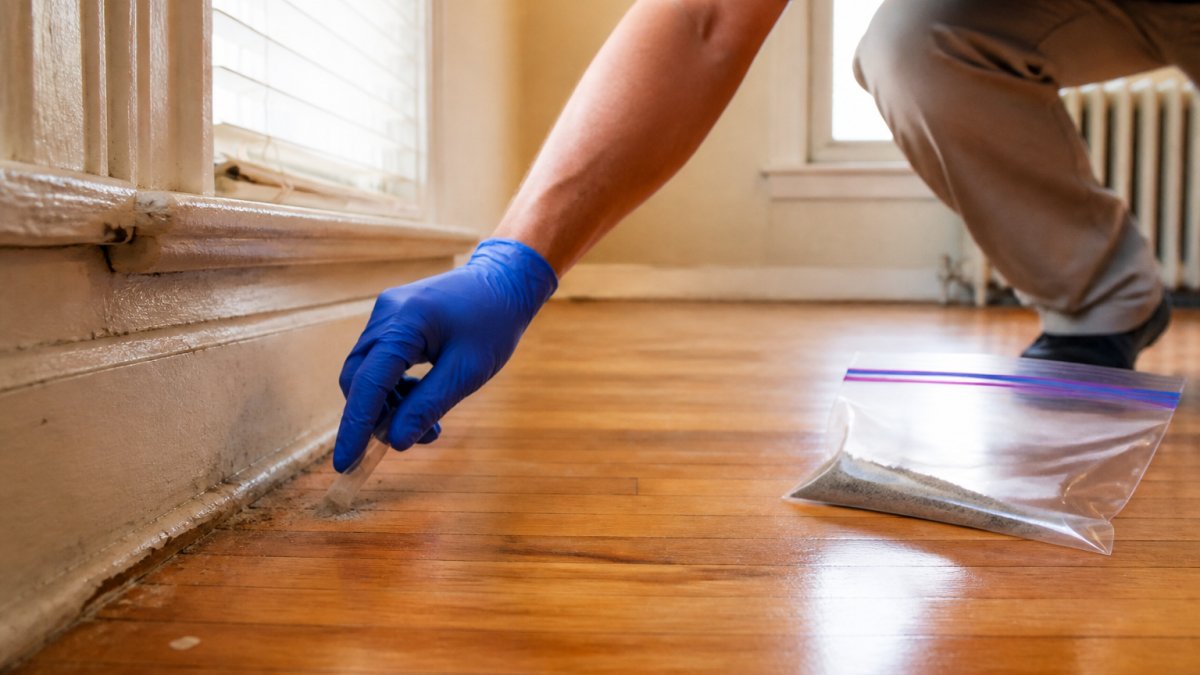
- Baseboards and radiators
Carpeted floors hold dust deep in the fibers, which makes them hard to sample well. Bare floors and sills are the standard sample areas because dust sits on top where a wipe can lift it.
One detail most guides skip: lead dust does not stay put. Foot traffic, drafts, and routine cleaning move it from room to room. A unit can test clean in the kitchen and fail in a back bedroom.
How to Take a Lead Wipe Sample: Step-by-Step
Taking a proper lead wipe sample comes down to three things: the right supplies, a measured area, and clean handling. Skip any of them and your lab results may not hold up.
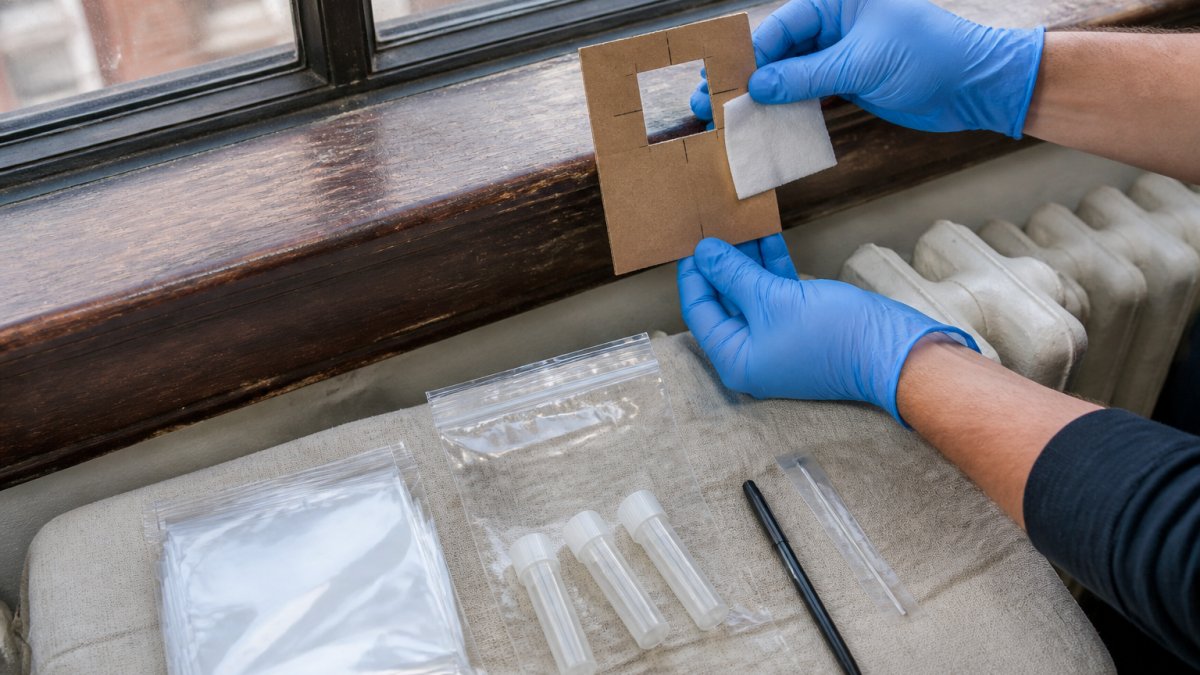
What Comes in a Sampling Kit
A standard dust wipe sampling kit includes:
- Pre-moistened sampling wipes
- A measured template or a tape measure
- Resealable plastic bags
- Clean gloves
- Sample tubes or containers with labels
- Chain-of-custody forms
- Shipping materials
Buy kits from a lab that analyzes them. Mixing brands can void your results.
Marking the One-Square-Foot Sample Area
Most wipe sampling procedures use a one-square-foot area for floors. Window sills and troughs use their full width. Mark the area with tape or a template so you wipe exactly the right space.
Wipe slowly, side to side, then top to bottom. Fold the wipe as you go so you use a clean face on each pass.
Packaging and Submitting Samples to the Lab
Place each wipe in its own container. Seal it, label it with the room and surface, and bag it. Fill out the chain-of-custody form completely.
Ship samples within a day or two. Heat and time can degrade a sample. A lab report that arrives three weeks late does not help when your rental license renewal is next week.
Understanding Lead Dust Wipe Test Results
Lead dust wipe test results come back as a number, measured in micrograms per square foot (µg/ft²). The lab compares that number to the clearance standards set by the EPA for the surfaces tested. You can find the current thresholds in the EPA lead clearance guidance.
Most guides skip the part that actually matters: the standard is not the same for every surface. Floors, window sills, and window troughs each have their own threshold, and a result that passes on a floor can fail on a sill. That is why the lab needs to know exactly which surface you sampled.
Reading the Number
A wipe result is a concentration, not a total. The lab takes the total lead it measured on your wipe and divides it by the area you wiped. That is why the one-square-foot measurement matters so much. If you wiped a smaller area, the lab cannot normalize the result, and the number is meaningless against the standard.
Matching the Result to the Surface
When you open a report, check three things in order:
- The surface type listed for each sample (floor, sill, or trough).
- The result in µg/ft².
- The applicable threshold for that surface type.
A sample only passes if its result is below the threshold for its own surface type. Do not compare a sill result to a floor threshold.
Screening Results vs. Regulatory Clearance
This is the distinction competitors miss. A wipe test you run yourself is a screening tool. It tells you whether lead dust is present and roughly how much. It does not, by itself, produce the documentation a city inspector accepts for a rental license.
Regulatory clearance is a formal process. It follows a set sampling pattern, uses a certified inspector, and produces a report formatted for compliance filing. If you need a Lead-Safe Certificate for a Philadelphia rental license or a Norristown property, a self-administered screening kit will not satisfy the requirement, even if every surface tests clean.
What a Passing Result Does and Does Not Mean
A passing result is not a permanent guarantee. Dust levels change with cleaning, repairs, and tenant turnover. A unit that passes today can fail after a renovation, a repair, or a change in how the space is used.
A wipe test also does not identify the source of the lead. It tells you lead dust is present on a surface, not whether it came from a window sash, a painted door, or tracked-in soil. If you need to know the source, that requires a separate paint or soil assessment.
When a Result Is Inconclusive
A result can come back inconclusive if the sample was damaged, the area was too small, or the chain-of-custody paperwork was incomplete. In that case, you retake the sample. There is no way to salvage an inconclusive result, and no lab will certify one.
Lead Dust Clearance Testing After Renovation or Repair
Lead dust clearance testing is the final check after any repair that disturbs painted surfaces in a pre-1978 unit. You cannot skip it. Federal rules require clearance before the space goes back to tenants.
Clearance testing follows a set pattern. A certified inspector samples floors, sills, and troughs in each work area. The unit passes only when every surface tests below the standard.
If a surface fails, the crew cleans again and the inspector retests. This cycle repeats until the unit clears. Budget time for it in your renovation schedule.
Common Sampling Errors That Invalidate Your Test
Most failed or rejected samples trace back to a handful of errors. None of them are exotic. All of them are avoidable.
The big ones:
- Wiping too small an area
- Using the same wipe on two surfaces
- Touching the wipe with bare hands
- Skipping the chain-of-custody form
- Letting samples sit before shipping
- Sampling a surface right after it was cleaned
That last one catches people. A freshly wiped sill may test clean even when lead dust is present a day later.
When to Hire a Certified Lead Professional Instead
Hire a certified lead professional when you need documentation that a city inspector will accept. For Philadelphia rental licenses and Norristown properties, the paperwork matters as much as the result.
A certified pro brings:
- EPA-approved lab analysis
- Proper chain-of-custody records
- A report formatted for compliance filing
- Faster turnaround when you have a deadline
At 99leadsafe.com, we handle lead-safe inspections for rentals and child-care facilities across the Greater Philadelphia area. Our $99 lead-safe inspection includes lab analysis with results in 2 to 7 business days, and expedited service is available when a lease signing is close. We give you the certificate and the filing instructions so you know exactly what to send and where.
If you manage several units, we can schedule them together rather than one at a time. One customer put it simply: the team "went above and beyond to meet our needs and exceeded our expectations."
Frequently Asked Questions
How is a lead dust wipe test different from a lead paint inspection?
A lead paint inspection checks the paint itself, often with an XRF gun or lab-tested paint chips, to find where lead-based paint exists. A lead dust wipe test measures settled dust on floors, window sills, and window troughs. You can have intact lead paint and still fail a dust test, or have no lead paint and pass. For rental compliance, dust results are usually what the city asks for.
What surfaces are tested during a lead dust wipe inspection?
Certified inspectors and landlords typically sample uncarpeted floors, window sills, and window troughs, since these are the flat surfaces where settled dust collects and where children are most likely to be exposed. Carpeted floors are usually not wipe-sampled because dust traps in the fibers; a vacuum method is used instead. The specific surfaces required depend on the standard your test is following.
What happens if a lead dust wipe test finds lead?
A result above the applicable limit means the unit is not lead-safe yet. The next step is a thorough dust cleanup using wet methods and HEPA vacuuming, followed by a clearance test to confirm the surfaces now pass. Fixing peeling paint or friction points that keep generating dust matters too. Retesting after cleanup is standard, and landlords should keep both sets of results on file.
Can a lead dust wipe test confirm that a rental property is lead-safe?
A passing dust wipe test shows that sampled surfaces are below the applicable lead dust limit at the time of testing, which is what a Lead-Safe Certificate is based on. It does not certify that no lead paint exists anywhere in the building, and it does not cover surfaces you did not sample. For Philadelphia rental license requirements, that passing result is usually the documentation the city wants.
Lead dust does not wait for a convenient week. Every month a pre-1978 unit goes untested is a month of exposure risk and a potential compliance problem at renewal. 99leadsafe.com makes the fix simple: a $99 lead-safe inspection, EPA-approved lab analysis, results in 2 to 7 business days, and clear documentation for your filing. Get started with 99leadsafe.com and get your Lead-Safe Certificate in hand before your next deadline.