 how-to
How to Get Lead Safe Certification in Philadelphia
Table of Contents
- What Philadelphia Lead Safe Certification Actually Requires
- Philadelphia Rental License Lead Requirements
- Step 1: Confirm Which Properties Need Certification
- Step 2: Book a Certified Lead Inspector or Risk Assessor
- The Lead Dust Wipe Testing Process, Start to Finish
- How to Pass a Lead-Safe Inspection the First Time
- If Your Property Fails: Remediation and Re-Testing
- Submitting Your Certificate and Staying Compliant
- Frequently Asked Questions
Last Updated: October 4, 2026
What Philadelphia Lead Safe Certification Actually Requires
A lead safe certificate is an official document showing that a rental property has been tested for lead dust and meets the city's safety standard. In Philadelphia, most landlords of pre-1978 rentals need one to get or renew a rental license (Rental Property Lead Certification Law | Department of Public Health).
At 99leadsafe.com, we handle lead hazard inspection services, and the same confusion comes up again and again: landlords think a visual check is enough.
Below, we break down exactly how to get lead safe certification in Philadelphia, from confirming your property needs it to filing the paperwork.
One thing most guides get wrong: certification isn't a one-time task. Certificates carry an expiration date, and the clock restarts the moment you pass.
Philadelphia Rental License Lead Requirements
The city ties lead safety directly to your rental license.
The rules apply to most rental units built before 1978, when lead paint was still common.
Here's what the city expects:
- A certified lead inspector or risk assessor performs the test
- Dust wipe samples go to an EPA-approved lab (the EPA)
- You submit a passing certificate with your license application
The EPA's lead renovation and repair rules set the federal baseline, but Philadelphia adds its own layer on top.
Miss the requirement and the city can refuse your license, meaning you can't legally collect rent.
Step 1: Confirm Which Properties Need Certification
Not every property needs a lead safe certificate. The requirement hinges on build year and use.
If your rental was built before 1978, assume it needs certification until you confirm otherwise. Properties built in 1978 or later are generally exempt.
Rentals, Child-Care Facilities, and Owner-Occupied Exceptions
Child-care facilities face separate lead safety rules from the rental license system; if you operate a daycare in an older building, check with the city.
Owner-occupied homes without renters usually fall outside the rental license requirement. But if you rent even one unit, that unit is likely covered.
A quick way to sort your portfolio:
- Pre-1978 rental units: almost always need certification
- Post-1978 rentals: generally exempt
- Child-care facilities: separate lead safety rules apply
When in doubt, test, a failed surprise at renewal costs far more than an inspection.
Step 2: Book a Certified Lead Inspector or Risk Assessor
Only a certified professional can produce a certificate the city accepts. You cannot self-test and file the results.
When you book, ask two questions: Are you certified? A certified lead inspector collects the dust wipes and sends them to an EPA-approved lab.
At 99leadsafe.com, we handle the full chain for landlords: sampling, lab analysis, and the documentation you file with the city.
One insider note: scheduling is the bottleneck, not the test itself.
The Lead Dust Wipe Testing Process, Start to Finish
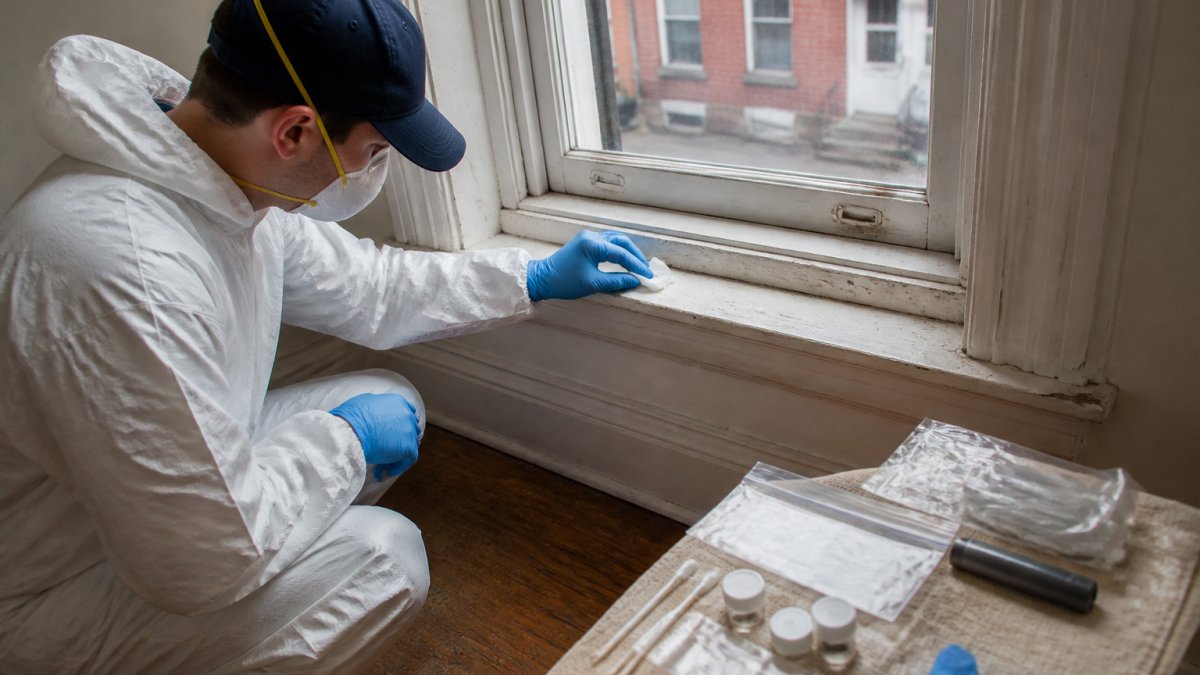
The test itself is fast. A certified inspector wipes specific surfaces, bags the samples, and ships them to a lab. You get a report showing whether lead dust levels pass or fail.
What Gets Sampled and How Results Are Read
Inspectors focus on surfaces where lead dust settles and where people touch it most, windows, floors, and other high-contact spots.
Typical sample locations include:
- Interior windowsills and window troughs
- Floors in living areas and bedrooms
- Stair treads and railings
Each sample goes to the lab, which measures lead dust by surface area. The report lists each location with a pass or fail. One failing surface can sink the whole certificate, so prep matters.
How to Pass a Lead-Safe Inspection the First Time
Most failures aren't caused by visible paint problems but by invisible lead dust on surfaces the landlord already cleaned. The inspector isn't grading how the unit looks, wipes go to a lab that measures lead loading per surface area, so a windowsill that passes the eye test can still fail the wipe test.
That's why prep is a surface-by-surface job, not a general tidy-up: landlords who pass on the first visit treat the days before inspection as a targeted cleaning operation.
Why Dust Wipes Fail (and What the Lab Actually Measures)
A dust wipe sample is a treated wipe run across a measured area, typically one square foot on a floor, or the full width of a windowsill or trough.
That means one overlooked surface can sink the whole report. The most common failure points we see on Philadelphia rental inspections are:
- Window troughs (the channel where the sash slides), the single most common failure surface
- Interior windowsills, especially on older double-hung windows
- Floor areas within a few feet of windows and doors
Lead dust doesn't stay where it lands: it migrates from friction surfaces, windows that open and close, doors that rub, onto nearby floors and sills, so cleaning the windowsill without the trough and floor beneath it usually doesn't help.
Room-by-Room Prep Checklist for Landlords
Run this in the 24-48 hours before the inspector arrives. Work top to bottom and use fresh wipes or rinse water often, a dirty rag just moves lead around.
Windows (do these first, they fail most often)
- Open the window and wet-wipe the entire trough, including corners
- Wet-wipe the interior sill, front edge, and the apron below it
- Wipe the sash edges and the frame where the sash meets the jamb
Floors and stairs
- Damp-mop all floors, never dry sweep or vacuum first
- Wipe stair treads, risers, and handrails
- Wipe the floor at the top and bottom of each stair run
Doors and entryways
- Wipe door frames, thresholds, and the floor on both sides
- Wipe any door that rubs or sticks, friction creates dust
Paint and surfaces
- Look for chipping, peeling, or chalky paint on windows, trim, and walls
- Stabilize any loose paint before the inspection, loose paint flakes into dust
- Clear clutter away from windows and floors so surfaces are accessible
Access
- Confirm every unit, closet, and common area the inspector needs is unlocked
- Confirm tenants know the inspection date so nothing is moved back into place
The Two Failure Modes Prep Can't Fix
Cleaning handles dust, not deteriorated paint.
If you find deteriorated paint during prep, either stabilize it before the inspection or accept that the report will flag it and plan for repair and re-testing.
Cleaning addresses dust failures; repair addresses paint failures. Most first-time failures are one or the other, and the report will tell you which.
If Your Property Fails: Remediation and Re-Testing
A failed inspection isn't a dead end, it's a report telling you exactly which surfaces need work. The landlords who recover fastest fix only what failed and re-test, instead of re-cleaning the whole unit.
Start with the lab report: it lists each sampled location with a pass or fail and the lead loading number. That's your work order, don't clean or repair surfaces that already passed.
Sorting Failures: Dust vs. Paint
Failures fall into two buckets, and they need different responses:
- Dust failures, the surface had lead dust above the clearance threshold. Deep clean the failing surface (and the surfaces around it), then re-test. These are usually the cheaper, faster fix.
- Paint failures, the report flagged deteriorated paint, chipping, or a friction surface generating dust. Cleaning alone won't fix it. You need to stabilize or repair the paint, then clean and re-test.
A single unit can have both. Handle the paint failures first, because repairing paint creates dust that will re-contaminate surfaces you just cleaned.
When You Need a Certified Abatement Contractor
For minor dust and small paint stabilization, many landlords handle the work themselves or with a handyman, as long as it's done safely and the surface is cleaned afterward.
Abatement is a bigger job, so get more than one quote. Ask any contractor for their certification and their approach to containment and cleanup, because abatement without proper containment spreads dust to the rest of the unit.
Financial Assistance for Remediation
This is the part most guides skip: remediation costs are the main reason landlords delay compliance, and there are programs designed to close that gap.
The city and its partners have offered lead hazard control and remediation assistance programs aimed at rental properties, often tied to income-eligible tenants or specific neighborhoods. These programs change over time, so check the city's lead program page and the local housing agency directly before assuming you're paying out of pocket. Ask about:
- Grants for lead hazard control in rental units
- Low-interest or deferred loans for abatement
- Programs tied to income-eligible tenant households
Many landlords assume assistance is only for owner-occupants, but many programs include rental units, verify current terms rather than relying on an old article.
Re-Testing: Don't Test Too Soon
The re-test is a fresh dust wipe inspection of the previously failing surfaces. The most common mistake is re-testing before the repair and cleaning are finished, which burns another lab fee and delays the certificate.
Before you schedule the re-test:
- Confirm every paint failure is stabilized, primed, and dry
- Confirm every dust failure has been deep cleaned
- Confirm cleanup dust from the repair work is gone
Submitting the Passing Certificate
Once the re-test passes, you have a valid lead safe certificate.
Then mark the expiration date: certificates expire on the city's cycle, and the clock restarts the moment you pass.
Submitting Your Certificate and Staying Compliant
Once you pass, file the certificate with the city as part of your rental license process, keep a certified copy, and give tenants the required lead disclosure.
Then mark your calendar. Certificates expire, and you'll need to retest on the city's cycle. Missing the renewal date puts you right back in the same bind.
A simple compliance system keeps you ahead:
- Store your certificate and lab report in one folder
- Note the expiration date and set a reminder
- Track which units are due for retesting
Frequently Asked Questions
Which rental properties in Philadelphia require lead-safe certification?
Philadelphia requires lead-safe certification for most rental properties built before 1978, when lead-based paint was still in use. If you rent to families with children under six, the requirement is enforced regardless of unit turnover. Child-care facilities in pre-1978 buildings also need certification. Owner-occupied single-family homes are generally exempt, but once a property is rented, the landlord obligations under the property maintenance code apply. Confirm your building's construction year before assuming you are exempt.
What is the difference between a lead-safe certificate and a lead-free certificate?
A lead-safe certificate confirms that lead hazards have been controlled or removed to below EPA standards, even if lead-based paint is still present in the building. A lead-free certification means the property has been tested and no lead-based paint was found at all, which is rare in pre-1978 housing. Lead-free status is permanent; lead-safe status must be renewed on the 24-month inspection cycle. Most Philadelphia landlords will pursue lead-safe certification because full abatement is far more expensive.
How long is a lead-safe certificate valid, and what happens if my property fails the lead dust wipe test?
A lead-safe certificate in Philadelphia is valid for a set period from the date of the passing inspection. If your property fails, you receive the lab report showing which surfaces exceeded EPA lead dust thresholds. You then complete lead remediation, typically by stabilizing chipping paint and cleaning dust from windows, floors, and sills, and schedule a re-test. Passing after remediation restarts the clock. Budget for remediation and re-testing as separate line items so a failed test does not delay your lease signing.
How do I submit my lead-safe certification to the city?
After your certified lead inspector completes the inspection and the EPA-approved lab returns passing results, you receive a certified copy of the lead-safe certificate. Submit it through the city's rental license portal, or provide it to your licensing expeditor if you use one. Keep the original on file and give a copy to tenants as part of your lead disclosure law obligations. If you are renewing a rental license, upload the certificate before the renewal deadline to avoid housing code violations or license suspension.
Rental lead compliance in Philadelphia has a lot of moving parts, and one missed deadline can hold up your license. 99leadsafe.com makes it straightforward: a $99 lead-safe inspection, EPA-approved lab analysis, results in 2 to 7 business days, and clear filing instructions so you know exactly what to submit. We serve landlords and property owners across the Greater Philadelphia area, including Norristown. Get started with 99leadsafe.com and keep your rental license moving.