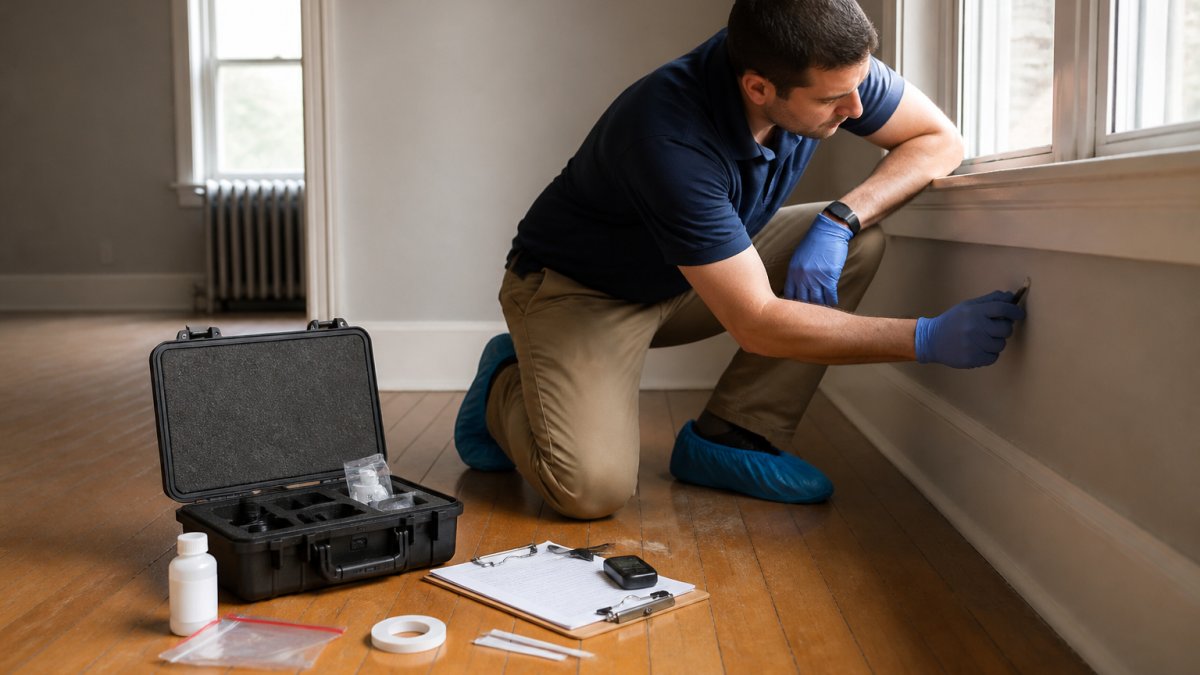
 ultimate-guide
Rental Property Certification: Lead-Safe Guide for Landlords
Table of Contents
- What Rental Property Certification Means for Landlords
- Who Needs a Lead Safe Certificate Philadelphia Landlords Rely On
- How Lead Dust Testing Philadelphia Landlords Use Confirms Compliance
- Lead Inspection Norristown PA Property Owners Can Schedule
- Step-by-Step: How to Get Your Rental Property Certified
- Common Reasons Properties Fail Certification (And How to Avoid Them)
- What Rental Property Certification Costs and What You Get
- Frequently Asked Questions
Last Updated: October 2, 2026
What Rental Property Certification Means for Landlords
Rental property certification is the documented proof that a rental unit meets the lead safety standards your city requires before you can legally lease it. In Philadelphia, that proof is a Lead-Safe Certificate, and without it your rental license application stalls.
Two documents get confused constantly. They are not the same thing, and mixing them up costs landlords weeks.
Certification vs. Rental License: Two Different Requirements
A rental license is your legal permission to operate a rental unit. A lead-safe certification is evidence that the unit's paint and dust are not creating a lead hazard for tenants. Philadelphia ties the two together: you generally cannot complete a rental license application for a pre-1978 property without showing lead-safe status. The City of Philadelphia rental license requirements lay out both obligations, and they are checked separately during review.
The practical takeaway: certification is a prerequisite, not a substitute. Get the certificate first, then file the license.
Who Needs a Lead Safe Certificate Philadelphia Landlords Rely On
Any landlord renting a property built before 1978 needs a Lead Safe Certificate Philadelphia issues through an approved inspector. That cutoff is federal, not local. The EPA's lead renovation, repair and painting rule treats pre-1978 housing as the risk window because lead paint was widely used before the ban.
Pre-1978 Housing and the Properties That Must Comply
The rule applies to single-family rentals, multi-family dwellings, and units in older rowhouses, which describes much of the city's housing stock. A few situations reduce or shift the requirement:
- Owner-occupied properties with no tenants are generally exempt
- Units certified lead-free by a licensed inspector can follow a lighter renewal path
- Child-care facilities in older buildings face their own certification rules
If you own a pre-1978 rental and collect rent, assume you need certification until an inspector tells you otherwise.
How Lead Dust Testing Philadelphia Landlords Use Confirms Compliance
Lead dust testing Philadelphia inspectors perform measures the actual lead on surfaces tenants touch, not just the paint's presence.
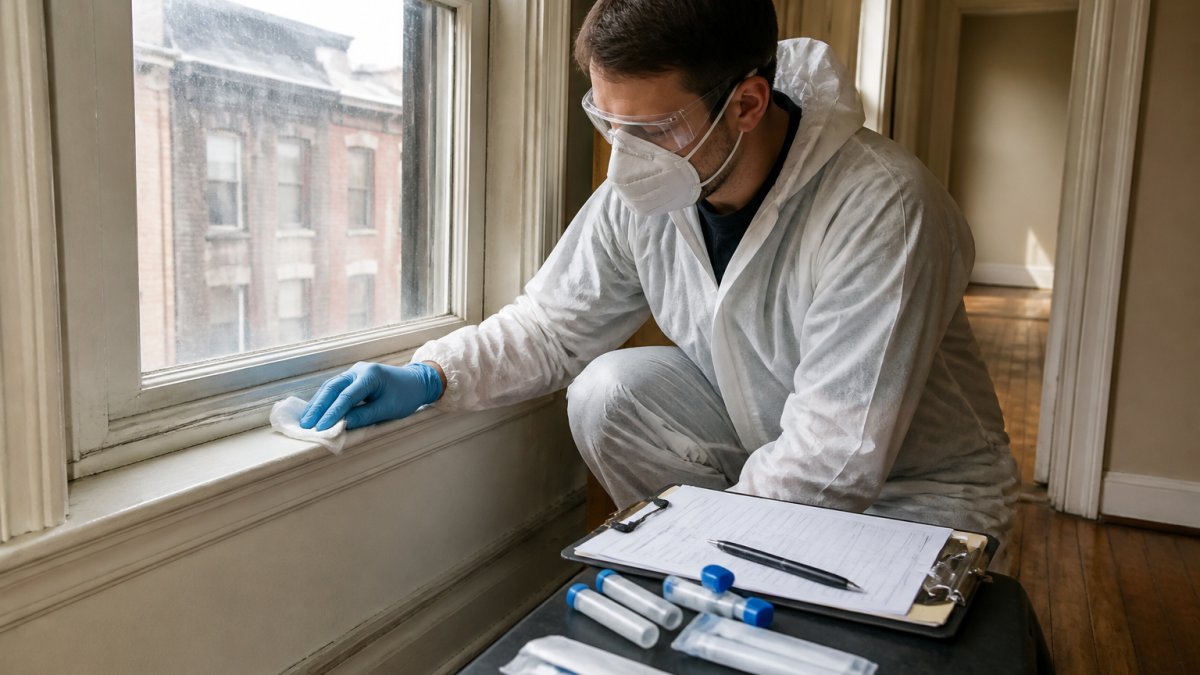
Dust testing matters because lead paint in good condition is not automatically a hazard. Deteriorating paint, friction on windows, and renovation dust create the exposure risk.
Lead Inspection Norristown PA Property Owners Can Schedule
A lead inspection Norristown PA landlords book works the same way as a Philadelphia inspection: a certified inspector assesses paint condition and dust levels, then issues documentation. Norristown sits in Montgomery County, and properties there follow the same pre-1978 logic.
What most guides miss is that the inspection is a snapshot. A passing result reflects conditions on the day of testing.
Step-by-Step: How to Get Your Rental Property Certified
Certification follows a predictable sequence. Here is the process most landlords complete in a few weeks.
- Confirm your property was built before 1978
- Gather your rental license application and property details
- Book a certified lead inspector for dust wipe testing
- Prepare the unit so surfaces are accessible
- Attend or arrange access for the inspection
- Receive lab results and the certificate
- File the certificate with your rental license application
- Set a renewal reminder before the certificate expires
What to Have Ready Before the Inspector Arrives
Clear access to every window, empty the windowsills, and make sure the inspector can reach all rooms. Remove tenant belongings from testing areas where possible. Have your property address, unit count, and prior certification on hand. If you manage multiple units, 99leadsafe.com can schedule them together rather than one at a time.
Common Reasons Properties Fail Certification (And How to Avoid Them)
Most failed inspections trace back to a handful of predictable conditions. Knowing what a certified inspector actually tests, and how, lets you fix problems before the wipe ever touches the surface.
What Inspectors Actually Test
A lead dust inspection is not a visual walkthrough. The inspector selects testing locations based on where lead dust accumulates and where tenants, especially children, are most likely to contact surfaces. Under the EPA's lead-based paint program, dust-lead clearance is measured in micrograms per square foot (µg/ft²) on floors, interior windowsills, and window troughs (also called wells) (the EPA). Those three surface types have different clearance thresholds, which is why a clean floor can still fail on a windowsill.
The inspector wipes a measured area, typically one square foot on a floor, and the full sill or trough width on windows, with a laboratory-grade wipe, then sends the sample to an accredited lab. Results come back as a number per surface, not a pass/fail guess. If any surface exceeds its threshold, the unit fails clearance.
The Failure Points That Show Up Most Often
| Failure Point | Why It Happens | How to Fix It |
|---|---|---|
| Deteriorating paint on friction surfaces | Windows and doors rub constantly, generating dust | Stabilize and repaint before testing |
| Dust in window troughs | Debris, dead insects, and old paint fragments collect there | Wet-clean and remove buildup |
| Dust on interior windowsills | Everyday settling, rarely cleaned thoroughly | Wet-wipe, then dry, before the inspection |
| Inaccessible testing areas | Clutter, furniture, or stored items blocking surfaces | Clear every room and window before arrival |
| Recent renovation without safe practices | Disturbed paint spreads dust through the unit | Retest only after work is complete and cleaned |
| Chalking or peeling exterior paint tracked indoors | Entryways and porches carry contaminated soil and dust inside | Clean entry paths and stabilize exterior paint |
Friction Surfaces: The Most Overlooked Category
Friction surfaces are any painted surfaces that rub against each other, window sashes sliding in their tracks, doors against jambs, cabinet doors against frames. Every open-and-close cycle grinds paint into dust. That is why a unit with intact walls can still fail on a single sticky window. Landlords who focus only on visible peeling paint miss this entirely.
How to Prepare Before the Inspector Arrives
A practical pre-inspection routine:
- Walk every room and open every window to identify sticking or rubbing surfaces
- Wet-wipe all interior windowsills and troughs, dry sweeping just redistributes dust
- Remove loose paint chips and debris from window wells
- Clear furniture and belongings away from windows and floors near testing areas
- Stabilize any peeling or chalking paint, then allow it to cure before testing
- Confirm the inspector can access every unit and every room
warning Skipping a retest after a failed inspection does not make the problem disappear. The city checks for a valid certificate, and an expired or missing one can hold up your rental license.
Why This Section Matters More Than Most Guides Admit
Most certification guides tell landlords to 'fix peeling paint.' That advice is incomplete. Clearance testing measures dust on specific surfaces at specific thresholds, and the surfaces that fail most often are the ones landlords never think to clean. Preparing to that standard, not to a visual standard, is what turns a failed inspection into a passed one on the first visit.
What Rental Property Certification Costs and What You Get
Pricing for a lead-safe inspection depends on variables such as the number of units, the square footage and window count, and the turnaround speed you need. You can find detailed pricing information on 99leadsafe.com's website.
What Drives the Price
- Unit count, each unit requires its own set of dust wipes and its own clearance determination
- Window count, windowsills and troughs are the most-tested surfaces, so more windows means more lab samples
- Turnaround, standard lab processing versus expedited results
- Access complexity, occupied units, locked rooms, or multiple buildings add scheduling time
What the Fee Covers
A complete certification package includes:
- An on-site inspection by a certified lead inspector
- Dust wipe sampling at floors, interior windowsills, and window troughs
- Laboratory analysis by an accredited lab
- A written report with per-surface results
- The documentation you file with your rental license application
What it does not cover: paint stabilization or repair work, repainting, cleaning services, or any renovation needed to bring a failing surface into compliance. Those are separate costs, and budgeting for them upfront prevents surprises.
The Cost-Benefit Math
Certification is a one-time inspection fee measured against the downside of operating an unlicensed rental. That downside includes:
- Fines and enforcement actions from the city
- Lost rent while a unit sits unrentable
- Legal exposure if a tenant's child is lead-poisoned in a unit you knew was pre-1978
- Delays in the rental license approval process
For most landlords, the inspection fee is the cheaper path by a wide margin. The real risk is not the cost of testing, it is the cost of skipping it.
A Unique Angle: Certification as Risk Management, Not Just Compliance
Most guides frame certification as a legal checkbox. A more useful framing is risk management. A current Lead-Safe Certificate does three things beyond satisfying the city:
- Documents due diligence, if a tenant later raises a lead concern, you have dated, lab-backed evidence of the unit's condition on inspection day
- Supports insurance and lending conversations, some carriers and lenders ask about lead compliance status during underwriting
- Protects renewal cycles, a clean inspection history makes each subsequent renewal faster and cheaper
Treat the inspection fee as the cost of a defensible paper trail, not just a permit prerequisite. The certificate is the receipt.
How to Get an Exact Quote
Because pricing scales with units, windows, and turnaround, the fastest path to a firm number is a direct quote based on your property details. Have your address, unit count, and approximate window count ready when you request one.
Frequently Asked Questions
What is a lead-safe certification for rental properties?
A lead-safe certification confirms that a rental unit has no lead hazards that would poison a child, even if lead paint is still present. In Philadelphia, landlords of pre-1978 rentals must hire a certified inspector to perform dust wipe testing and a visual assessment. Passing results are filed with the city, and the property then holds a valid lead-safe certificate for the required period.
Are landlords required to provide a lead-safe certificate?
Yes, if the rental property was built before 1978. Philadelphia requires landlords to certify these units as lead-safe or lead-free and to renew on schedule. Without a current certificate, you risk fines, failed rental license renewals, and legal liability if a tenant's child is exposed to lead dust. Confirm your specific deadlines with the city or your inspector.
How does lead dust wipe testing work for rental units?
An inspector wipes specific surfaces such as windowsills, floors, and window wells with treated wipes, then sends the samples to an EPA-approved lab. Results typically come back in 2-7 business days. If dust lead levels fall below the federal thresholds, the unit passes and the inspector files the certification paperwork. If it fails, you clean and retest.
What is the difference between lead-free and lead-safe certification?
Lead-free means the property contains no lead paint at all, which is rare in older housing. Lead-safe means lead paint may exist but no deteriorating paint or lead dust hazards are present. Lead-safe is the standard most pre-1978 rentals can realistically meet, and it still requires periodic retesting to stay valid.
What happens if a rental property fails a lead-safe inspection?
A failed inspection means lead dust levels exceeded federal limits or deteriorated paint was found. You must address the hazard, typically by cleaning, repairing, or stabilizing the surfaces, then schedule a retest. The property cannot be certified until it passes. Ask your inspector upfront how retests are handled so there are no surprise costs.
How often must rental properties be inspected for lead hazards?
Philadelphia requires lead-safe certification for pre-1978 rentals, with renewal on a set cycle rather than a one-time test. Between certifications, you should address any chipping or peeling paint immediately and document it. Because rules and deadlines change, verify the current renewal period with the city or a certified inspector before your certificate lapses.
Lead compliance is one of those tasks that feels optional until code enforcement makes it mandatory. If you own pre-1978 rentals in Philadelphia or Norristown, 99leadsafe.com handles the inspection, the EPA-approved lab analysis, and the documentation you need to file with confidence. Our $99 lead-safe inspection includes clear results in 2-7 business days and expedited service when your lease signing is close. Get started with 99leadsafe.com and put your rental certification on solid ground.