 Ultimate guide
Philadelphia Lead Inspection Turnaround Times Explained
Last Updated: November 8, 2026
Quick Summary
A Philadelphia lead inspection runs on three separate clocks: the on-site visit takes hours, lab analysis of dust wipes takes several business days, and city processing time varies. Report delivery adds 1-3 business days, so build deadlines around the full chain rather than the lab date alone.
- Pre-1978 rental housing requires certification, and the obligation sits with the owner, not the tenant.
- The on-site visit is measured in hours, not days, and multi-unit buildings take longer.
- A lead-safe certificate is valid for 24 months from issuance, and renewal is not automatic.
- A failed dust test adds a remediation and retest cycle, so plan the retest as a separate lab cycle.
- Confirm tenant access and keys for every unit before the visit to avoid rescheduling.
Table of Contents
- Why Philadelphia Lead Inspection Turnaround Times Vary
- Philadelphia Rental Lead Inspection Requirements Landlords Must Meet
- The Full Timeline: From Booking to Philadelphia Lead-Safe Certificate
- Understanding the Philadelphia Lead Certification Submission System
- How Long a Philadelphia Lead-Safe Certificate Lasts and When to Renew
- What Can Delay Results and How to Avoid It
- What Happens If Your Property Fails Lead Dust Testing
- Book Your $99 Lead-Safe Inspection with 99leadsafe.com
- Frequently Asked Questions
Why Philadelphia Lead Inspection Turnaround Times Vary
Turnaround for a Philadelphia lead inspection is not one clock. It is three separate clocks running in sequence: the on-site visit, the laboratory analysis of dust wipes, and the city's handling of the submitted certification. Most landlords who ask how long a Philadelphia lead inspection turnaround times picture a single number, and that is where expectations go wrong. At 99leadsafe.com, we walk landlords through each stage separately because each one fails for different reasons.
The honest answer to "how long does it take" is that the on-site visit is short, the lab is the variable, and city processing sits outside any inspector's control.
Below, we break the process into its three stages, show where delays actually come from, and explain what to do when a property fails.
Philadelphia Rental Lead Inspection Requirements Landlords Must Meet
Philadelphia rental lead inspection requirements apply to rental properties built before 1978, and the obligation sits with the owner, not the tenant.
Which Properties Need Certification
Pre-1978 rental housing is the core category. Family daycare facilities operating in older buildings also fall under lead-safe expectations, which surprises operators who assume the rules are only for landlords. If you rent out a unit in an older row house, duplex, or converted building, assume you are covered until an inspector tells you otherwise.
What a Certified Inspector Checks
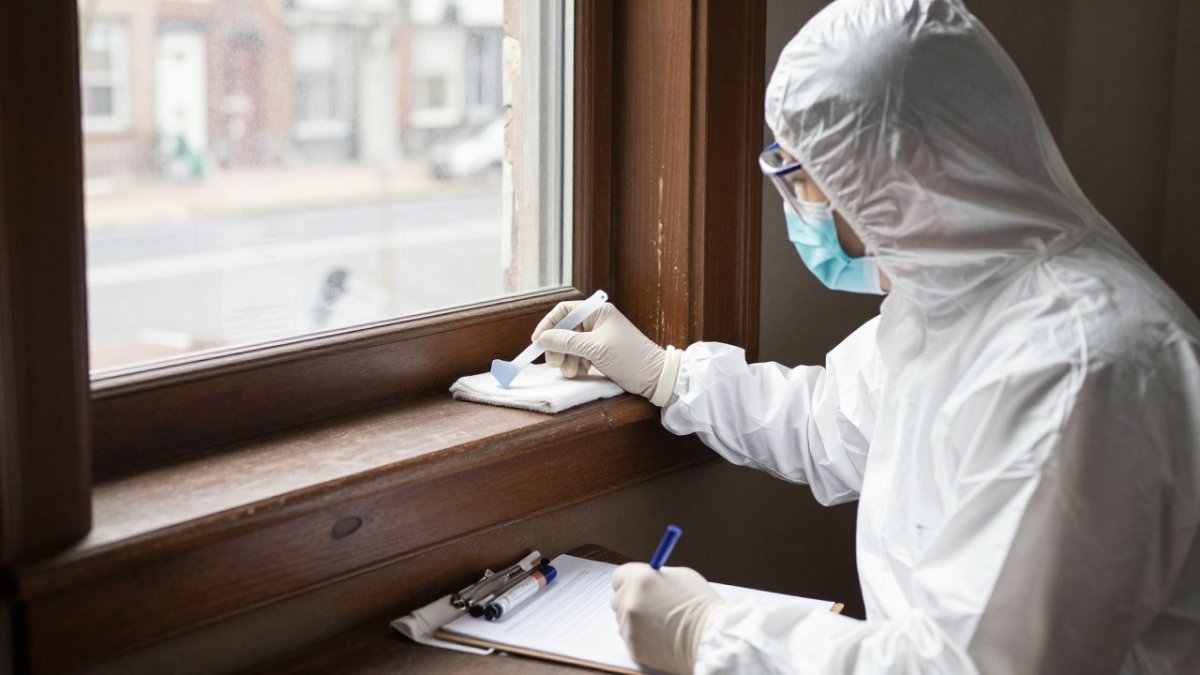
Lead dust wipe sampling on floors, windowsills, and window troughs is the core of the inspection. The inspection report, with laboratory results attached, is the document used for certification.
The Full Timeline: From Booking to Philadelphia Lead-Safe Certificate
Most landlords want one number, but the honest answer is a sequence: booking, the on-site visit, laboratory analysis, report compilation, and city submission. Each stage has its own clock, and only two of the five are under your control. The unified timeline below is what a typical pre-1978 rental property in Philadelphia actually experiences when nothing goes wrong.
Stage 1: Scheduling and On-Site Inspection
Booking timing depends on availability, and the visit itself is measured in hours, not days. A multi-unit building takes longer than a single unit because more surfaces need sampling. If you want a detailed breakdown of on-site times by property size, see how long a lead inspection takes so you can plan around the visit.
Stage 2: Lab Processing and Lead Dust Wipe Testing Philadelphia Results
Lab processing is where most of the calendar disappears. Lead dust wipe testing in Philadelphia produces physical samples that must be analyzed at a laboratory, and results take several business days after the samples arrive. For a full walkthrough of prep, wipe tests, and lab handling, read the Philadelphia lead dust sampling process.
Stage 3: Report Delivery and City Submission
Once results are in, the inspector compiles the report and you or your provider submit it to the City. Philadelphia maintains an online system for uploading, managing, and viewing lead certifications, which is documented on the City of Philadelphia's lead certification submission page. The city's processing time is outside any inspector's control.
The Unified Timeline at a Glance
| Stage | What Happens | Typical Duration | Who Controls It |
|---|---|---|---|
| Scheduling | Book visit, confirm property details | A few days | You and provider |
| On-site inspection | Paint and dust sampling | Hours, by property size | Inspector |
| Lab analysis | Wipe samples processed | Several business days | Laboratory |
| Report delivery | Results compiled into report | 1-3 business days | Provider |
| City submission | Upload and review | Varies | City of Philadelphia |
Read the table as a chain, not a menu. A multi-unit building, a peak-season lab backlog, or a paperwork mismatch can extend the overall timeline. The on-site visit is almost never the bottleneck; the lab and the city are.
Watch out: treating a fast lab result as a finished certification. The lab result is one input; the certificate exists only after the report is compiled and accepted through the city system. Build your lease-signing or license-renewal deadline around the full chain, not the lab date.
Understanding the Philadelphia Lead Certification Submission System
The Philadelphia lead certification submission system is an online database where certifications and inspection reports are uploaded, managed, and viewed. Landlords should treat submission as a documented step, not an afterthought: keep the upload confirmation, the report, and the lab results together in your property records.
A common mistake is submitting a report that does not match the property record on file. Confirm the address and account details before you upload, because a mismatch can send the file back and restart the clock.
How Long a Philadelphia Lead-Safe Certificate Lasts and When to Renew
A Philadelphia lead-safe certificate is valid for 24 months from issuance, after which you must renew to stay compliant. Renewal is not automatic, and missing the window creates a gap in your records that can complicate licensing.
For the exact validity rules and what triggers a new inspection, see how long lead certification is valid in Philadelphia. When you are ready to act, the lead safe certification renewal process lays out the deadlines and documents step by step.
What Can Delay Results and How to Avoid It
Delays rarely come from the laboratory itself. In practice they cluster around four causes, and each one restarts a different part of the clock. Understanding the mechanism is what lets you build a realistic deadline instead of hoping.
Access and Scheduling Delays
If the inspector cannot get into every unit, the visit is incomplete and must be rescheduled. Tenant notice, keys, and gate or lobby access are the usual culprits in multi-unit buildings. Confirm access for every unit before the visit, not just the vacant one.
Sampling Delays From Recent Work
Recent painting, renovation, or cleaning can affect sample results, so disclosing recent work helps planning. If work was done recently, tell the inspector before the visit so sampling can account for it.
Paperwork and Record Mismatches
A report that does not match the property record on file can be sent back, and a returned submission restarts the city review clock. Match the property address and account details exactly before upload.
Lab Backlogs During Peak Season
Lab volume can rise when landlords cluster renewals around common license deadlines, so booking early helps.
Pre-Visit Checklist to Protect Your Timeline
- Confirm tenant access and keys for every unit before the visit
- Clear windowsills, floors, and window troughs of clutter so every surface can be sampled
- Disclose any recent painting or renovation so sampling is planned around it
- Match the property address to your records exactly before submission
- Book early if you have a lease signing or license deadline
Watch out: waiting until the week your rental license renewal is due leaves no room for a failed test and retest. Build the timeline backward from your deadline, not forward from your call.
What Happens If Your Property Fails Lead Dust Testing
A failed dust test is not a dead end, but it does add a remediation and retest cycle to your timeline.
Plan for the retest as a separate lab cycle, and budget the time rather than the panic.
Book Your $99 Lead-Safe Inspection with 99leadsafe.com
Complying with Philadelphia's lead rules comes down to timing and documentation, and both are easier when the inspection is simple to book and the results are explained clearly. 99leadsafe.com offers a $99 lead-safe inspection with EPA-approved lab analysis, results in 2-7 business days, and expedited service. We provide the professional documentation and filing instructions you need for city submission. See our pricing and book your inspection to get your certificate moving.
The deadline on your rental license will not move, but your inspection can start this week. 99leadsafe.com provides $99 lead-safe inspections with EPA-approved lab analysis, results in 2-7 business days, expedited service for tight timelines, and clear documentation with filing instructions for the City. Get started with 99leadsafe.com and secure your Lead-Safe Certificate before your renewal date.
Frequently Asked Questions
How long does a lead inspection take?
The on-site portion of a lead inspection usually takes one to three hours, depending on property size and the number of units. After the visit, samples go to an EPA-approved lab. Confirm the timeline with your inspector before booking.
How long do lead dust wipe test results take?
Lab turnaround depends on the lab, the number of samples, and whether you choose expedited service. Confirm the timeline with your inspector before booking. Ask whether the quoted time covers lab results only or the finished report and certificate, because those are different deliverables with different start points.
What can delay a rental property lead inspection?
Common causes include incomplete property records, no access to units on inspection day, and lab backlogs. To avoid delays, gather your property documents before booking and confirm access to every unit.
What happens if a rental property does not pass lead dust testing?
If dust samples exceed safe levels, the report will identify the affected areas. You then address the lead hazard and arrange a retest. Ask your provider about retest terms before booking. Planning for a possible retest keeps your certification timeline realistic.
How do landlords submit lead certification documents in Philadelphia?
The City of Philadelphia provides an online system for submitting and managing lead certifications and inspection reports. Users can upload, manage, and view lead certifications through the database. Your inspector should supply the documentation and filing instructions you need. Confirm the report format matches what the city accepts before your inspection so submission does not stall.
When should landlords schedule lead testing before a new tenancy?
Schedule well before a lease signing to absorb inspection, lab, and city processing time. If your timeline is tighter, ask your provider about expedited service options. Booking early also gives you room to fix any failed dust samples and complete a clearance examination without delaying the tenancy.