 Ultimate guide
A Landlord's Guide to Lead Safe Certification Documentation
Last Updated: November 8, 2026
Quick Summary
Lead safe certification documentation is the set of records you must hold to prove a rental unit has been tested and cleared of lead hazards, and in Philadelphia it typically means three separate documents: the certificate, the inspection report, and the lab results. Keep all three together, because a certificate without its supporting report is difficult to defend if a unit's status is ever challenged.
- File records by unit, not by building, since a certificate for one unit does not cover another.
- Only the inspection pathway yields the certificate filed with the rental license record.
- A report must show which surfaces were sampled and where each sample was taken.
- Submit as soon as the certificate is issued and save the portal confirmation.
- Keep the prior certificate and its report after renewal to show a history of compliance.
Table of Contents
- What Lead Safe Certification Documentation Actually Requires
- Your Lead Inspection Documentation Checklist, by Role
- Lead Dust Wipe Test Documentation: What the Report Must Show
- Philadelphia Rental Lead Requirements Landlords Must Document
- Federal and State Rules That Shape Your Paperwork
- How to Submit Your Documents Without a Rejection
- The Lead-Safe Certification Renewal Period and Record Retention Calendar
- Book Your Lead-Safe Inspection and Get Filing-Ready Documents
- Frequently Asked Questions
What Lead Safe Certification Documentation Actually Requires
Lead safe certification documentation is the set of records a property owner must hold to prove a rental unit has been tested and cleared of lead hazards. In Philadelphia, that typically means several separate documents, not one. This guide from 99leadsafe.com breaks down exactly what each document must show, who collects it, and how to file it so a submission is not sent back.
The distinction matters more than most landlords expect. A certificate alone does not tell an auditor what was tested, where samples were taken, or what the lab found. Each piece answers a different question.
Certificate, Report, and Lab Results: Three Separate Documents
The certificate is the one-page determination: the property address, the unit, the certifying party, and the date the status was issued. It is what a tenant or licensing clerk looks at first.
The inspection report is the narrative. It records the rooms visited, the surfaces sampled, the condition of painted components, and any deficiencies observed. This is the document that explains why the certificate says what it says.
The lab results are the raw wipe sample data from the analyzing laboratory. Under EPA lead program guidance, dust-lead clearance is judged against laboratory analysis, so the report and the certificate both depend on this third document. Keep all three together. A certificate without its supporting report is difficult to defend if a unit's status is ever challenged.
Your Lead Inspection Documentation Checklist, by Role
Owners, property managers, and contractors collect different things, and mixing the three creates gaps. The checklists below assign each item to the party who should physically hold it, and they separate the inspection pathway from the renovation pathway so a document from one is never filed as proof for the other.
Owner Checklist for Each Rental Unit
- Current lead-safe certificate with the unit identifier on its face
- Full inspection report matching each certificate
- Laboratory results for every wipe sample taken
- Prior certificate and report retained after renewal
- Renewal date logged in a shared calendar
- Copy of the submission confirmation from the city portal
Property Manager Checklist for Each Unit File
- Certificate filed by unit, not by building
- Unit-level identifier confirmed on the certificate itself
- Inspection report and lab results filed behind the certificate
- Portal confirmation saved with the unit file
- Handover audit completed when taking over a portfolio
A common mistake is filing by building. Multi-unit properties generally need unit-level records, because a certificate for one unit does not cover another. When a manager takes over a portfolio, a useful first task is matching certificates to units rather than simply counting them.
Renovation Pathway Checklist (Separate From Inspection)
- Firm certification for the renovation contractor
- Certified renovator assigned to the job
- Renovation records retained alongside inspection records
- Confirmation that renovation records do not substitute for a lead-safe certificate
Certification Pathway Decision Guide
Searchers often confuse the inspection, abatement, and renovation credentials. The inspection pathway produces the lead-safe certificate a rental license depends on. The abatement pathway addresses hazard removal and produces its own clearance documentation. The renovation pathway under the EPA Renovation, Repair and Painting Program produces firm and renovator records. Only the inspection pathway yields the certificate filed with the rental license record. If your folder contains renovation records but no current certificate, the unit is not compliant for rental licensing purposes.
Our guide to what a lead dust wipe test involves explains how the lab results in the owner checklist are produced and read.
Lead Dust Wipe Test Documentation: What the Report Must Show
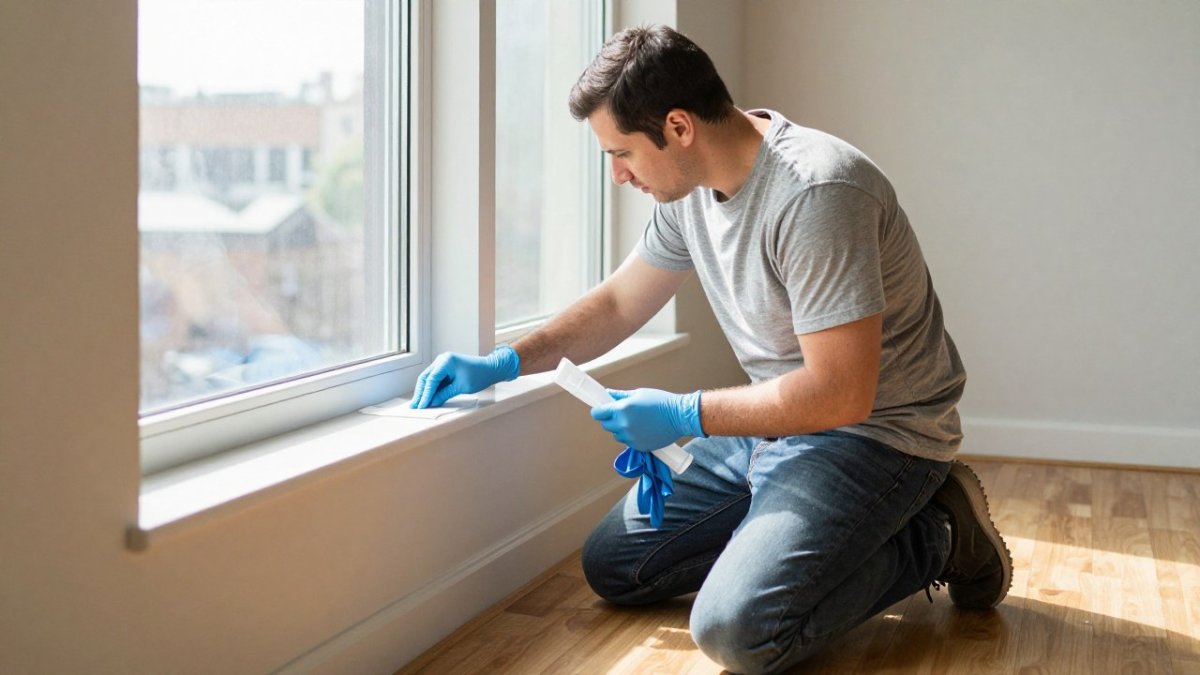
A lead dust wipe test documentation package must show which surfaces were sampled, the location of each sample within the unit, the laboratory's analysis, and the date of collection. Without surface-level detail, a report cannot be matched to the clearance decision it supports.
For landlords, the practical test is simple: could a stranger read the report and know which windowsill and which floor section were tested? If the report only lists "kitchen" and "bedroom," ask for a more detailed record. The HUD lead-safe housing rule sets out how dust-lead clearance is evaluated in federally assisted housing, and the sampling detail it expects is a useful benchmark for any report you keep. Our guide to what a lead dust wipe test involves explains how samples are taken and how results are read.
Philadelphia Rental Lead Requirements Landlords Must Document
Philadelphia rental lead requirements center on proof. A landlord must be able to produce a current certificate for each unit, and the submission system expects the certificate together with the inspection documentation behind it, per the Philadelphia lead certification submission system. The certificate number alone is not the record.
Two habits prevent most problems. First, submit as soon as the certificate is issued, not the week a license renewal is due. Second, keep the portal confirmation. If a clerk cannot locate a filing, the confirmation is the fastest way to resolve it. The same discipline applies to Norristown properties under state rules, which we cover next.
Federal and State Rules That Shape Your Paperwork
Three layers of rules touch the same folder, and they do not ask for identical things. The most common filing error is treating one layer's document as a substitute for another's. The table below separates what each layer actually requires so you can confirm your folder is complete at every level.
| Rule layer | What it governs | Document it produces | Who holds it |
|---|---|---|---|
| Federal (EPA RRP) | Renovation and repair work on pre-1978 housing | Firm certification, renovator certification, renovation records | Owner or contractor |
| Federal (HUD) | Dust-lead clearance in federally assisted housing | Clearance report with wipe sample data | Owner or manager |
| State (Pennsylvania) | Rental property lead certification | Lead-safe certificate and supporting inspection report | Owner |
| City (Philadelphia) | Rental license lead filing | Certificate filed with the licensing record, portal confirmation | Owner or manager |
For renovation work specifically, the EPA Renovation, Repair and Painting Program requires firms to be certified and to have a certified renovator assigned, which means renovation records belong in your file alongside inspection records. Those renovation records are separate from the lead-safe certificate and do not replace it.
State rules govern the rental certification itself. State rules govern rental certification, and landlords should confirm current requirements with the relevant agency. City rules govern what gets filed and when, so confirm the current filing sequence with the city before submitting.
Where the layers diverge most is renewal timing and retention. Federal renovation records follow their own retention schedule, state certification follows the certificate cycle, and city filing follows the license renewal calendar. Our guide to Philadelphia rental license lead requirements walks through the city filing sequence step by step.
How to Submit Your Documents Without a Rejection
Most rejections trace to a mismatch, not a missing inspection. The address on the certificate does not match the license record, the unit number is absent, or a scanned page is unreadable. Work through these steps in order.
- Confirm the property address matches the licensing record exactly, including street suffix and unit format.
- Check that every unit has its own certificate and that the unit identifier is legible.
- Scan at a resolution high enough that the certificate number is readable on screen.
- Attach the inspection report and lab results where the portal allows supporting documents.
- Save the confirmation page or email before closing the browser.
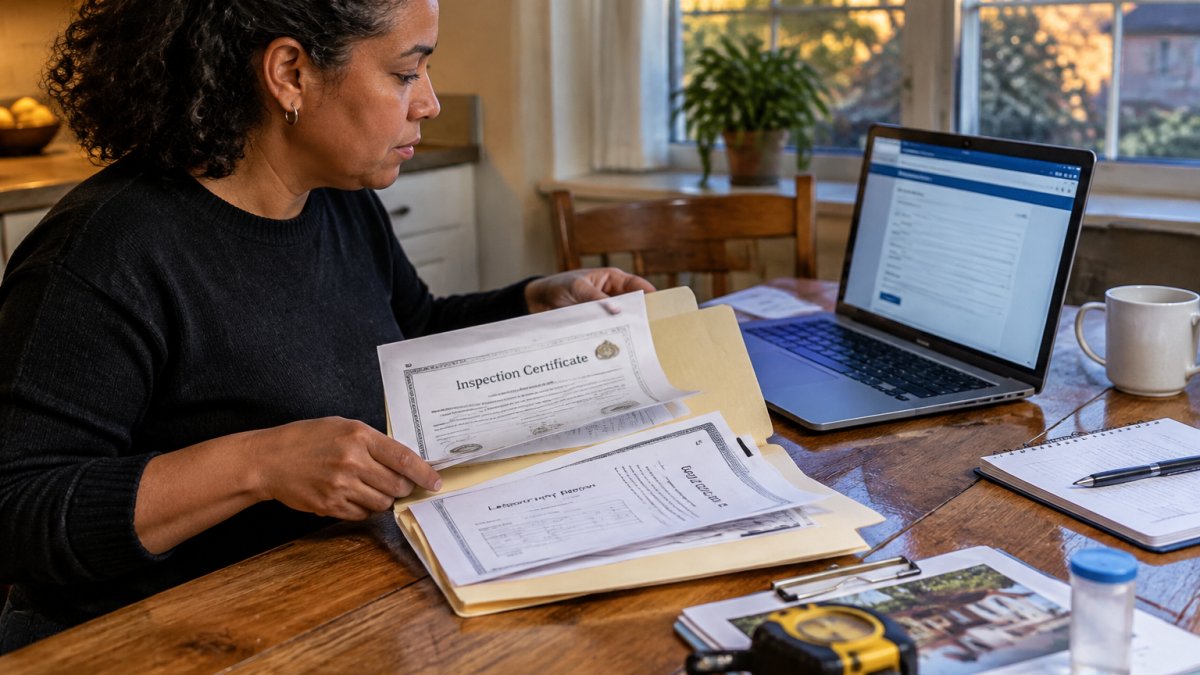
If a submission is rejected, read the reason literally. "Document not accepted" usually means format or legibility, not a failed test. Our guide to landlord documentation and filing systems covers how to structure the folder so a rejection is a five-minute fix.
The Lead-Safe Certification Renewal Period and Record Retention Calendar
Certificates expire, and an expired certificate is treated as no certificate. Build a calendar with three dates per unit: the issue date, a reminder set well before expiration, and the renewal inspection date. Do not wait for the expiration month to schedule testing, because lab turnaround adds days you cannot compress.
Retention is the other half. Keep the prior certificate and its report after renewal. A history of compliant status is far easier to demonstrate than a single current document, and it answers questions about past tenants. Our walkthrough of the renewal process lists the deadlines and documents each cycle requires.
| Record | Who holds it | Retention |
|---|---|---|
| Current certificate | Owner and manager | Until renewed |
| Prior certificate and report | Owner | Keep after renewal |
| Lab results | Owner | Match to certificate |
| Submission confirmation | Manager | Keep with unit file |
Book Your Lead-Safe Inspection and Get Filing-Ready Documents
The paperwork problem solves itself when the inspection is done correctly the first time. At 99leadsafe.com, we provide EPA-approved lab analysis and results in 2-7 business days, and expedited service is available. Our inspections come with professional documentation and filing instructions.
Sorting out certification paperwork across a portfolio is easier with a single point of contact. 99leadsafe.com handles lead dust inspections for rentals and child-care facilities across Greater Philadelphia, with transparent pricing and documentation built for filing. Get started with 99leadsafe.com and put a compliant folder together before your next renewal.
Frequently Asked Questions
What documents are needed for a lead-safe rental inspection?
You need the lead-safe certificate issued after the inspection, the full inspection report listing each tested location, and the lab results for the dust wipe samples. Confirm with the city what must be submitted for each unit and how. Keep the inspection report and lab results on file even though the city mainly wants the certificate, because you will need them if a tenant or inspector questions the results.
How do landlords document lead dust wipe test documentation for each unit?
Each unit should have its own dust wipe report showing which surfaces were sampled, the room or location for each sample, and the lab's analysis of every wipe. Store the report with the certificate in a folder labeled by address and unit number. If you manage several buildings, keep a simple spreadsheet that lists the unit, inspection date, lab report number, and certificate expiration so nothing gets missed at turnover.
How long is a lead-safe certification good for?
The lead-safe certification renewal period depends on where the property sits. Philadelphia sets its own cycle for rental certificates, and neighboring states differ, so confirm the current rule with the issuing agency or your inspector before you assume a date. Build a reminder 60 to 90 days before the expiration so you can schedule the next inspection without a gap in coverage that could affect your rental license.
What records should a landlord keep after a lead inspection?
Keep the certificate, the inspection report, the lab results, and any correspondence with the city or your inspector. Retain them for at least as long as the certificate is valid, and longer if you have had a failed test or a repair, since those records show the property was corrected. A simple calendar of inspection dates, renewal deadlines, and unit-level notes keeps your file audit-ready year after year.
What is the difference between lead-safe and lead-free certification?
A lead-safe certificate confirms the property was tested and no lead hazards were found at the time of inspection, while a lead-free certificate states there is no lead-based paint present. Lead-free status is harder to establish in older housing and often requires more extensive testing. Most pre-1978 rentals pursue lead-safe certification because it matches what Philadelphia rental lead requirements ask for at license renewal.