 How-to
How to Pass a Lead Clearance Test for Your Rental
Last Updated: November 10, 2026
Quick Summary
A lead clearance test is a post-abatement check that proves a rental unit is safe to occupy again. It combines a visual assessment with dust-wipe sampling, then compares lab results against federal dust-lead limits for floors, interior window sills, and window troughs.
- Clearance testing confirms cleanup after abatement worked; it is not a lead inspection or risk assessment.
- As of January 12, 2026, floors must test at or below 5 μg/ft² and sills at or below 40 μg/ft².
- If the visual assessment fails, testing stops and the unit must be cleaned and rescheduled.
- One sample above the limit fails the whole unit, because results are never averaged.
- A failed clearance usually means targeted re-cleaning and a retest, not a new abatement job.
Table of Contents
- What a Lead Clearance Test Actually Proves
- Step 1: Confirm When You Need Lead Clearance Testing After Abatement
- Step 2: Prepare the Unit Before the Clearance Examiner Arrives
- Step 3: Visual Assessment and Lead Dust Wipe Testing for Rental Properties
- Step 4: Read Your Results Against the Lead Dust Wipe Clearance Levels
- Step 5: What to Do If the Unit Fails Clearance
- Lead-Safe Certificate Requirements for Landlords in Philadelphia
- Book Your Lead Clearance Test and Get Certified
- Frequently Asked Questions
What a Lead Clearance Test Actually Proves
A lead clearance test is a post-abatement check that proves a rental unit is safe to occupy again. It combines a visual assessment with dust-wipe sampling, then compares lab results against federal dust-lead limits.
The EPA hazard standards and clearance levels set those limits. As of January 12, 2026, floors must test at or below 5 μg/ft², interior window sills at or below 40 μg/ft², and window troughs at or below 100 μg/ft².
That is a big drop. Floors previously allowed 10 μg/ft² and sills allowed 100 μg/ft².
Below, we walk through each step of the process, from scheduling to reading your report.
Clearance Testing vs. a Lead Inspection or Risk Assessment
These three services are not the same, and mixing them up wastes money.
- Lead inspection: finds and documents lead-based paint on surfaces. It does not tell you whether dust is a hazard today.
- Risk assessment: looks at paint, dust, and soil together to find hazards and suggest controls.
- Clearance test: confirms that cleanup after abatement or renovation actually worked.
Clearance only happens after work is done. A clearance examiner tests the space, and the report states whether the unit passes. Per HUD clearance guidance, clearance examinations verify that lead hazard reduction was completed and the space is safe for occupancy.
Watch out: a landlord who books a clearance test before any abatement work is done will pay for a test that proves nothing.
Step 1: Confirm When You Need Lead Clearance Testing After Abatement
You need clearance testing after any lead abatement or remediation, and often after renovation work that disturbs painted surfaces in pre-1978 housing.
Interim controls, window replacement, and paint stabilization all trigger it. So does any job where lead-safe work practices were used to address a known hazard.
The test is not optional paperwork. It is the record that lets you rent the unit again.
Timing matters as much as the test itself.
A NIH study on particle settling after abatement found that airborne particles settle over time after abatement work. Testing too soon can catch dust that would have settled, or miss dust that lands later.
Ask your contractor when work finishes. Then book the clearance examination for after the space is clean and dry.
Step 2: Prepare the Unit Before the Clearance Examiner Arrives
Preparation decides whether you pass on the first try. Failed clearances often come down to dust left on surfaces the cleaning crew skipped, or to sampling that happened before the unit was actually ready.
Timing comes first. Clearance is the final step before reoccupancy, not a follow-up you schedule weeks later.
Do this before the examiner arrives:
- Wet-wipe all floors, then rinse and dry
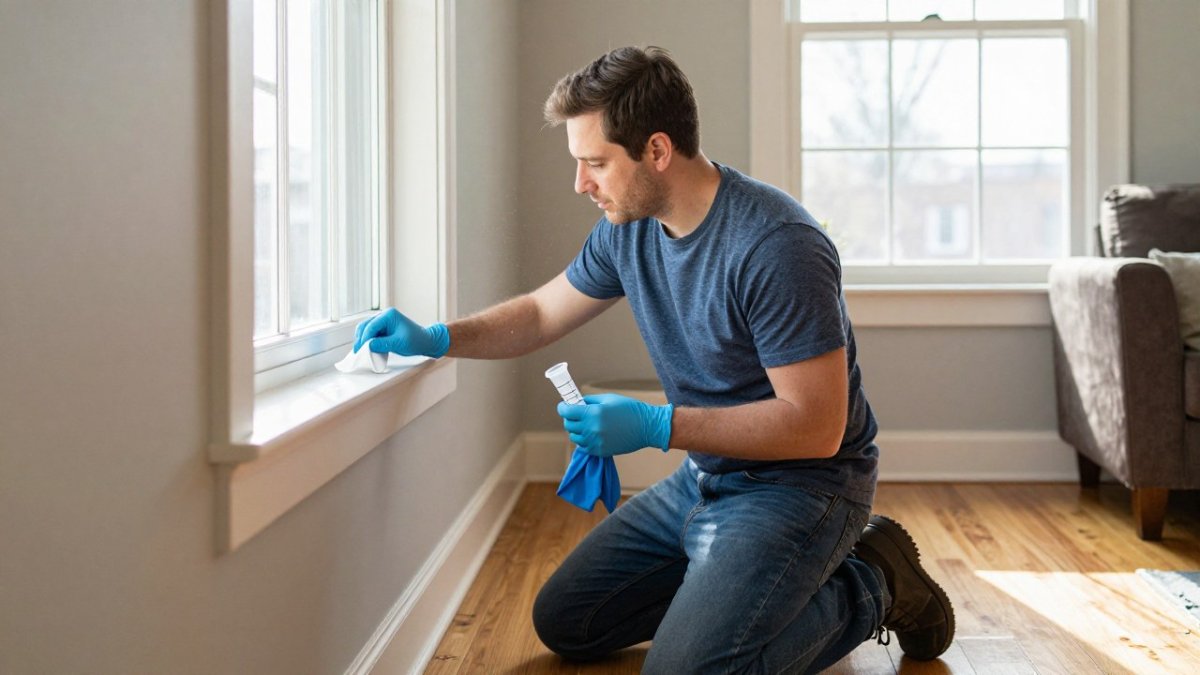
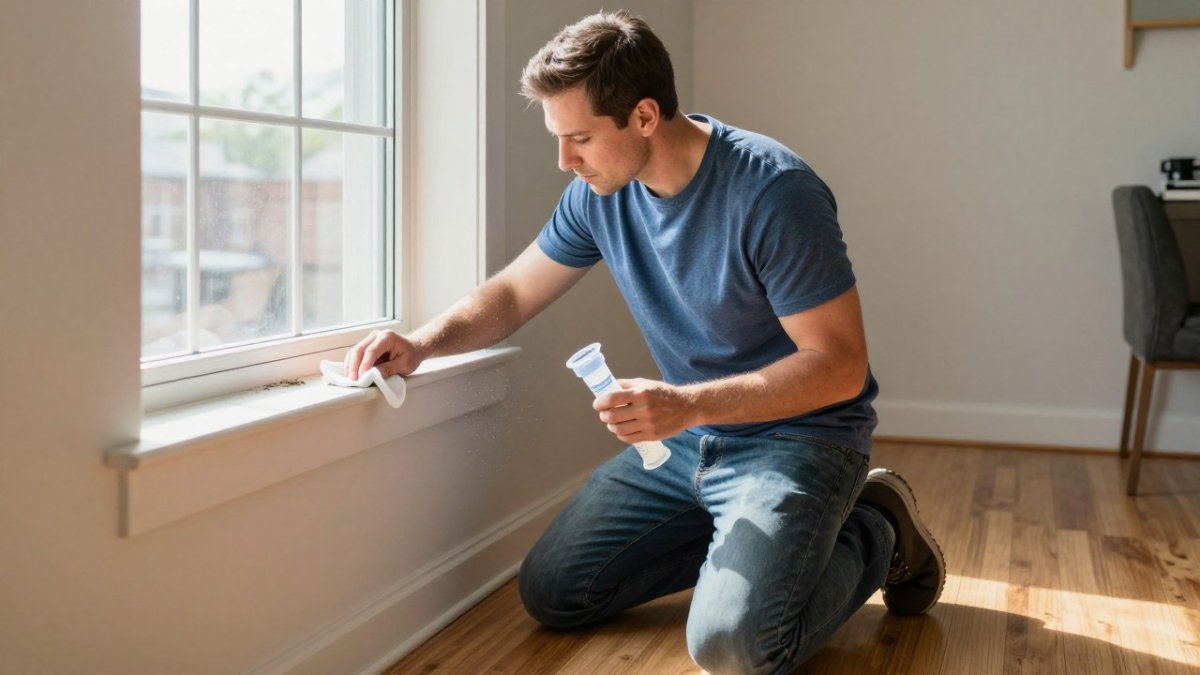
- Clean window sills and troughs with a damp cloth, including the well between the sash and the sill
- Wipe baseboards, ledges, and door frames
- Remove all visible dust and debris
- Clear the unit of furniture and clutter so the examiner can reach sampling locations
- Confirm work areas are dry
- Keep cleaning supplies and debris bags out of the unit
Why each step matters. Wipe sampling is taken over a measured area, usually one square foot, and the lab reports dust loading per square foot.
Dry sweeping or vacuuming with a standard shop vac can spread dust back onto clean surfaces. Use wet methods and a HEPA-filtered vacuum if you vacuum at all.
Also, keep your abatement records and contractor paperwork on hand. The examiner may ask for them, and they help confirm the scope of work the clearance is meant to verify.
Our guide on how to prepare for lead dust inspection walks through the full cleaning and documentation sequence.
Step 3: Visual Assessment and Lead Dust Wipe Testing for Rental Properties
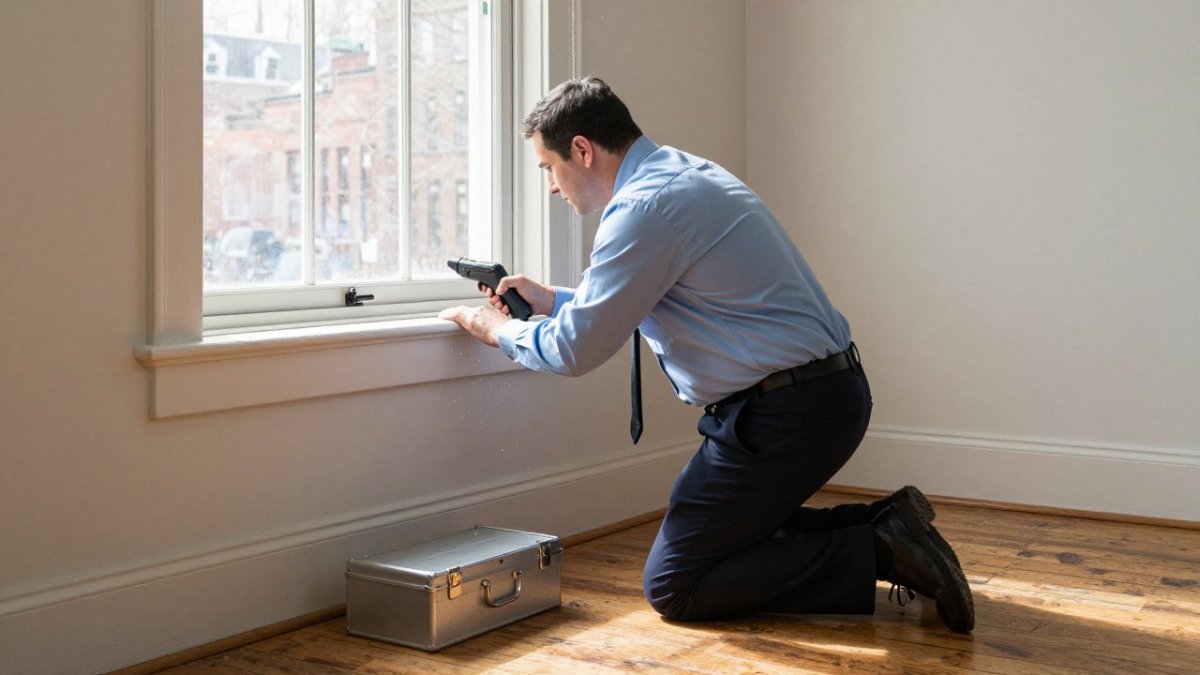
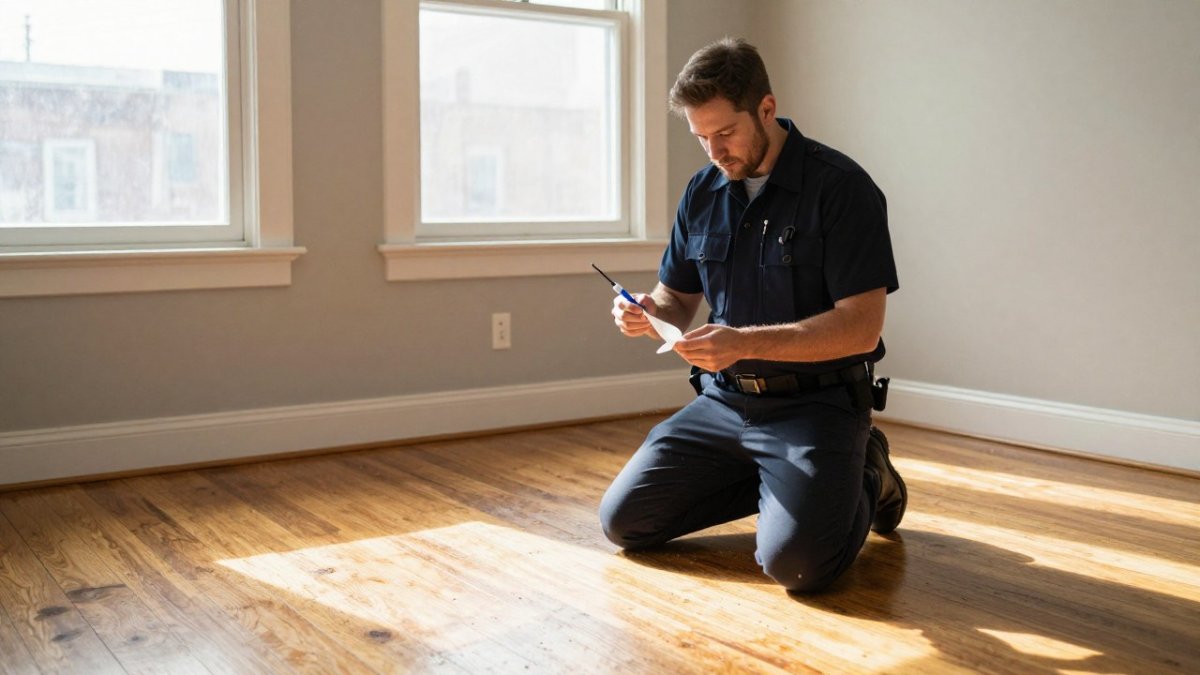
The examination starts with a visual assessment. The examiner checks that paint is intact, that dust and debris are gone, and that the work area is clean.
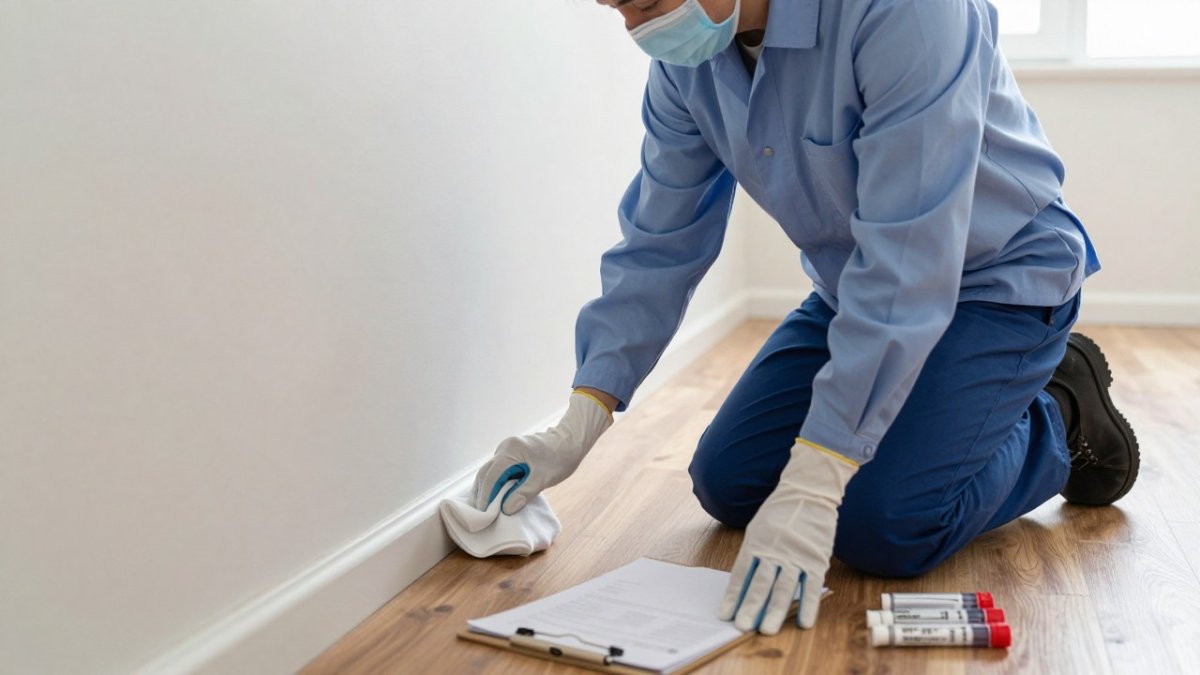
If the visual assessment fails, testing stops there. The unit gets cleaned again and rescheduled.
If it passes, the examiner moves to dust-wipe sampling. A wipe sample is collected by pressing a treated wipe over a measured area, usually one square foot, then sealing it in a labeled tube.
Those tubes go to an accredited laboratory for analysis. Results come back as dust loading in micrograms per square foot.
Where Wipe Samples Are Taken: Floors, Window Sills, and Window Troughs
Samples come from the surfaces where lead dust collects and where children can reach it.
- Floors: main living areas, bedrooms, and entryways
- Interior window sills: the flat surface where dust settles
- Window troughs: the well between the sash and the sill
Clearance testing requires samples from each of these surface types when they are present. The examiner picks specific sample locations based on the size and layout of the unit.
We cover sampling in more detail in our guide on what a lead dust wipe test is.
Step 4: Read Your Results Against the Lead Dust Wipe Clearance Levels
Your report compares each sample to the federal dust-lead action levels. A unit passes only when every sample is at or below the limit for its surface type.
| Surface Type | Clearance Limit |
|---|---|
| Floors | 5 μg/ft² |
| Interior window sills | 40 μg/ft² |
| Window troughs | 100 μg/ft² |
One number above the limit means the whole unit fails. There is no averaging.
Keep one distinction in mind. Screening levels flag areas for further investigation. Clearance levels decide pass or fail. Industry sources note these two should never be confused.
Read the report carefully. Check that every surface type was sampled and that the lab is accredited.
Step 5: What to Do If the Unit Fails Clearance
A failed clearance is not a disaster, and it rarely means more construction. A failure can mean dust was left behind on a surface the cleaning crew skipped, or dust settled back onto clean surfaces after cleaning stopped. The fix is targeted re-cleaning and a resample, not a new abatement job.
Here is a sequence to follow after a failed report:
- Read the report by surface type. Identify exactly which sample failed and whether it was a floor, an interior window sill, or a window trough. A single failed sill tells a different story than three failed floors.
- Trace the likely source before you re-clean. A failed window trough usually points to debris trapped in the well or a sash that was not cleaned. A failed floor near a doorway often points to tracked dust from a work area that was not contained. A failed floor in the middle of a room can point to dry sweeping or a shop vac that spread dust back onto clean surfaces.
- Re-clean with wet methods only. Wet-wipe the failed surface and any adjacent surfaces the dust could have traveled to, then rinse and dry. Do not dry sweep, and do not use a standard shop vac without a HEPA filter.
- Re-check containment and work-area boundaries. If the work area was not sealed off from the rest of the unit, dust may have migrated into rooms that were never sampled. Cleaning only the failed room rarely works, because dust travels and the next sample may land somewhere you skipped.
- Schedule the retest. The retest follows the same process as the first examination: visual assessment, then wipe sampling, then lab analysis. The examiner will typically resample the failed surface types and may add locations based on what the first report showed.
- Document the corrective work. Keep the failed report, a written note of what was re-cleaned and where, and the passing retest together. If the city or a tenant ever questions the unit's status, that paper trail is what shows the corrective work was done.
Budget for retesting. Our breakdown of lead inspection retesting costs in Philadelphia explains what triggers a retest and how to plan for it. If the failure traces back to the original abatement contractor's cleanup, raise it with them before you pay for a second examination, because the clearance step is part of the job they were hired to finish.
Lead-Safe Certificate Requirements for Landlords in Philadelphia
Philadelphia requires landlords of pre-1978 rentals to hold a valid lead-safe certificate or lead-free certification. The certificate depends on passing a dust-wipe test.
Two statuses exist, and they are not interchangeable:
- Lead-free: no lead-based paint found in the unit
- Lead-safe: lead paint may be present, but dust levels pass
Certification has a validity period, and it must be renewed. A lapsed certificate can affect your rental license.
Our guide on lead safe certification in Philadelphia explains the differences, validity periods, and how to check your current status.
Rules can change, so confirm current requirements with the city before you rely on an old certificate.
Book Your Lead Clearance Test and Get Certified
Accurate testing and a clean lab report matter when you need to show a unit meets current dust-lead limits.
At 99leadsafe.com, we handle lead dust inspections and clearance testing for rentals, homes, and child-care facilities. Our $99 lead-safe inspection includes EPA-approved lab analysis, with results in 2-7 business days and expedited service when a lease signing is close.
You get professional documentation and filing instructions, so your certificate is ready when the city asks.
Review our services to see what fits your property, then book your inspection and get the paperwork done.
Stricter dust limits mean more units fail on the first pass. If you have a lease signing coming up, test early and leave room for a retest. Get started with 99leadsafe.com and get a clear, documented result you can file with confidence.
Frequently Asked Questions
Is a lead clearance test the same as a lead paint inspection?
No. A lead paint inspection surveys a property to find where lead-based paint exists and in what condition, so you know what you are managing. A lead clearance test comes after abatement, remediation, or renovation work and answers a narrower question: is the dust left behind below the federal dust-lead action levels, so the unit is safe to reoccupy? Landlords often need both, but they serve different purposes and are not interchangeable for compliance.
What happens if my property fails a lead clearance test?
A failed clearance means dust loading on at least one sampled surface sits above the applicable federal dust-lead action level for that surface type. The fix is usually re-cleaning with lead-safe work practices, then a new clearance examination before anyone moves back in. Ask your provider up front how a retest is scheduled and billed so you are not surprised.
How long does lead clearance testing take, and who can perform it?
The on-site work is typically a few hours for a single unit, covering the visual assessment and dust-wipe sampling, with laboratory analysis adding turnaround time afterward. Clearance should be performed by a qualified clearance examiner, and samples should go to a laboratory that is accredited for dust-lead analysis. For a lease signing deadline, confirm the lab turnaround before you book so the documentation arrives in time.
Do Philadelphia landlords need a lead-safe certificate, and how does clearance fit in?
Philadelphia requires landlords of pre-1978 rentals to hold a valid lead-safe certificate or lead-free certification. A clearance test is part of that picture: it verifies that any lead hazard control work achieved acceptable dust levels. Confirm your specific obligations with the city and keep your reports on file, since documentation is what proves compliance if your property is questioned.